

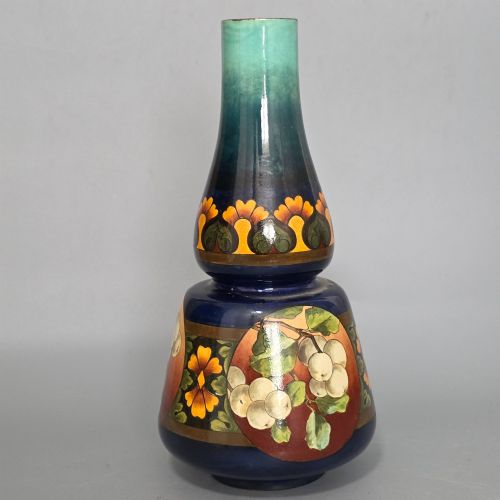
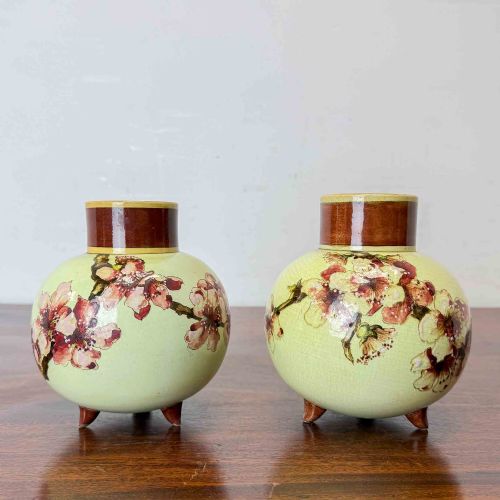


Late Victorian Urn
When you search for a late victorian urn, you explore an era of ornate metalwork, classical revival forms, and decorative ceramics.
Late Victorian Urn
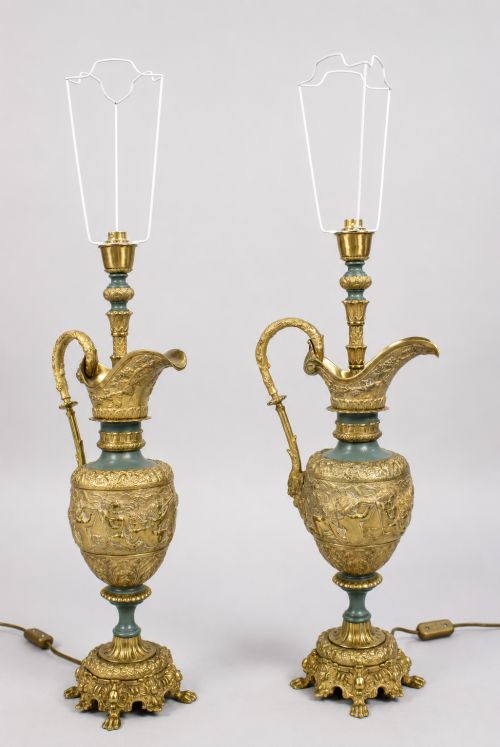
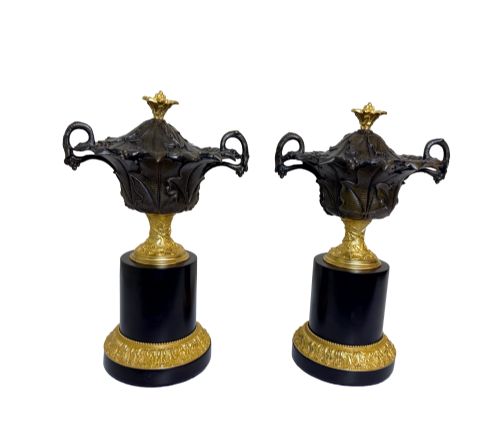
A late victorian urn encompasses ornamental vessels, table lamps, and clock garnitures drawing on classical motifs, Neoclassical revival designs, and French rococo styles from the nineteenth century.
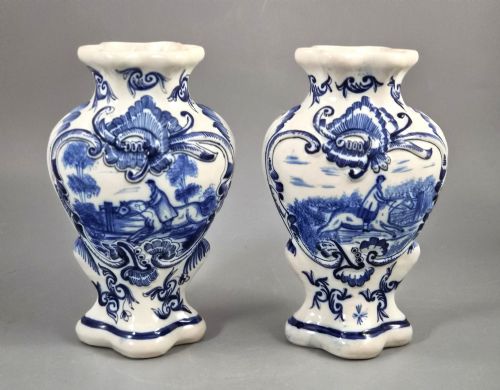
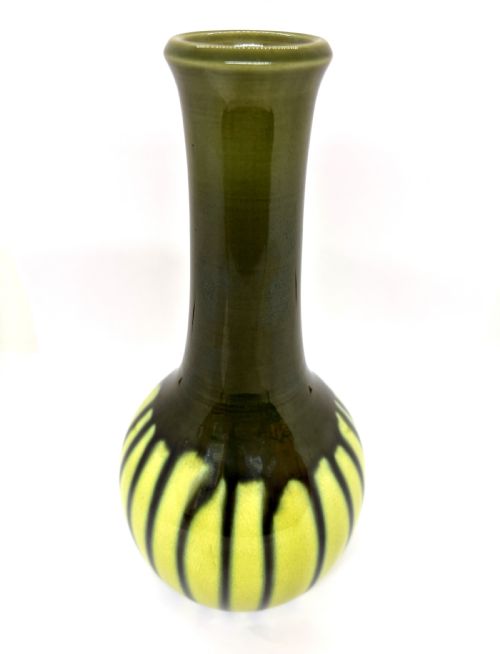
Buyers will encounter decorative vases, porcelain jugs, and bronze or brass vessels alongside larger architectural planters and table stands produced during the late Victorian period.
The selection ranges from English pottery and Continental porcelain to Grand Tour bronze reductions and silver plated tea urns or ice pails utilised in period interiors.
How they were made
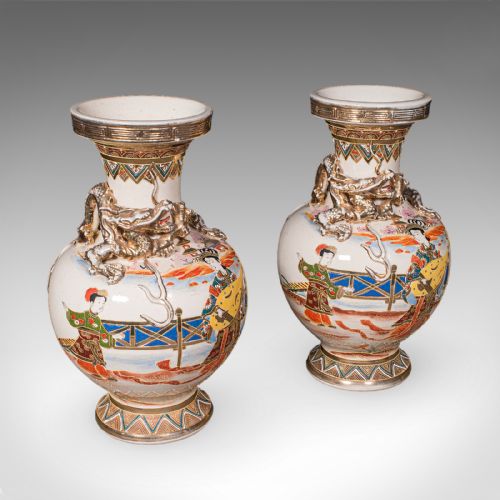
Artisans employed porcelain, earthenware, and glass alongside cast metals such as brass, bronze, and gilt metal, frequently applying hand-painted details, polychromatic enamel, or gold leaf.
Pottery techniques include faience glazes, lustre finishes, and intricate piercing, paired with carved hardwood stands, marble pedestals, or giltwood frames constructed by period makers.
A late Victorian silver plated pepper mill shaped precisely like a dairy milk churn brings unexpected agricultural charm to the dining table.
What varies in quality
Quality rests in the crispness of casting for bronze and brass elements, the fineness of hand-painted ceramic decoration, and the preservation of original gilt surfaces.
The distinction between standard production items and exceptional pieces lies in the depth of sculptural detail, the integration of materials like marble or champleve enamel, and documented workshop provenance.
Fourmaintraux Courquin at Desvres·Burmantoft s Pottery·Alice Euphemia Thatcher·Minton·Christopher Dresser·Ernst Wahliss·Clement Massier·William Soutter and Sons·Risler and Carre Paris·William Whiteley
The Late Victorian Urn Glossary
- Garniture
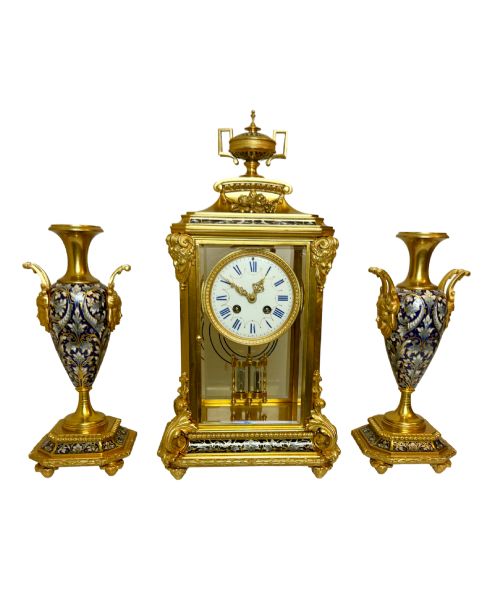
- A set of matching decorative ornaments, typically comprising a central clock flanked by vases or urns for a mantelpiece. These matched sets demonstrate cohesive design within late nineteenth-century interiors.
- Faience
- Tinned glazed earthenware produced across European potteries, known for bright painted surface decoration. This technique allowed makers to achieve vibrant colour palettes on decorative vessels.
- Grand Tour
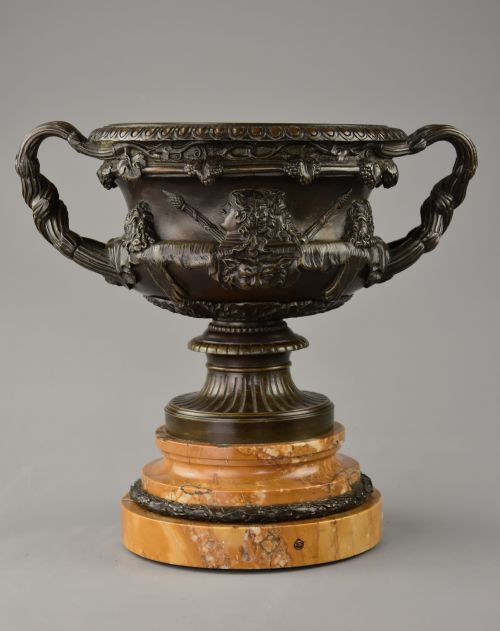
- A cultural journey undertaken by wealthy Europeans to study classical antiquities, inspiring miniature bronze reductions of famous sculptures like the Warwick Vase. These decorative objects brought classical sculpture into Victorian domestic spaces.
- Champleve
- An enamelling technique where troughs are carved into a metal surface and filled with vitreous enamel before firing. This method produced durable, richly coloured patterns on brass and bronze bases.
- Jasperware or similar ceramic bodies
- Fine stoneware developed for contrasting relief figures against a coloured background. Such wares reflect the enduring popularity of Neoclassical revival aesthetics.
Late Victorian Urn: Frequently Asked Questions
What is a late victorian urn used for?
These pieces served primarily as decorative garniture elements on mantelpieces, architectural focal points in reception rooms, or functional items like tea urns and ice pails.
Over time their role shifted from utilitarian or formal display objects to highly collectible decorative antiques that anchor period interior schemes.
How do I style a late victorian urn at home?
Position metal or porcelain urns on side tables, mantels, or dedicated stands where their classical proportions and reflective surfaces catch the light.
They pair effectively with eclectic interiors, contrasting against plain modern backgrounds or complementing darker wood furniture from the same era.
How do I identify the materials used?
Examine the surface finish under good light to distinguish between cast bronze, gilt metal, pressed brass, and hand-painted porcelain or earthenware.
Weights and mounting details, such as marble pedestals or turned wooden bases, help confirm the primary construction period and manufacturing technique.
Are these pieces marked by makers?
Many ceramics and metalwares carry factory stamps, incised signatures, or paper labels identifying the pottery or retail house on the underside or base.
Unmarked pieces can often be attributed through stylistic similarities, signature glazes, or known casting designs associated with specific nineteenth-century workshops.