


Floral Relief Vase
A floral relief vase brings sculptural botanical detail into a room through raised ornament on ceramic, glass, or metal.
Floral Relief Vase
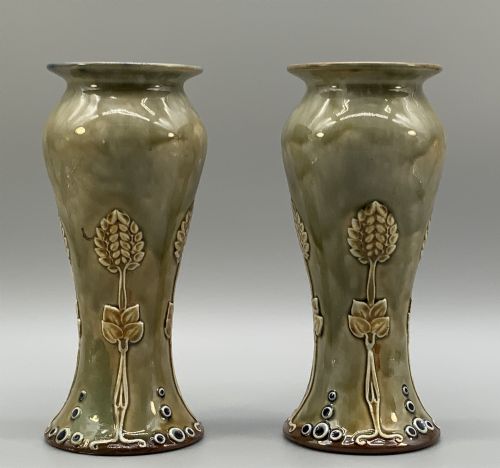
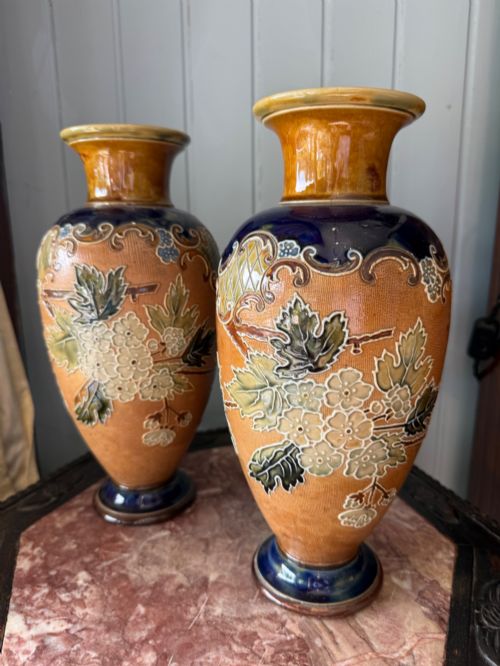
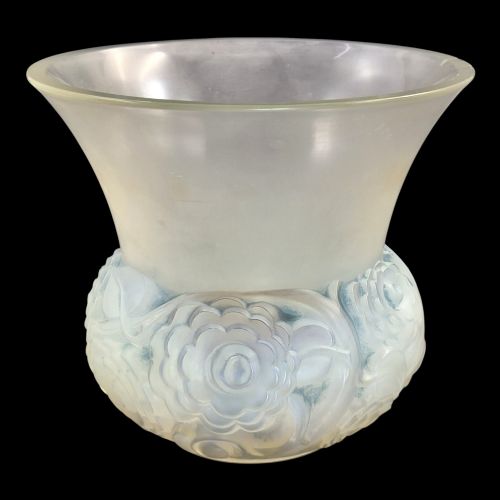
A floral relief vase is a vessel adorned with raised botanical ornament, spanning periods from the nineteenth century into the mid-twentieth century. Buyers encounter diverse forms, including pairs of stoneware vases, bronze urns, and cameo glass vessels.
The selections on this page incorporate distinct regional styles, such as Japanese Meiji period bronzes, French cameo glass, and British art pottery. Forms range from modest posy vessels to large centrepieces and converted lamps mounted in gilt bronze.
Nineteenth-century Victorian examples sit alongside Art Nouveau and Art Deco creations. Makers utilise porcelain, ceramic, stoneware, bronze, copper, and cameo glass to render raised floral motifs.
How they were made
Makers applied surface ornament using techniques such as pâte-sur-pâte, cameo carving, and mould-pressed glazing on porcelain and stoneware. Bronze and mixed metal vessels achieve raised floral and bird details through casting and applied metalwork.
Glassmakers created layered cameo pieces by acid-etching or blowing glass to reveal contrasting floral designs. Glazed earthenwares and faience received moulded relief patterns before firing.
Listings feature works in bronze, porcelain, stoneware, and cameo glass spanning the nineteenth and early twentieth centuries.
What varies in quality
Quality rests in the crispness of the modelled relief and the harmony between the vessel form and its botanical ornament. Finer pieces demonstrate precision in hand-finishing, whether in the delicate layering of cameo glass or the sharp chiselling of Japanese bronze.
The sophistication of the glaze or patination dictates the visual depth of the object. Master potteries and signed studios achieve a tonal richness that elevates standard moulded production.
Royal Doulton Lambeth·Royal Dux Bohemia·Burmantofts Faience·Royal Worcester·René Lalique·Paul Nicholas for D'Argental·Eichwald
The Floral Relief Vase Glossary
- Cameo glass
- Glass formed with multiple layers of different colours, acid-etched or carved to create a raised design. This technique allows intricate botanical silhouettes to stand out against a contrasting background.
- Pâte-sur-pâte
- A ceramic technique where successive layers of liquid clay slip are applied to a body before firing, building up a low relief cameo effect. The method produces a fine, translucent white decoration on a coloured ground.
- Stoneware
- A robust, vitrified ceramic fired at high temperatures, often finished with salt glazes or rich coloured slips. It provides a durable ground for bold moulded relief decoration.
- Art Nouveau
- An international decorative style popular around nineteen hundred, characterised by flowing, organic lines inspired by plant stems and blossoms. It heavily influenced the curving sculptural forms of ceramics and glass of the period.
Floral Relief Vase: Frequently Asked Questions
What is a floral relief vase?
A floral relief vase is a decorative vessel featuring raised botanical motifs executed in materials like ceramic, bronze, glass, or porcelain. These pieces range from nineteenth-century studio pottery to mid-century moulded glass.
The raised design gives the surface tactile depth, setting these vessels apart from flat painted ceramics. They serve as decorative centrepieces or functional displays for flowers.
How do I date a bronze floral vase?
Dating bronze vessels involves examining the patination, casting quality, and stylistic markers such as Meiji period Japanese signatures or Victorian decorative conventions. Mixed metal accents often point towards late nineteenth-century workshops.
Studio signatures and foundry marks stamped into the metal provide further chronological clues. Comparing the casting crispness with known period examples helps narrow the decade.
What materials are used for these vases?
Common materials include glazed porcelain, stoneware, faience, bronze, copper, and cameo glass. Some pieces incorporate gilt bronze mounts or mixed metal detailing.
Each material dictates the method of relief, from the acid-etched layers of cameo glass to the hand-modelled slip of art pottery.
How should I style a ceramic vase?
These vessels suit placement on side tables, mantels, or as dining table centrepieces where their textured surfaces catch the light. Pairing them with complementary period objects enhances their visual impact.
Care should be taken to place them where their detailed relief work remains visible from multiple angles in the room.