


Moulded Blue Glass
Moulded blue glass brings together deep cobalt tones, translucent opalescence and tactile relief from the eighteenth century to the art deco period.
Moulded Blue Glass
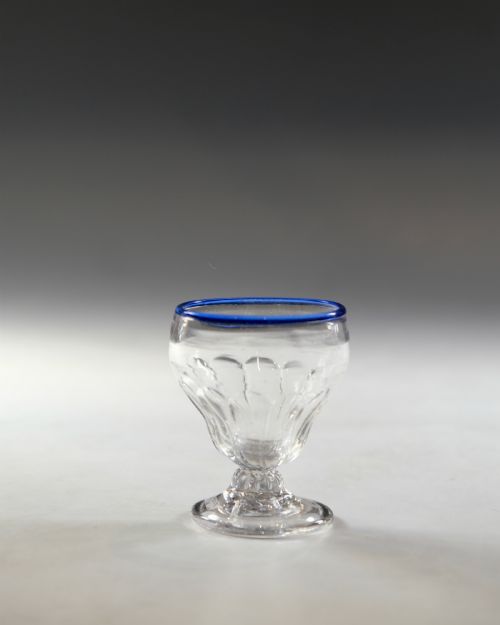
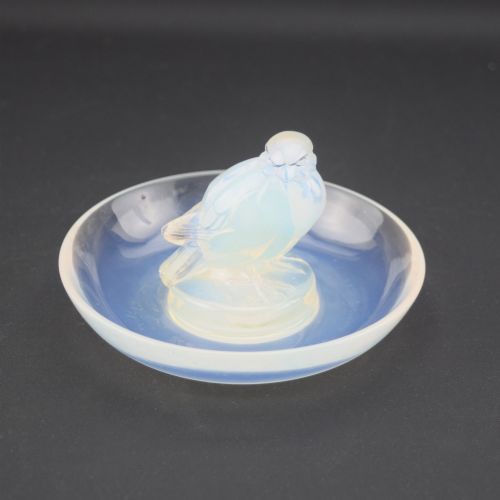
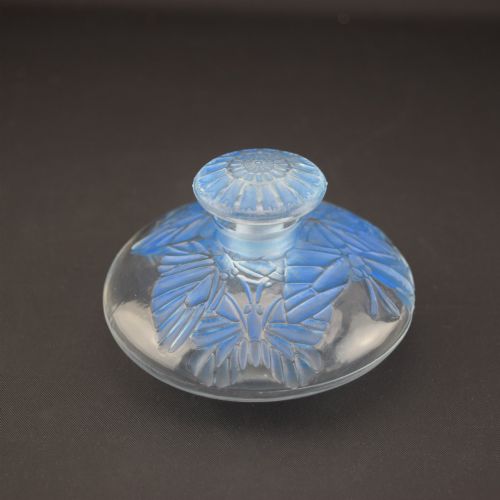
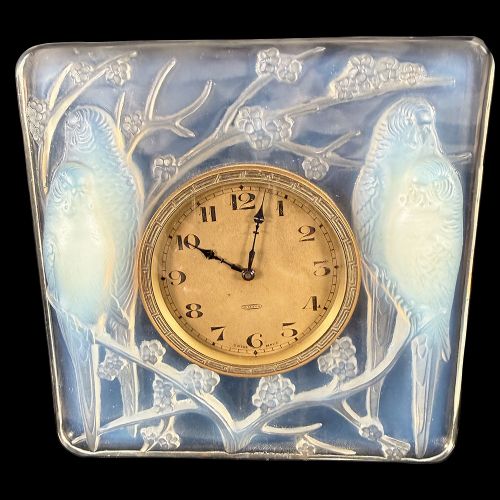
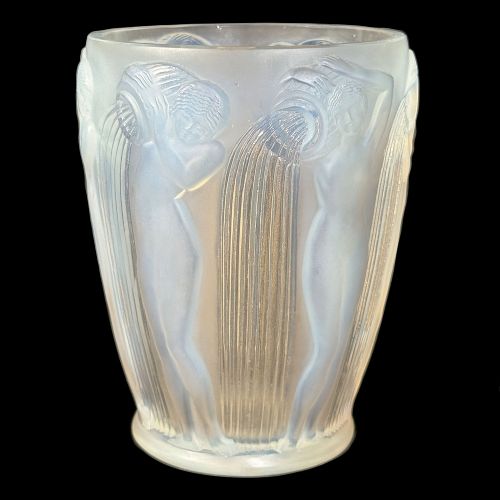
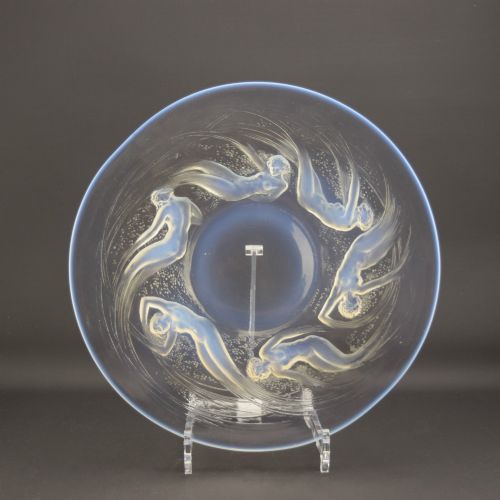
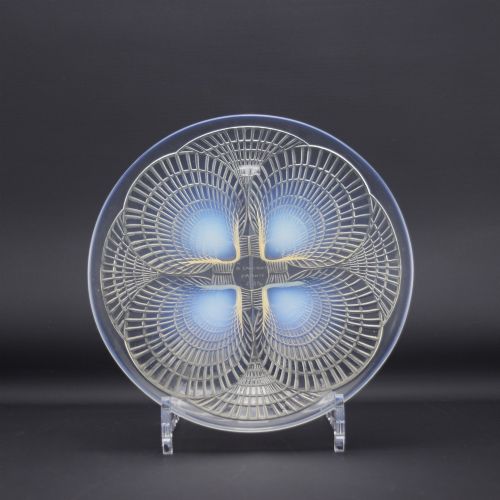
Moulded blue glass encompasses decorative vessels, scent bottles, tableware and ornaments produced across the eighteenth, nineteenth and twentieth centuries. The selection centres heavily upon French art deco pieces from the 1920s and 1930s, alongside earlier Georgian specimens.
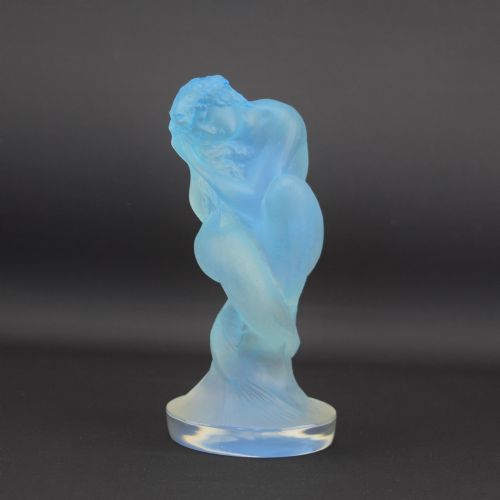
Vases, bowls, powder boxes and car mascots dominate the forms available. Buyers encounter utilitarian domestic items like cream jugs and sugar bowls sitting alongside luxury artistic creations.
Origins span English Georgian workshops and French studios. Twentieth-century works display the distinct influence of continental design movements.
Production and Materials
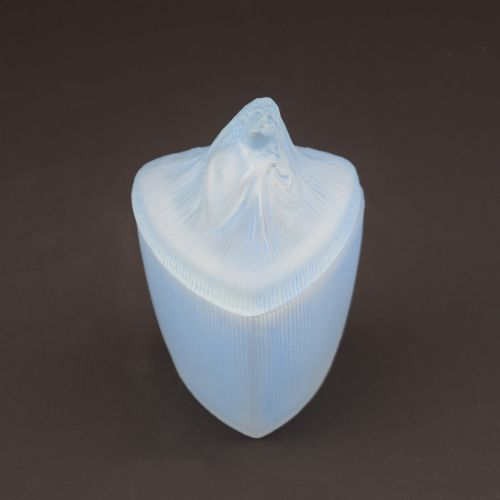
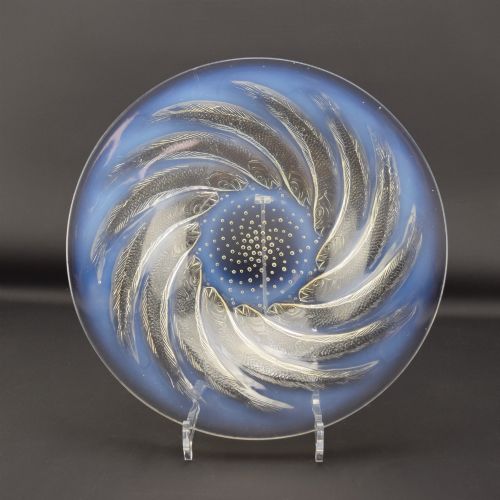
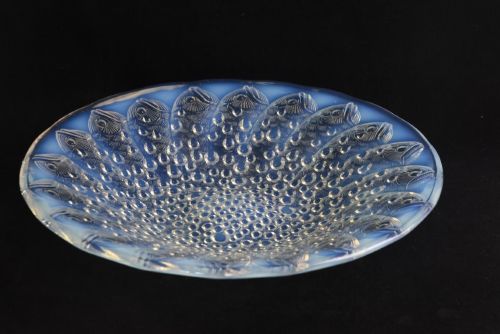
Pieces rely on glass shaped through moulds, yielding raised patterns, figural reliefs and panelled surfaces. Makers combined clear, frosted, opalescent and cobalt glass to achieve depth and contrast.
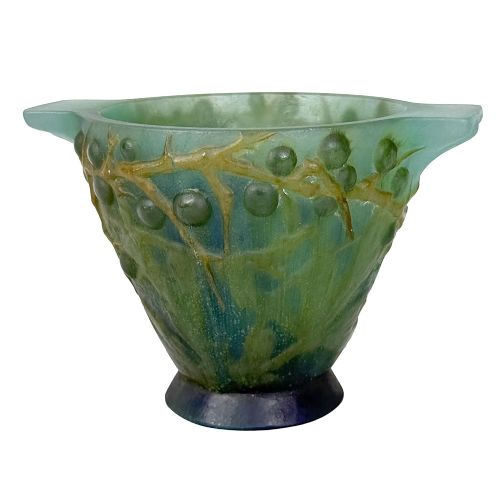
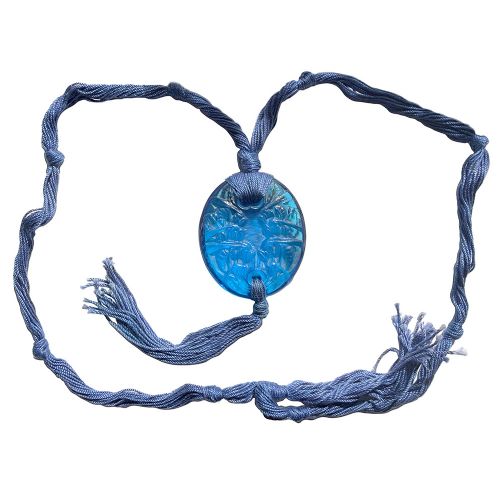
Specialised techniques such as pate de verre involved fusing powdered glass in a kiln to produce sculptures and pendants with granular textures. Enamel staining and blue tinting further highlighted the moulded details.
The listings span the Georgian era through to the 1930s, featuring opalescent, frosted, cobalt and stained glass.
Evaluating Quality
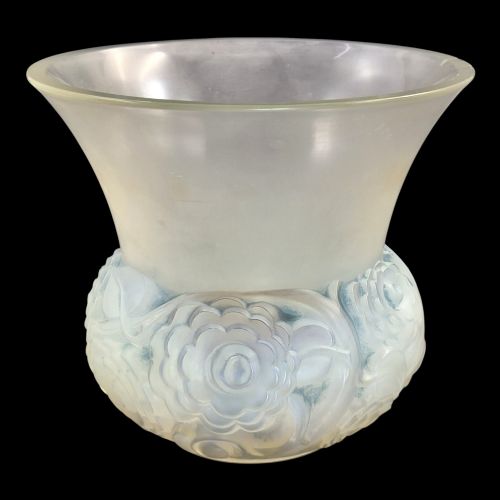
Quality rests upon the crispness of the moulded relief and the depth of the coloured or opalescent effects. Superior items exhibit sharp definition in figural elements and floral motifs.
The sophistication of the material blend distinguishes standard production from masterworks. Successful integration of frosted textures and blue staining elevates a piece considerably.
Rene Lalique·Amalric Walter·Marius Ernest Sabino·Jobling
The Moulded Blue Glass Glossary
- Opalescent Glass
- Glass that diffuses light to display a milky blue or orange glow depending on the angle. This effect adds ethereal depth to moulded motifs.
- Pate de verre
- A glass-casting method using crushed glass packed into a mould and fused in a kiln. The technique produces richly coloured, textured objects.
- Cobalt Glass
- Glass coloured by the addition of cobalt oxide, resulting in a deep, intense blue hue. It appears frequently in both Georgian and art deco items.
- Frosted Glass
- Glass treated to achieve a matte, non-reflective surface finish. Makers utilised this texture to contrast against polished or coloured sections.
- Moulded Glass
- Glass formed by pressing molten material into a metal or wooden matrix. The process allows for consistent production of patterned vessels and figures.
Moulded Blue Glass: Frequently Asked Questions
What periods do these pieces come from?
The selection ranges from eighteenth-century Georgian tableware to twentieth-century art deco creations. Twentieth-century examples from the 1920s and 1930s form the largest group.
Earlier pieces include Georgian bonnet glasses and cream jugs with blue rims. The majority reflect the design shifts of the interwar period.
How were these glass objects used originally?
Many served practical functions on dressing tables and dining rooms, holding powders, perfumes, sugar or cream. Others functioned purely as decorative centerpieces, vases or lighting elements.
Figurative items also found places as car mascots and desk ornaments. Luxury objects often doubled as display pieces reflecting modern tastes.
How should I display moulded blue glass?
Placing pieces near natural light allows opalescent and coloured variants to catch and refract illumination. Open shelving helps showcase the tactile relief of moulded patterns.
Consider positioning translucent vessels where light can pass through the cobalt or frosted surfaces. This reveals subtle variations in texture and tone.
How do I distinguish art deco pieces from older items?
Art deco items typically display stylised floral motifs, geometric symmetry and frosted or opalescent finishes. Signatures or registration numbers often appear on twentieth-century works.
Georgian items tend towards simpler panel-moulded forms with deep cobalt rims or body tints. The manufacturing techniques and stylistic vocabularies clearly separate the eras.