





Gilt Glass Vase
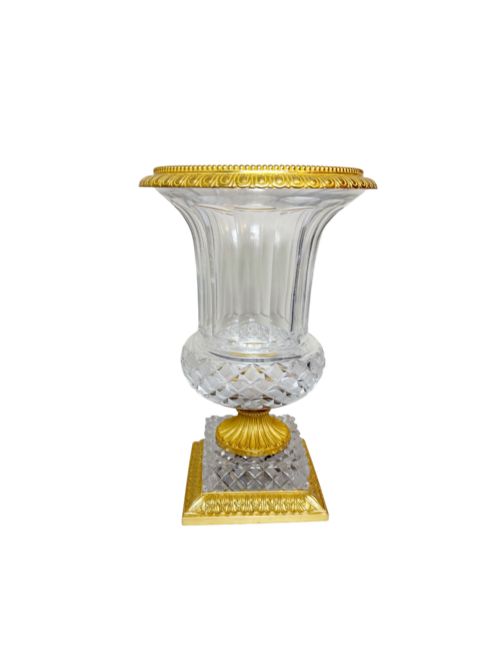
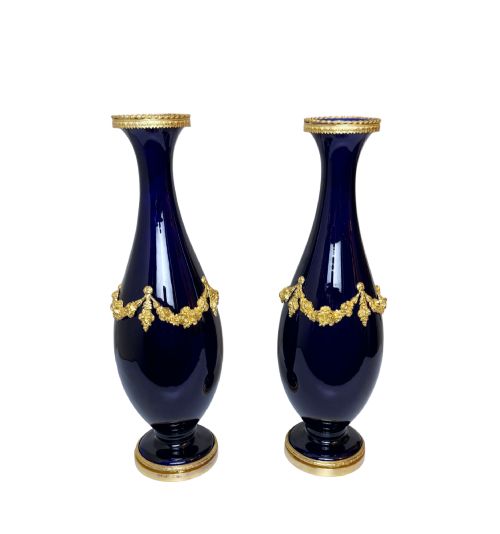
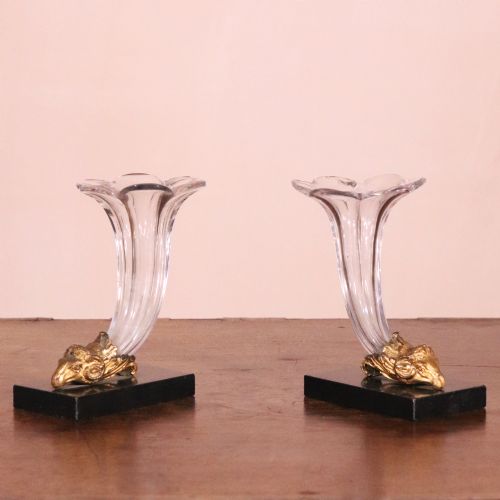
These gilt glass vase examples combine rich metal leaf decoration with blown or moulded vessels from the nineteenth and early twentieth centuries.
Gilt Glass Vase
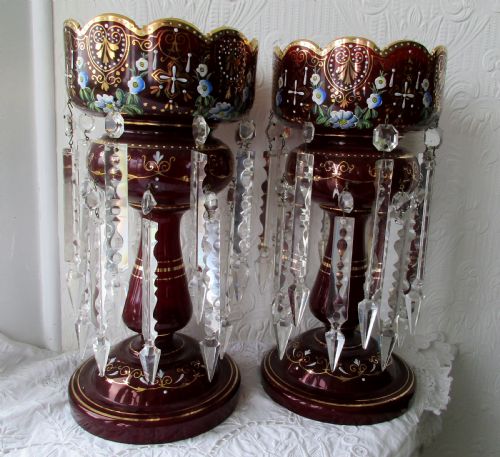
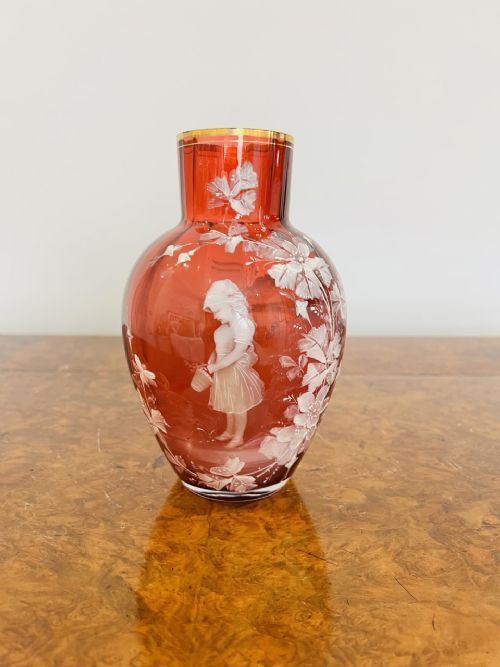
Most entries originate from English, French, and Bohemian makers, frequently taking the form of mantel lustres, handled vessels, or table centrepieces. Ruby, cranberry, and blue glass variants appear alongside clear crystal and opaque opaline grounds.
Beyond standalone vessels, related items include epergnes and decorative bottles carrying painted or etched gilt enrichment. These objects reflect nineteenth-century interior decorative schemes that favoured bright colour and reflective metallic highlights.
Materials and application techniques
Vessels are formed from blown or moulded glass, incorporating layered techniques such as cased glass and overlay cutting to expose contrasting under-colours. Lead crystal and opaque glass provide the structural body for subsequent ornamentation.
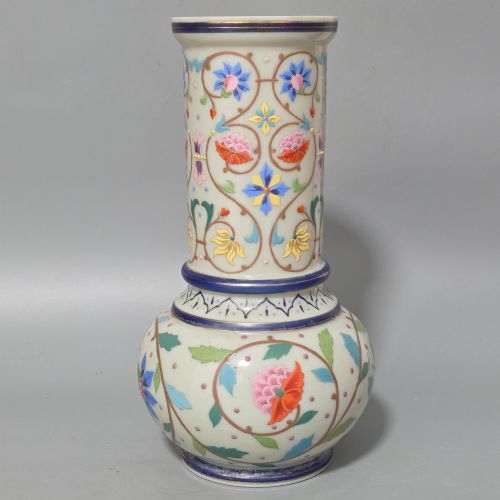
Decoration relies on gold leaf, paste gilding, or ormolu mounts fixed to the glass body. Enamel work and oil paint occasionally accompany the gilding, adding polychrome detail to floral motifs and scrollwork.
Gilt Glass Vase Retail Price Guide 2026
Typical asking prices for gilt glass vase among the pieces listed under this phrase on Sellingantiques today, from the lower quarter to the upper quarter. They describe what is for sale here now, not the wider market.
Some nineteenth-century mantel lustres include detachable crystal prisms designed to chime softly whenever a draft swept through the parlour.
Discerning the work
Quality rests in the crispness of the glass cutting and the hand-applied detail of the gilding. Superior examples display finely etched or painted gold enrichment that adheres securely to the glass surface without rubbing or fading.
The weight of the glass body and the precision of any bronze or ormolu mounts also define the standard of the piece. Heavier crystal formations and deeply carved overlay panels indicate higher manufacturing input.
Thomas Webb·Moser·St Louis·Konstantin Stoitzner
The Gilt Glass Vase Glossary
- Gilt bronze
- An alloy of copper and zinc treated with a gold amalgam or finish to resemble solid gold, frequently used for mounts and bases.
- Mantle lustre
- A decorative glass vase hung with prismatic glass pendants, designed for display on a fireplace mantelpiece.
- Opaline glass
- An opaque or translucent pale glass developed in France during the nineteenth century, often tinted in pastel shades.
- Cased glass
- A vessel composed of two or more distinct layers of glass of different colours fused together before shaping.
- Soliflore
- A narrow-necked vase intended to hold a single flower stem.
Gilt Glass Vase: Frequently Asked Questions
How do I clean a gilt glass vase?
Dust gently with a soft, dry cloth to protect fragile gold leaf and enamel details. Avoid soaking or using chemical solvents that might strip the historic gilding.
Keep the vessel away from direct sunlight and moisture to preserve both the glass colour and the metallic surface finish over time.
Were these pieces used for cut flowers?
Many larger vessels and centrepieces held fresh blooms in domestic settings, while smaller bottles served purely decorative purposes on mantelpieces.
Pendants on lustre varieties reflected candlelight in nineteenth-century drawing rooms rather than holding botanical arrangements.
How can I tell Victorian from later pieces?
Victorian examples often display heavy cranberry or ruby coloration combined with hand-painted floral enamels. Look for pontil marks on the base and traditional nineteenth-century manufacturing traits.
Later twentieth-century iterations tend towards cleaner lines or French Belle Epoque styles with refined gilt appliques.
What causes wear on the gilding?
Frequent handling and aggressive cleaning over generations wear down thin gold leaf layers. Pieces with paste gilding or deep etching retain their metallic brilliance more successfully.
Display location matters since atmospheric humidity and temperature shifts can also impact fragile painted surfaces.