

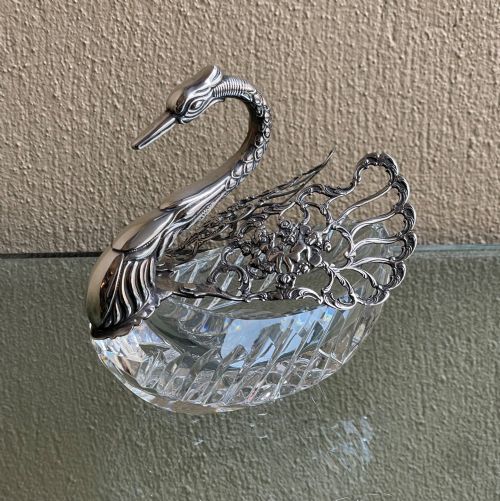


Crystal Centrepiece Bowl
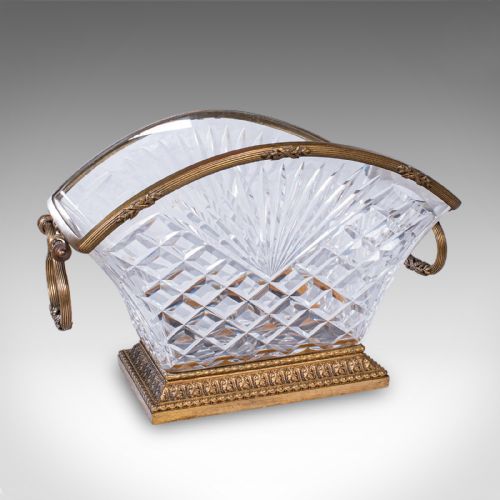
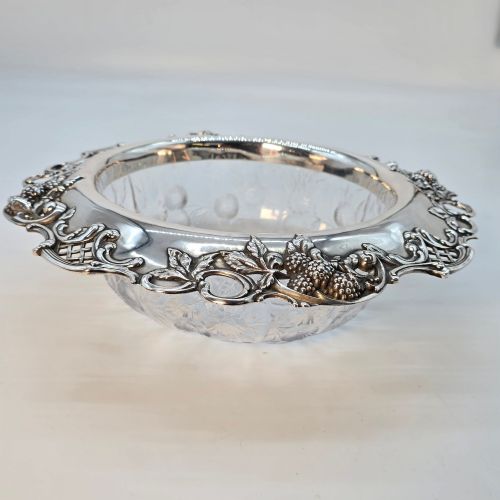
A crystal centrepiece bowl sits low and bright on the dining table, holding fruit or catching the room's light through deep facet cuts.
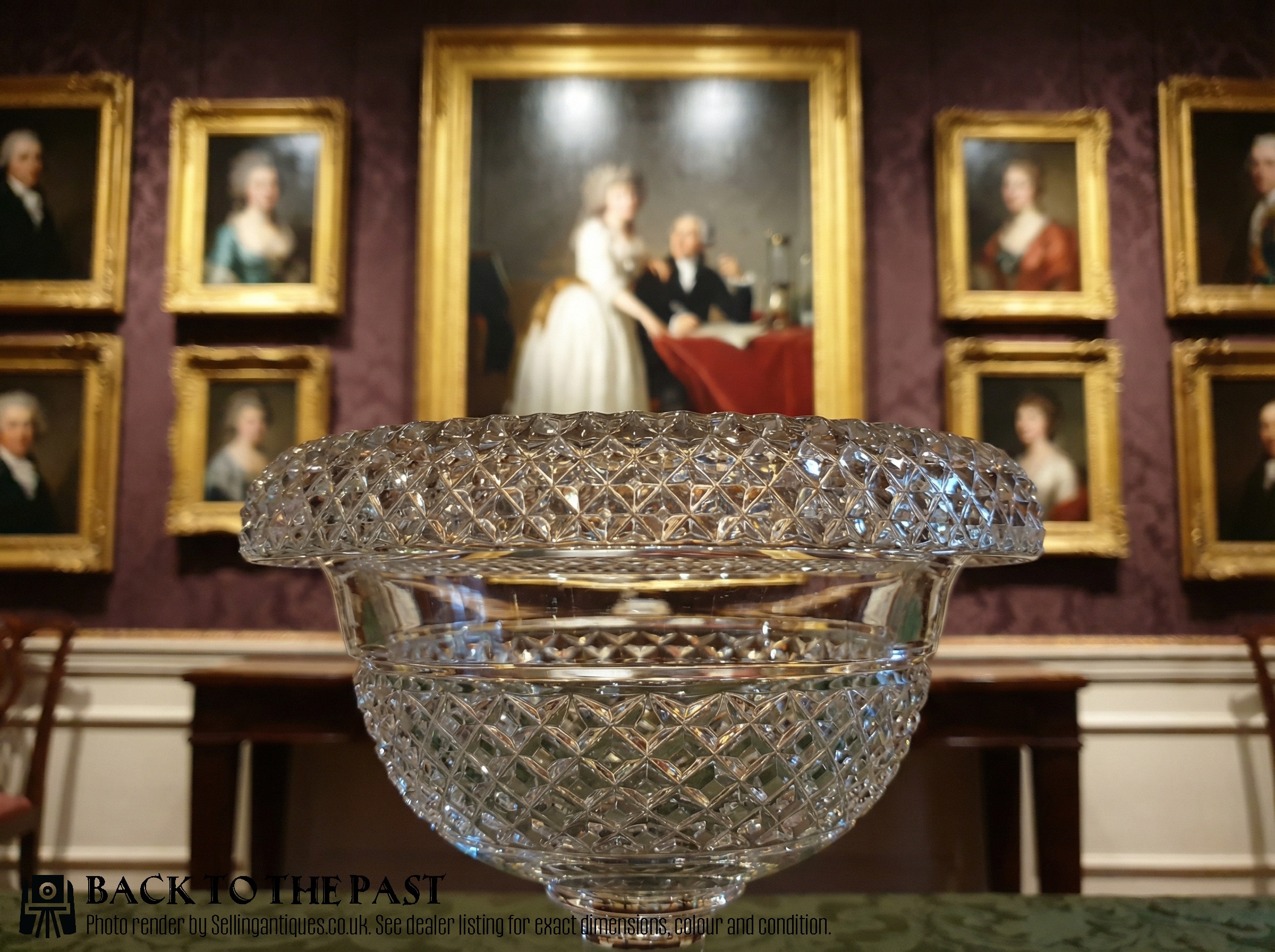
Crystal Centrepiece Bowl
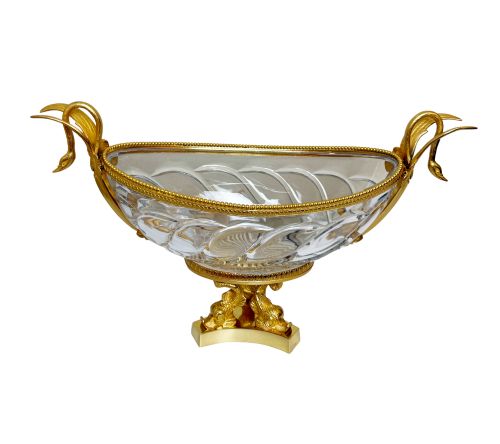
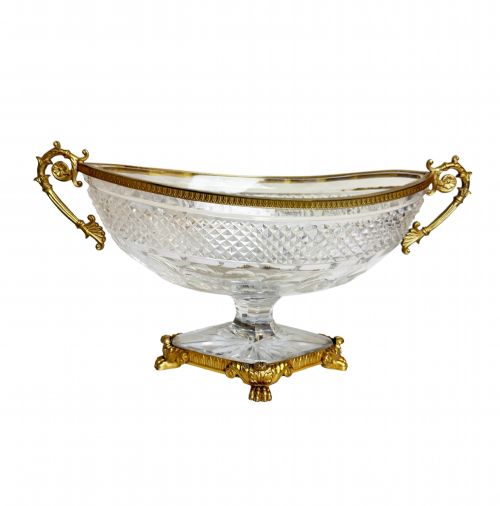
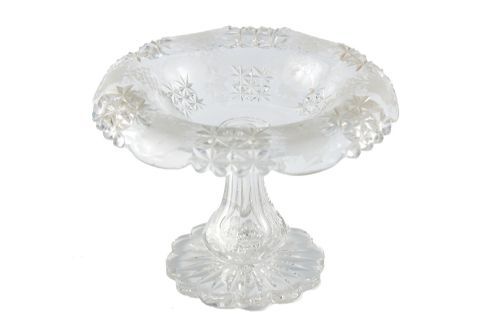
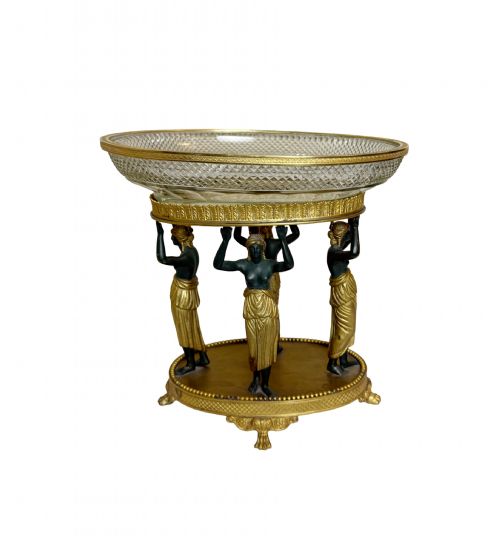
A crystal centrepiece bowl is a substantial table vessel designed to command the middle of a dining table or sideboard, appearing in forms from pedestal comports to low fruit dishes.
The pieces on this page span the Georgian, Victorian, and Edwardian eras, alongside Art Nouveau and Art Deco designs from Britain, France, and Belgium.
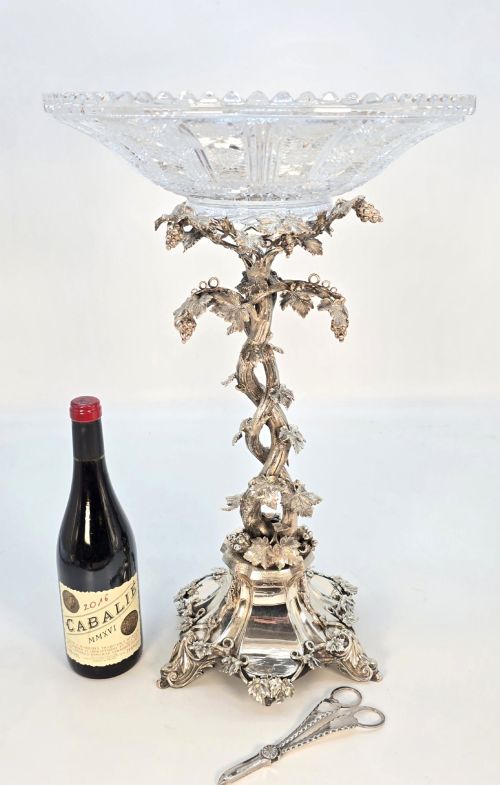
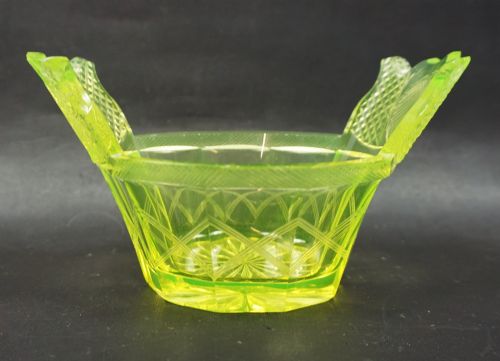
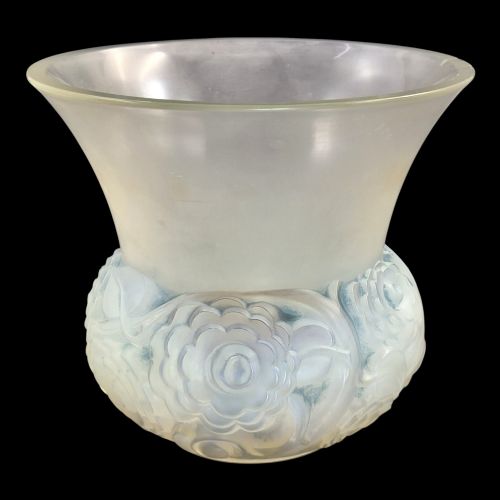
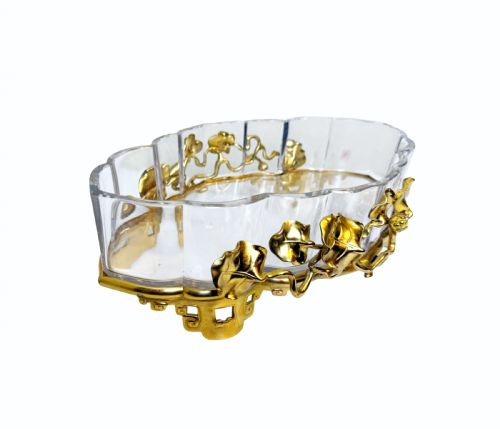
Buyers will encounter heavy lead crystal bowls mounted in gilt bronze or supported by silver plated frames, as well as coloured over-crystal and moulded glass vessels.
How They Were Made
Makers formed the glass bodies through hand-blowing and deep wheel-cutting to create sharp facets, flutes, and hobnail patterns that refract light.
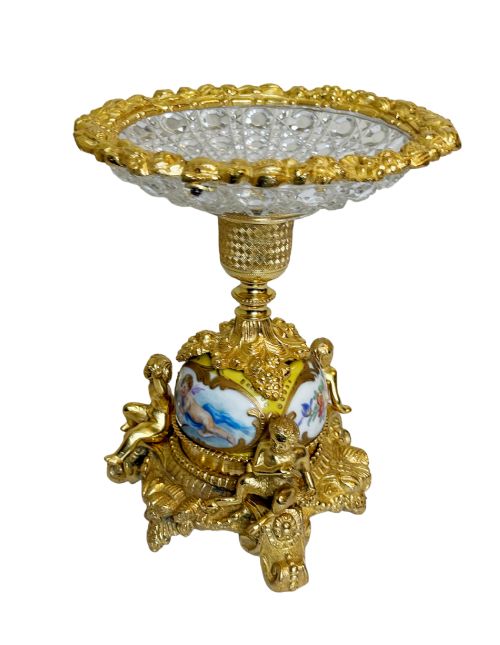
Many significant bowls incorporate metalwork, securing the crystal within cast gilt bronze, ormolu, or silver plated mounts, frames, and stands created by specialist metalworkers.
Some nineteenth-century tables held so many glass baskets and epergne arms that guests had to peek around crystal cherubs to talk.
What Varies in Quality
Quality rests in the crispness of the glass cutting and the weight of the lead crystal, where deeper, sharper facets produce brighter refraction.
The fineness of the cast metal mounts, such as detailed cherubs or chased gilt bronze frames, separates standard vessels from exceptional dining table showpieces.
Tiffany and Co·Val St Lambert·St Louis glassworks·Rene Lalique·Stuart for Liberty
The Crystal Centrepiece Bowl Glossary
- Comport
- A shallow bowl raised on a high pedestal stem, often used for serving fruit at the centre of a table. These pieces stand prominently above other tableware.
- Hobnail
- A raised, faceted glass pattern resembling the hobnails on sturdy boots. This texture creates intense light refraction across the body of the bowl.
- Ormolu
- Gilt bronze mounted onto decorative objects, providing a rich golden contrast to clear or coloured glass. French makers utilised this technique extensively.
- Epergne
- An ornate table centrepiece featuring a central bowl surrounded by smaller hanging baskets or arms for fruit and flowers. They dominate the table setting with complex branching metalwork.
Crystal Centrepiece Bowl: Frequently Asked Questions
How were crystal centrepiece bowls used?
These bowls held seasonal fruits, sweetmeats, or floating flowers to anchor the arrangement of a formal dining table. They were positioned centrally to catch candle or daylight.
During the nineteenth century, larger examples with attached stands or epergne arms served as the focal point of multi-course dinner service displays.
How do I style a centrepiece bowl?
Place the bowl in the middle of a large dining table or wooden sideboard where natural light can pass through the cut facets. Keeping the bowl empty highlights the quality of the glass cutting and metal mounts.
Alternatively, fill the vessel with polished fruit, glass spheres, or seasonal foliage to match the historical manner of display.
How can I tell a Georgian bowl from a Victorian one?
Georgian and early nineteenth-century bowls often feature heavier lead crystal with hand-polished pontil marks on the base and simpler, wider cutting. The glass has a distinct greyish or dense warm tone.
Victorian and later pieces introduce sharper machinery cutting, bolder hobnail patterns, and more complex metal frames in silver plate or gilt bronze.
What is over-crystal glass?
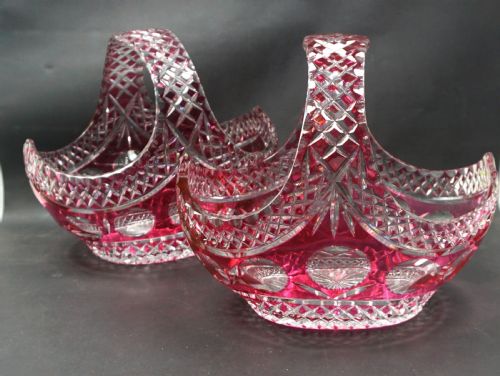
Over-crystal involves casing a layer of coloured glass over a clear crystal core before cutting through the outer layer. This technique reveals the contrasting clear glass beneath in geometric or floral patterns.
Belgian and French makers utilised this method during the early twentieth century to produce deep cobalt, red, and green display pieces.