

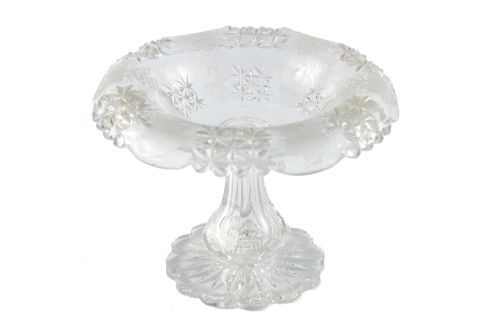


Footed Crystal Fruit Dish
These footed crystal fruit dish examples offer brilliant sparkle and substance, bringing period elegance directly to the modern table.
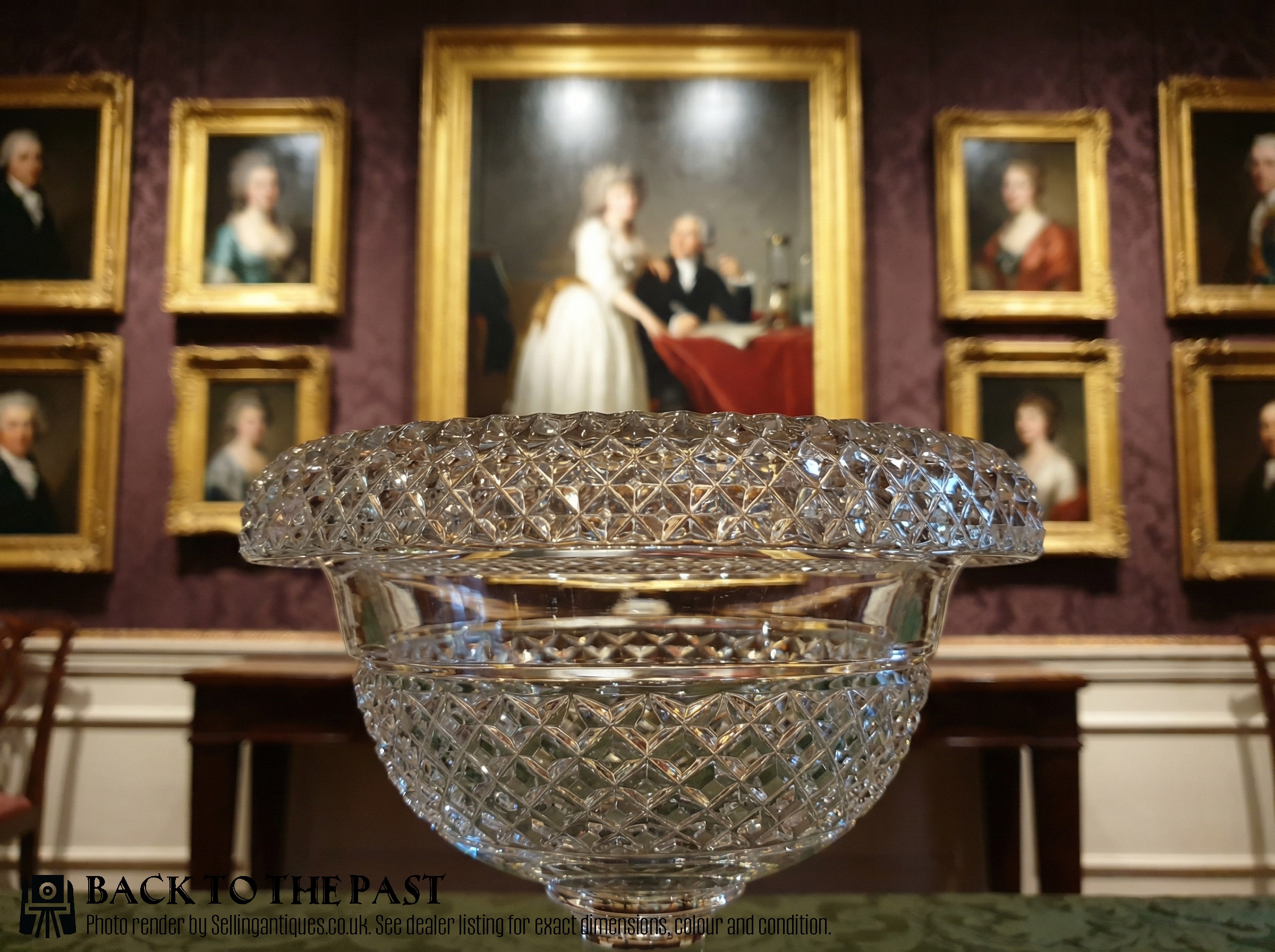
Footed Crystal Fruit Dish
A footed crystal fruit dish combines elevated display with deep vessel capacity for serving fruit or acting as a centrepiece. When exploring this selection, buyers frequently encounter heavy Victorian and Georgian forms alongside refined Edwardian and Art Nouveau creations.
The objects span varied configurations including tazzas, large centrepiece bowls, and decorative dishes raised on distinct pedestals or feet. Pieces range from traditional Irish crystal to Continental works featuring elaborate enamel decoration.
Origins stretch across multiple decades, encompassing nineteenth-century British production as well as renowned French glassworks. Each item serves a dual purpose as both functional tableware and a decorative focal point.
Materials and construction
Makers utilised lead crystal and heavy cut glass, shaping the material through intricate facet-cutting and wheel-engraving to capture light from every angle. This heavy glass composition provides the necessary weight and resonance expected from quality tableware.
Selected examples incorporate surface embellishments such as gold enamel and cased glass layers, demanding precise firing techniques. Artisans fused coloured glass overlays or applied delicate floral motifs directly onto the clear crystal substrate.
Footed Crystal Fruit Dish Retail Price Guide 2026
Typical asking prices for footed crystal fruit dish among the pieces listed under this phrase on Sellingantiques today, from the lower quarter to the upper quarter. They describe what is for sale here now, not the wider market.
Factors determining quality
Depth and crispness of the cut glass facets distinguish superior examples from simpler production, creating sharper light refraction and a more substantial feel in the hand. The clarity of the crystal itself dictates the overall visual impact of the piece.
Integration of specialised decorative elements, such as hand-painted gold enamel poppy motifs or complex cased glass colours, elevates certain vessels above standard utilitarian tableware. The proportion and stability of the pedestal foot relative to the bowl body also indicate the maker level.
St Louis glassworks·François Eugène Rousseau·Baccarat·Waterford
The Footed Crystal Fruit Dish Glossary
- Tazza
- An ornamental pedestal plate or shallow bowl used for serving fruit or small dishes. This elevated form places the contents at eye level on the dining table.
- Lead crystal
- Glass containing metallic oxide that increases refractive index and weight. This material allows for deeper and sharper cutting.
- Cased glass
- A vessel composed of distinct layers of different coloured glass fused together. Artisans cut through the outer layer to reveal the contrasting colour beneath.
- Centrepiece
- A large decorative object placed in the middle of a dining table. These bowls anchor the tablesetting through size and visual weight.
Footed Crystal Fruit Dish: Frequently Asked Questions
What is a footed crystal fruit dish used for?
These elevated vessels serve fresh fruit or function as standalone decorative centrepieces on dining tables and sideboards. Their raised profile gives prominence to whatever is placed inside.
Historically, they formed part of larger tablesetting arrangements during formal dining occasions. Today, collectors frequently display them empty to showcase the cut glass patterns.
How do I identify a Victorian footed crystal fruit dish?
Victorian examples often feature deep, heavy facet cutting combined with substantial pedestals designed to bear significant weight. The glass density and specific decorative motifs align with nineteenth-century manufacturing techniques.
Examining the base and rim finish provides further clues regarding the period of production. Stylistic influences ranging from traditional patterns to early Art Nouveau appear within this era.
Are these dishes made of lead crystal?
Many of the listed pieces consist of lead crystal or heavy cut glass, selected by makers for clarity and refractive brilliance. This material permits deep cutting without compromising structural integrity.
Content varies across different manufacturing traditions and periods represented in the collection. The resulting weight distinguishes them from standard pressed glass vessels.
How should I clean a vintage crystal dish?
Hand washing in lukewarm water using mild detergent protects the delicate surfaces and any gold enamel decoration. A soft cloth prevents scratching during the drying process.
Harsh abrasives and automatic dishwashers should be avoided to preserve the clarity of the lead crystal. Storing the piece away from direct edges prevents accidental impact damage.