


Gilt Framed Winter Landscape
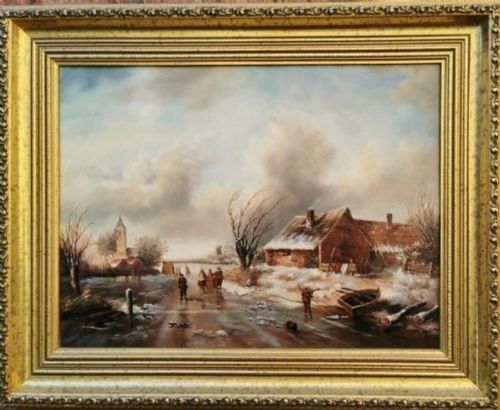
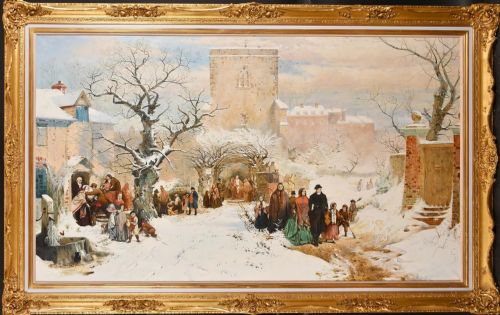
A gilt framed winter landscape brings the stillness of snow and ice indoors, framed in bright gold.
Gilt Framed Winter Landscape
A gilt framed winter landscape captures scenes of snow, ice, and cold weather enclosed within a golden or giltwood frame. These works span the nineteenth century through the mid-twentieth century, capturing rural and urban winter moments.
The selections here showcase oil paintings, waterpaintings, and gouache on canvas, board, and paper. Styles range from Victorian and Edwardian pastoral to Dutch School and Impressionist approaches.
Buyers encounter subjects featuring frozen lakes, stagecoaches in snowstorms, Highland cattle, and quiet townscapes. The combination of cold seasonal imagery and warm metallic framing defines this group of artworks.
Materials and Techniques
Artists painted these winter scenes primarily using oil paint on canvas or board, alongside watercolours and gouache on paper. These mediums allowed painters to layer cold tones of white, grey, and blue to render snow and ice effectively.
The frames are constructed from wood finished with gilt or giltwood to provide a reflective border around the painted surface. Glass often protects works executed on paper or delicate watercolours.
Several winter scenes feature stagecoaches and mail coaches battling through unexpected snowstorms.
Assessing Quality in These Works
Quality rests in the handling of light and atmosphere, where skilled brushwork distinguishes a compelling winter scene from a formulaic composition. The depth of the snow and the rendered chill of the air demonstrate the artist's capability.
The construction and original pairing of the gilt frame matter significantly. A well-preserved giltwood frame that complements the period and scale of the painting elevates the entire piece.
Gaston Cornil·Charles Jones·John Charles Maggs·W. Tatton Winter·William Tatton Winter·A. Winter Shaw·Sydney Kendrick·Pieter Cornelis Steenhouwer·Alexis De Leeuw·John Ritchie·John Richard Worsdale·Ludwig Hermann·Louis Smets·George Augustus Williams·Wilson
The Gilt Framed Winter Landscape Glossary
- Giltwood
- Wood carved and covered with thin gold leaf or gilt preparation. This material provides the bright decorative border typical of these frames.
- Gouache
- An opaque water-based paint that allows for dense highlights of snow and winter skies on paper. It often appears alongside watercolour in these works.
- Oil on Canvas
- Pigment mixed with drying oil applied to a stretched cloth support. This combination forms the durable surface for many nineteenth-century landscapes.
- Watercolour
- Pigments suspended in a water-based solution applied to paper to achieve translucent washes of winter light. It requires glass protection.
- Genre Painting
- Art depicting scenes from everyday life, such as figures collecting firewood or travelling by stagecoach in winter. These narratives add human scale to the landscape.
Gilt Framed Winter Landscape: Frequently Asked Questions
What periods do these paintings come from?
The pieces span from the mid-nineteenth century through the mid-twentieth century. Works date across the 1860s, 1870s, 1880s, and into the Edwardian and mid-century eras.
This broad timeline encompasses Victorian narrative scenes as well as later Impressionist interpretations of snow and ice.
How should I hang a gilt framed winter landscape?
Keep these artworks away from direct sunlight and damp conditions to protect both the canvas and the gilt frame. Proper placement preserves the integrity of the gold leaf and the paint layers.
Ensure the wall fixings match the weight of the wooden frame, particularly for larger oil paintings.
What subjects are common in these winter scenes?
Common subjects include frozen lakes with figures skating, stagecoaches caught in snowstorms, and rural cottages in the snow. Urban townscapes and quays on frozen rivers also appear.
Animals feature frequently, including Highland cattle and sheep enduring winter conditions.
How do I distinguish watercolours from oil paintings?
Watercolours are executed on paper and sit beneath a protective layer of glass to prevent moisture damage. They exhibit translucent washes and delicate handling.
Oil paintings utilise canvas or board supports with textured paint layers that do not require glass for protection.