




Vintage Horse Carriage Painting
These vintage horse carriage painting selections bring the momentum and charm of traditional coaching days straight onto the wall.
Vintage Horse Carriage Painting
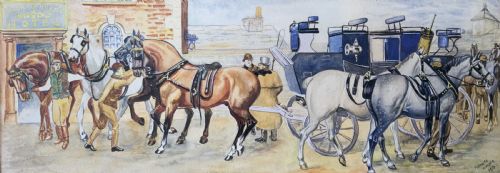
A vintage horse carriage painting captures the movement of nineteenth-century and early twentieth-century transport, spanning street scenes, rural coaching routes, and hunting pursuits. Buyers searching this phrase encounter framed watercolours and oil paintings depicting stagecoaches, cabs, and horse-drawn traps.
The selections on this page lean heavily towards traditional British sporting, Edwardian folk art, and French street scenes. Artists such as George Wright, Samuel Henry Alken, and Philip Henry Rideout dominate the pictorial records alongside unsigned works.
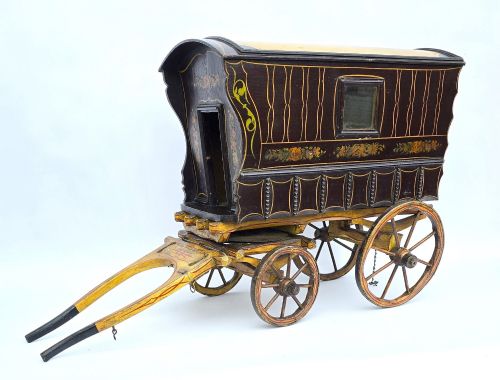
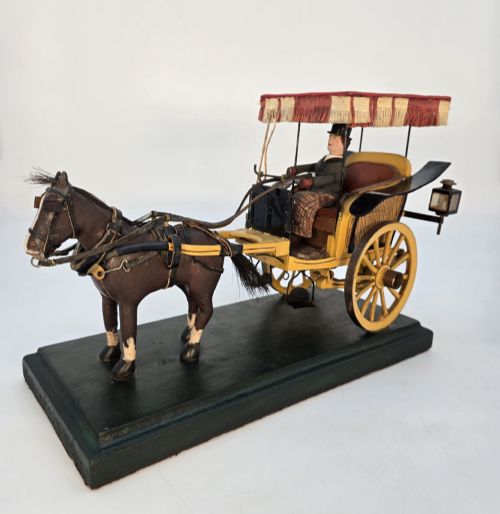
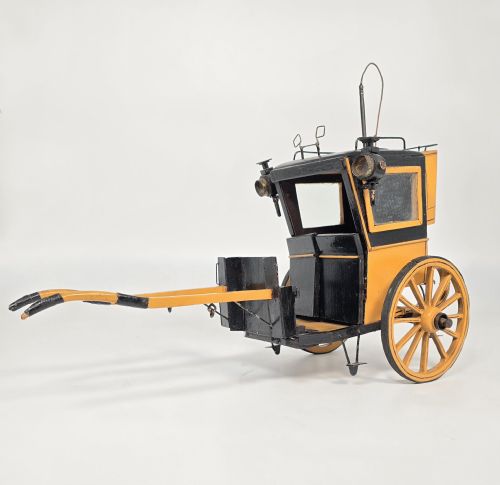
Beyond flat artwork, the category occasionally stretches to include wooden models and folk art representations of carriages and cabriolets. Most surviving examples date from the Victorian era up through the nineteen-twenties, reflecting a vanished age of animal-drawn transit.
Evaluating quality and execution
Quality rests upon the artist's command of equine anatomy and the mechanical perspective of carriage construction. Stronger pieces convey genuine kinetic energy in the stride of the horses and the tilt of a two-wheel trap, whereas weaker works stiffly freeze the subject.
The handling of light and atmosphere separates competent decorative items from finer artistic records. Paintings that successfully evoke London fog, twilight street scenes, or the glare of winter snow demonstrate superior tonal control and observation.
R.D. Roberts·Albert Ludovici Jnr·George Wright·William Manners·Charles James Lauder·Philip Henry Rideout·Samuel Henry Alken·Eduard Leon Cortes·John Richard Worsdale
The Vintage Horse Carriage Painting Glossary
- Watercolour painting
- A picture executed on paper using water-soluble pigments that rely on the white of the paper for luminosity. These works require protective glass framing to prevent fading.
- Oil painting
- A medium consisting of pigments suspended in a drying oil, typically applied to canvas or wood panels. This technique allows for rich texture and deep colour saturation.
- Folk art
- Artistic work created within a traditional culture by self-taught or untrained makers. In this context, it often describes scratch-built carriage models and vernacular paintings.
- Hansom cab
- A type of two-wheeled horse-drawn carriage with the driver seated behind the passengers. It was a common sight on nineteenth-century urban streets.
- Genre painting
- The pictorial representation of scenes from everyday life. These works depict ordinary people engaged in common activities, such as hailing a cab or travelling by coach.
Vintage Horse Carriage Painting: Frequently Asked Questions
What periods do these paintings cover?
The available pieces primarily span the nineteenth century and the early decades of the twentieth century, reflecting the peak of horse-drawn transit before the dominance of the motor car.
Specific dates on signed works frequently land between eighteen-seventy and nineteen-twenty, encompassing Victorian realism and Edwardian charm.
Are these paintings original works?
The selection consists of original period paintings executed in oil or watercolour, rather than modern mechanical reproductions.
Signatures from listed artists and period framing help confirm the authenticity and age of individual pieces.
How should I hang and care for them?
Watercolour paintings require hanging away from direct sunlight to prevent the pigments and paper from fading over time.
Keeping oil paintings in rooms with stable humidity levels protects both the canvas and the wooden frames from warping or cracking.
What subjects appear besides coaching?
While rural coaching scenes and stagecoaches are common, the selection also includes urban street scenes from Paris and London.
Equestrian sporting scenes, fox hunting, and winter weather vignettes frequently accompany the transport themes.