
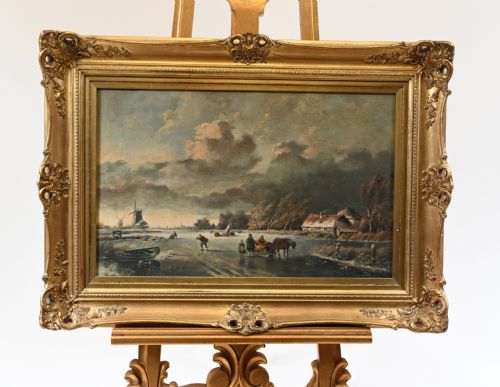


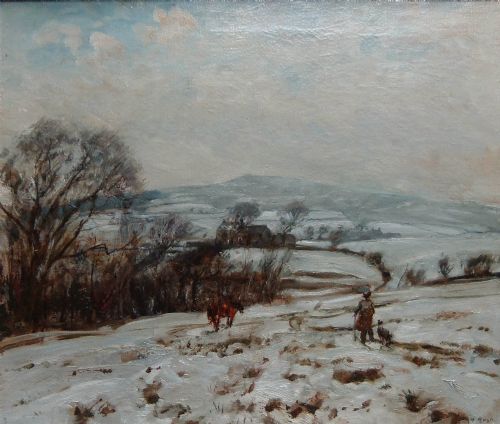

Oil Canvas Winter Scene
An oil canvas winter scene brings the quiet chill of frost, snow, and bare boughs straight into a room through rich brushwork.
Oil Canvas Winter Scene
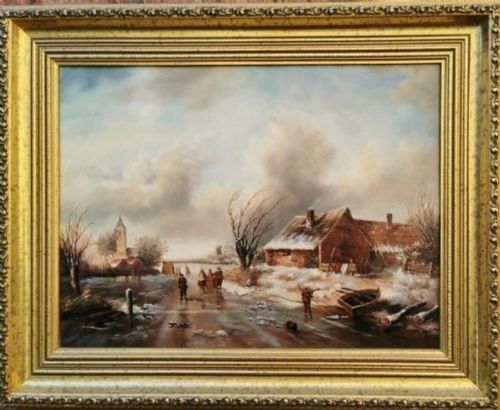
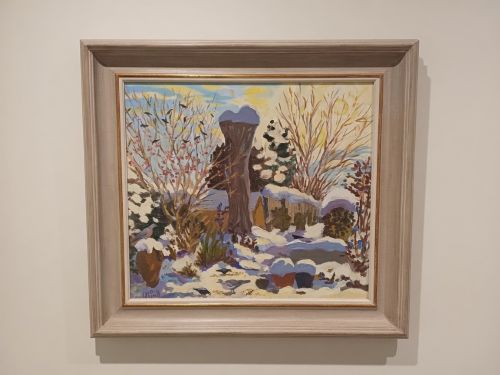
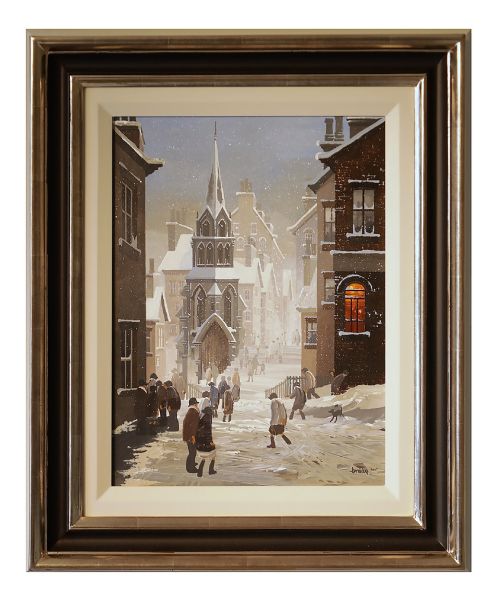
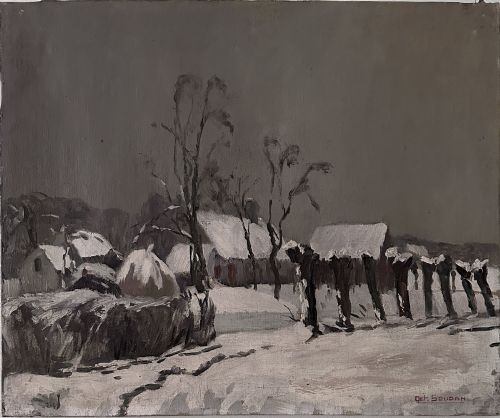
An oil canvas winter scene captures cold weather, snow-covered fields, frozen rivers, and seasonal village life through layered oil paint. These works range from nineteenth-century coaching scenes and Dutch landscapes to mid-century British regional views and twentieth-century impressions.
The most common pieces on this page span the late nineteenth century through to the mid-twentieth century, featuring rural valleys, village streets, and ice skaters. Painters utilise the medium to render crisp winter light, pale skies, and deep snowdrifts across canvas grounds.
Subjects stretch from traditional British pastoral valleys and coaching halts to continental frozen waterways and nocturnal country settings. Each canvas records a specific regional light and atmospheric frost, framed securely in period wood mouldings.
Materials and construction
Artists painted primarily with oil paint on woven canvas stretched over wooden frames, often building texture with thick impasto to suggest piled snow. The physical support relies on sturdy wood stretchers that hold the canvas taut through decades of seasonal temperature shifts.
Surrounds typically consist of original or period wood frames, sometimes finished with gilt details that complement the cooler tones of the snowy palette. Pigments were applied with brushes and palette knives, building up heavy layers of lead white, earth tones, and muted blues.
Several Victorian stagecoaches brave permanent blizzards on canvas, carrying passengers who will forever remain stuck in the snow.
Assessing quality and execution
Quality rests in the handling of light and atmosphere, distinguishing a flat record from a canvas that genuinely evokes freezing air and low winter sun. Stronger works demonstrate confident brushwork, accurate perspective in snowscapes, and a harmonious balance between shadow and bright white highlights.
The depth of composition and the artist's ability to render complex forms like horses, stagecoaches, and bare timber against snow define the upper tier. Lesser pieces often rely on stiff repetition and muddy mixing, whereas accomplished hands manage translucent ice and crisp morning frost with ease.
John Charles Maggs·Herbert Royle·Ernest Higgins Rigg·Lucy Pratt·Brian Shields Braaq
The Oil Canvas Winter Scene Glossary
- Impasto
- Paint applied thickly to a canvas, standing out in relief to give texture to drifts of snow and frozen ground. This technique catches the light and adds a tangible sense of cold depth.
- Gilt
- A gold leaf or gold-coloured finish applied to wood frames. It warms the surrounding wall and contrasts sharply with the chilly palette of the painting within.
- Dutch School
- A collective term for seventeenth-century and later Dutch painters renowned for landscape and domestic subjects. Their influence persists in moody winter canals and frozen townscapes.
- Genre painting
- Artwork depicting scenes from everyday life, such as figures skating on ice or stagecoaches braving a snowstorm. These pieces offer a narrative glimpse into past social history.
Oil Canvas Winter Scene: Frequently Asked Questions
How should I clean an oil canvas winter scene?
Dust gently with a soft, dry brush and avoid all water, chemical sprays, or rubbing the painted surface.
For deeper cleaning or varnish removal, consult a professional conservator to prevent damage to the delicate oil layers.
Are these paintings genuine antiques?
The selections span from the nineteenth century through the mid-twentieth century, authenticated by materials, stretchers, and framing methods.
Examine the canvas back and wood frame construction to verify the age and original mounting of each piece.
How do I hang a heavy framed oil painting?
Use robust wall fixings anchored directly into studs or masonry rather than relying on standard plaster hooks.
Ensure the hanging wire or brass rings on the wood frame can support the combined weight of the canvas and heavy moulding.
Why do some winter scenes look brighter than others?
Artists used varying pigment mixtures and varnish states to capture different times of day, from low morning light to bright midday glare on snow.
Older varnishes also yellow over time, casting a warmer tone across whites and blues that were originally crisp.