
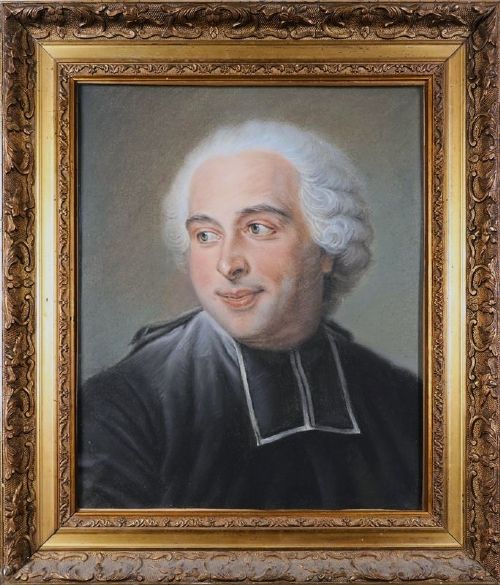
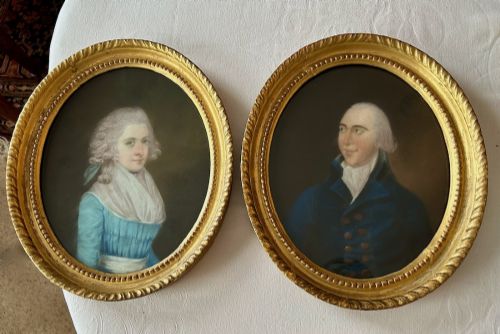


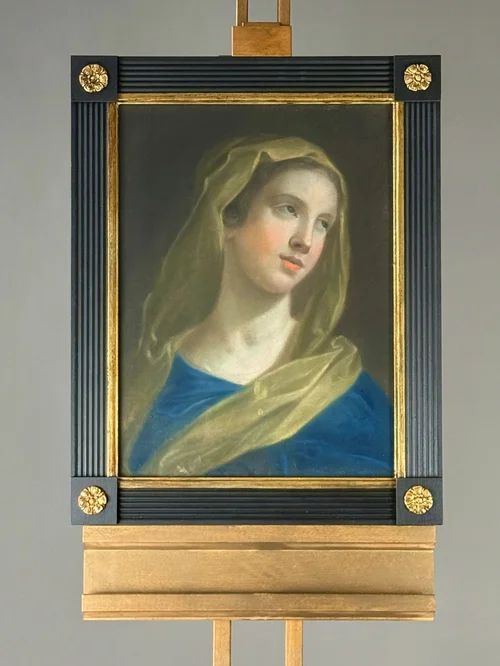

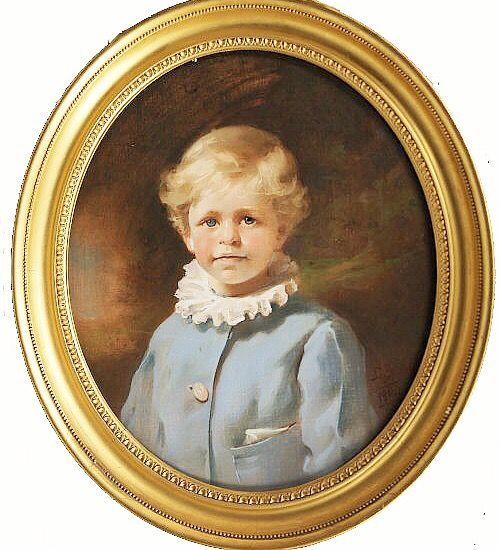


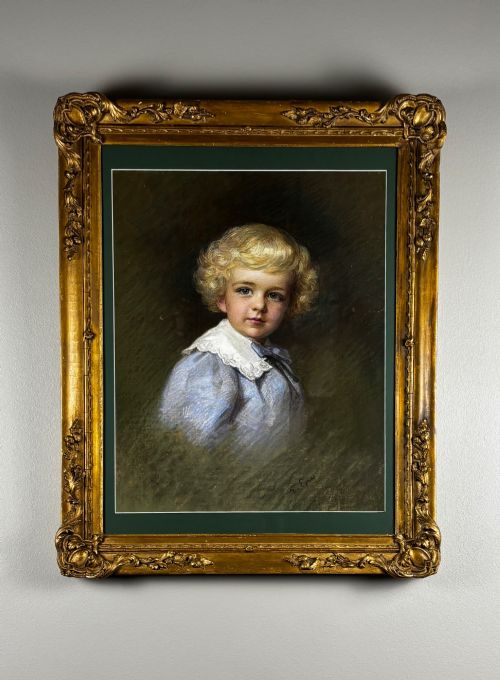


Gilt Framed Pastel
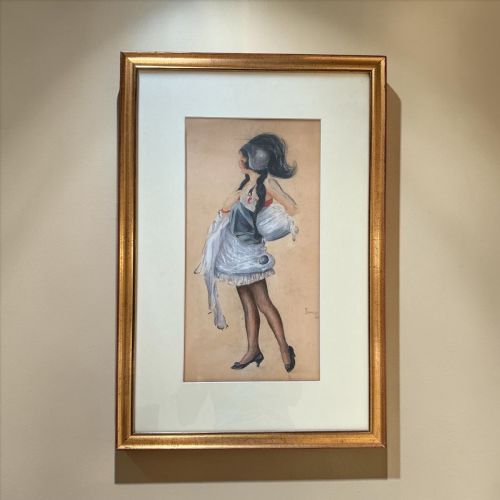
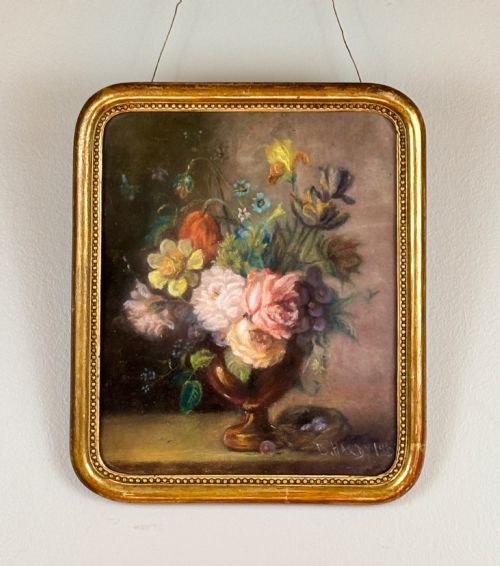
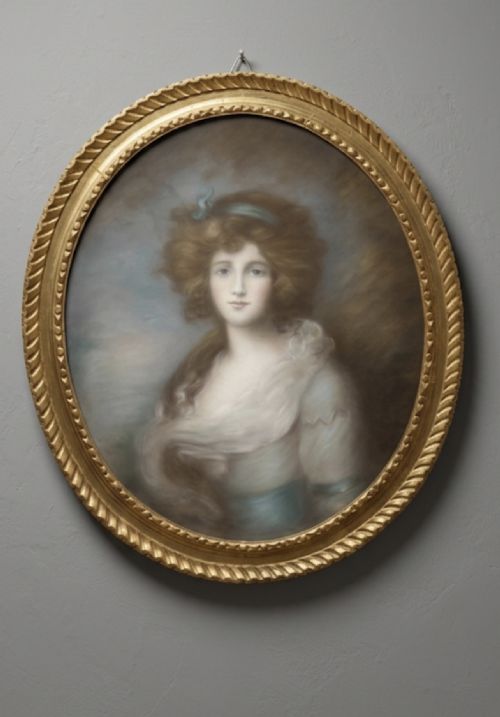
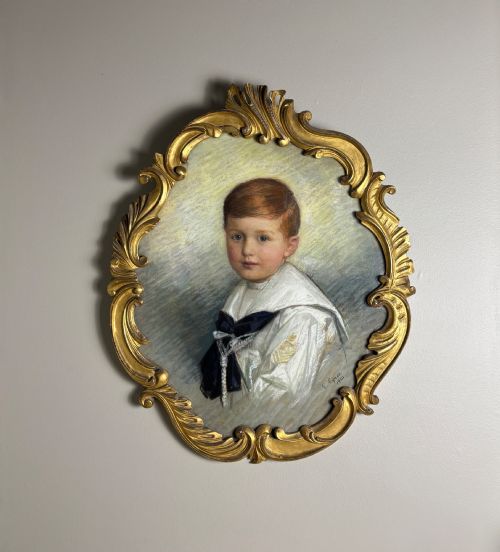
Gilt framed pastel works combine the delicate pigment of dry drawing with the rich ornament of period surrounds.
Gilt Framed Pastel
A gilt framed pastel brings together dry chalk pigment on paper, card or canvas and a decorative timber moulding finished in gold leaf or giltwood. When you search for a gilt framed pastel, you meet portraiture, landscape and still life drawn from the eighteenth century through to the mid-twentieth century.
The format is dominated by portrait paintings and portrait miniatures originating from the Georgian, Victorian and Edwardian eras. These pieces lean heavily on the visual language of the French School and British fine art traditions, housed in frames that range from restrained Regency profiles to elaborate Italian Baroque surrounds.
Mid-century examples also appear, stretching the category towards animal studies, landscapes and post-impressionist figures executed in pastel on paper. The core constant across these varied centuries is the union of fragile chalk media with protective glass and a gilded border.
Materials and technique
Pastel work relies on compressed dry pigment applied directly to paper, card or canvas, often supported by charcoal or gouache for underlying structure. Because the dry chalk lacks a binder to fix it permanently, these drawings require immediate glazing behind glass to prevent the pigment from dusting away.
The surrounding frames are constructed from timber, carved or moulded, then covered in gold leaf or giltwood to create a reflective metallic border. This combination protects the delicate friable surface from atmospheric moisture and physical contact while framing the composition.
Among the historical portraits, three black Pekingese dogs and a stylish cat in oil pastels claim their own moments of furry charm.
Quality factors
Quality in these works rests upon the draughtsmanship of the pastel itself, where surety of line and subtlety of tonal blending separate accomplished portraiture from stiff imitation. The handling of light on fabric and skin reveals the true skill of the hand behind the chalk.
The housing matters equally, with period giltwood or gold leaf frames carved by hand holding greater integrity than later cast replacements. Original glass and undisturbed backing boards preserve the internal condition of the pigment over centuries.
James Sharples·Emily Eyres·Benedetto Luti·John Russell·Joseph Knight·Antoine Calbet·Nathaniel Bermingham·Aubrey Sykes
The Gilt Framed Pastel Glossary
- Pastel
- A dry art medium consisting of powdered pigment and a binder rolled into sticks. It permits rapid blending of tone directly on the drawing surface.
- Giltwood
- Timber, usually carved gesso on pine or hardwood, coated in gold leaf or metal leaf. This material provides the reflective border typical of period frames.
- Gouache
- An opaque water-based paint frequently used alongside pastel to build dense highlights and solid passages. It adds structural weight to the drawing.
- Portrait miniature
- A small-scale painting executed with fine precision. These works capture likenesses within intimate dimensions often intended for personal keeping.
Gilt Framed Pastel: Frequently Asked Questions
Where should I hang a gilt framed pastel?
Hang these works away from direct sunlight and sources of damp or excessive heat, such as open fires or radiators. Ultraviolet rays fade fugitive pastel pigments over time, while humidity damages both the paper support and the gesso beneath the gilding.
An interior wall with stable ambient temperature and indirect light provides the ideal environment for long-term preservation. Ensure the wall fixings match the weight of the timber and glass.
How can I tell a genuine period frame from a modern copy?
Examine the construction corners, the type of gesso preparation, and the wear patterns on the gold leaf. Period gilt frames show subtle shrinkage cracks in the gesso and thinning of the gold where handling occurred over generations.
Backboards made of old timber secured with handmade nails or early screws also indicate period assembly. Modern replacements often use uniform synthetic moulding without the historical patina.
Why are pastels often covered with glass?
Pastel is pure dry pigment held to the paper by minimal binder, making the surface extremely fragile and easily disturbed by touch or air movement. Glass creates a protective physical barrier that stops airborne dust and accidental smudging.
Historically, makers placed a spacer or mount between the drawing and the glass to prevent the chalk from touching the glazing. This gap remains essential for preventing condensation against the delicate surface.