

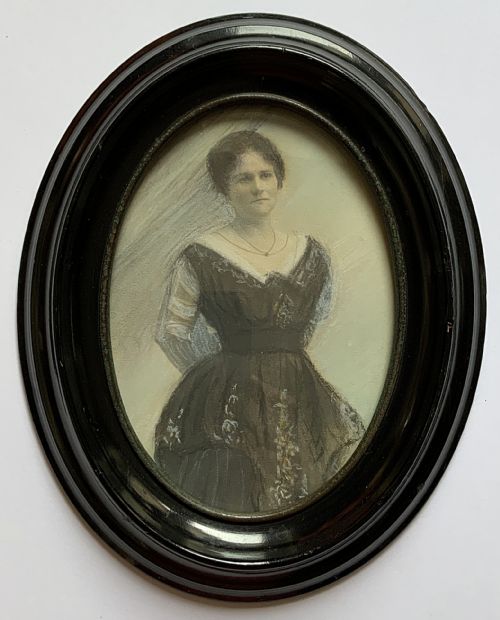


Oval Pastel Painting
An oval pastel painting brings the soft grain of chalk and paper into a domestic interior, prized for intimate portraiture.
Oval Pastel Painting
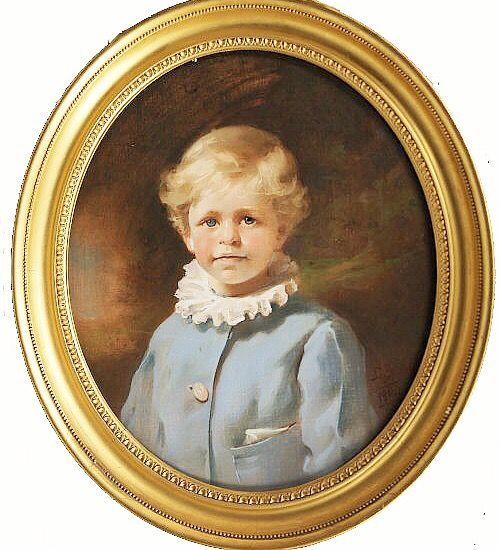
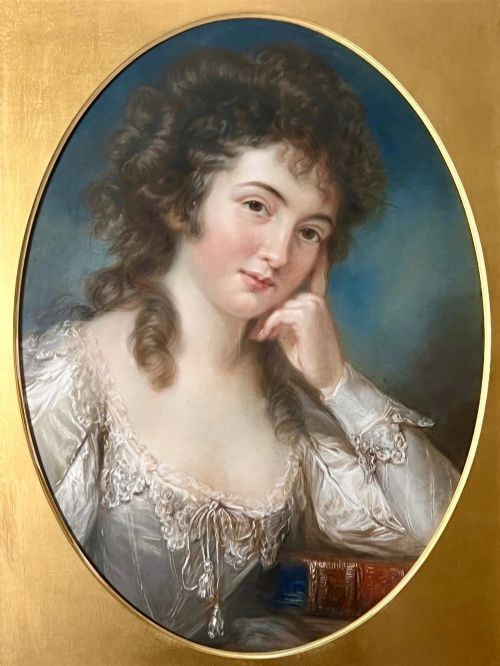
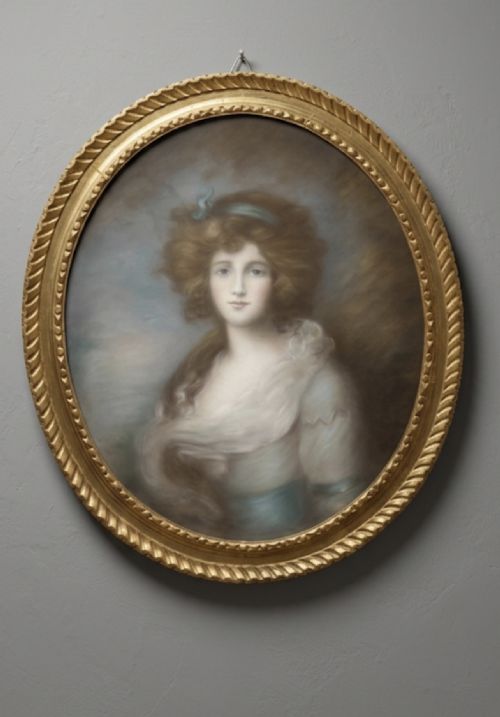
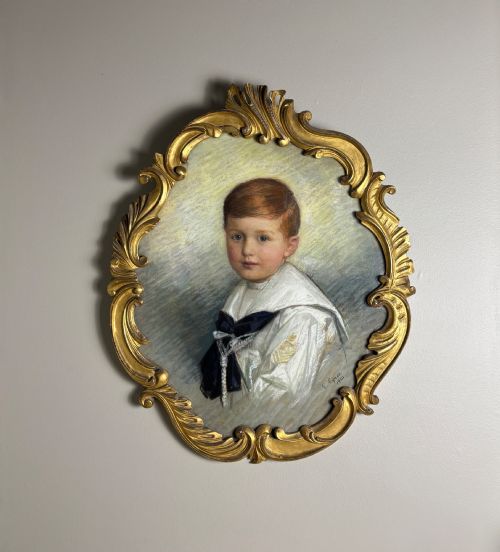
An oval pastel painting is primarily a portrait, capturing sitters ranging from Georgian notables to Victorian children and French subjects. These works take the form of miniature paintings and wall art, often framed within curved wooden borders.
The pieces on this page span the eighteenth and nineteenth centuries, moving through the Edwardian era into the early twentieth century. Portrait miniatures and larger framed drawings dominate the selection, executed by named artists and anonymous schools alike.
Materials and construction
Finished works sit behind protective glass to prevent pigment loss, housed within giltwood or plain wooden frames shaped to match the oval format of the composition.
One nineteenth-century French painting captures a woman feeding flowers to a goat.
Distinctions in quality
Quality rests in the handling of the chalk and the preservation of the surface beneath the glass. Finer examples display deft facial modelling and confident line work that retain their freshness over the centuries.
The integration of the frame matters equally, with original giltwood surrounds enhancing the piece. Weaker examples show surface blurring or later reframing that alters the intended proportions of the oval composition.
James Sharples·Leon Sprinck·John Russell·Thomas Gainsborough·Emily Eyres·J Bizo·Robin Watt·Gerrit Schipper
The Oval Pastel Painting Glossary
- Pastel
- A dry painting medium consisting of powdered pigment and a binder rolled into sticks. It produces a velvety texture that requires glass protection.
- Giltwood
- Wood carved and coated with gold leaf or gold paint. This material forms the ornate frames typical of antique portraiture.
- Portrait miniature
- A small-scale painting designed for intimate viewing. These works capture individual likenesses in precise detail.
- Chinoiserie
- A European artistic style reflecting Chinese motifs and decorative techniques. It appears in specific stylistic interpretations across decorative arts.
Oval Pastel Painting: Frequently Asked Questions
How do I hang an oval frame?
Oval frames require a secure single wall hook positioned to catch the hanging cord or ring at the upper rear. Ensure the fixing matches the weight of the wood and glass.
Position the centre of the painting at eye level for balanced viewing within a room arrangement.
Why are pastels placed under glass?
Pastel pigment sits loosely on the paper surface without strong liquid binders. Glass prevents accidental smudging and airborne dust from disturbing the chalk.
Keep the glazing intact to protect the fragile medium from physical disruption.
Can I clean the glass on my painting?
Use a soft cloth slightly dampened with water or standard glass cleaner applied to the cloth rather than the frame. Keep moisture away from the wooden edges and the paper interior.
Take care not to press too heavily on the glass during cleaning to avoid shifting the frame contents.
How do I date a nineteenth century portrait?
Examine the sitter's clothing, hairstyle, and the construction of the wooden frame behind the work. Signatures, dates inscribed on the paper, and backing materials also offer chronological clues.
Compare the artistic style to known works from periods like the Victorian or Edwardian eras.