
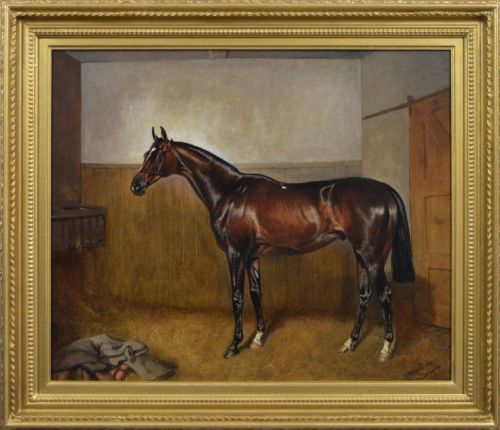
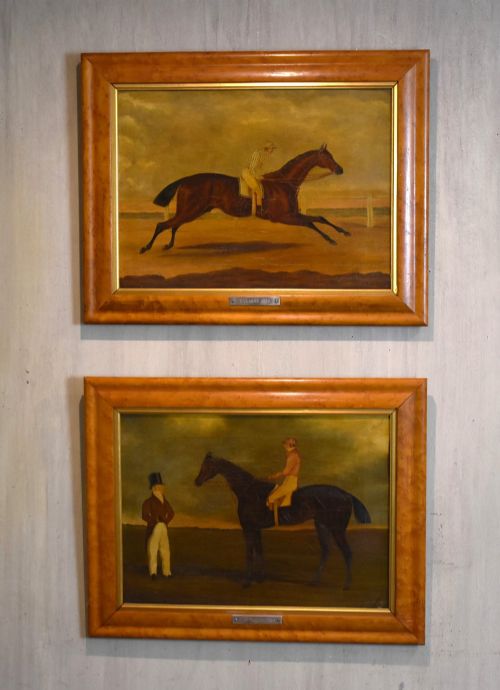


Gilt Framed Horse Print
A gilt framed horse print brings the energy of the stables and the turf directly onto your wall, combining equestrian history with classic framing.
Gilt Framed Horse Print
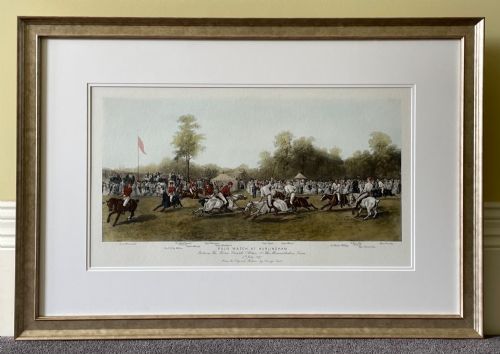
When searching for a gilt framed horse print, you encounter a variety of nineteenth century lithographs, twentieth century photographic sets, and hand-coloured engravings depicting polo matches, hunting meets, and celebrated racehorses. These works capture sporting heritage through depictions of famous thoroughbreds, showjumpers, and country pursuits.
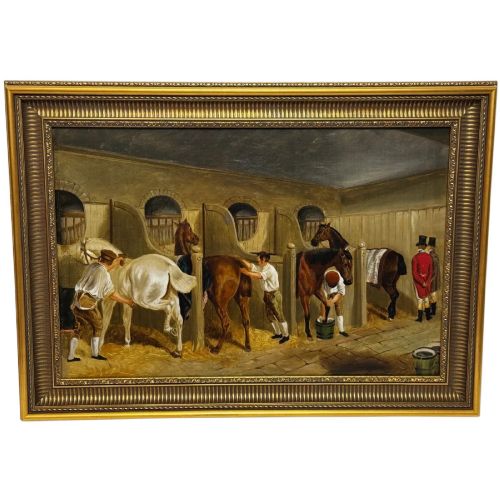
The pieces on this page span several distinct eras, stretching from Victorian sporting art and Edwardian racehorse portraits through to mid-century photographic portfolios. You will find individual framed plates alongside matched sets of hunting prints and larger oils.
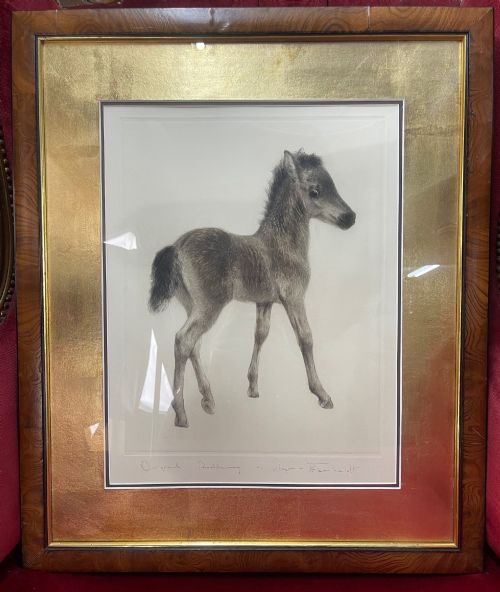
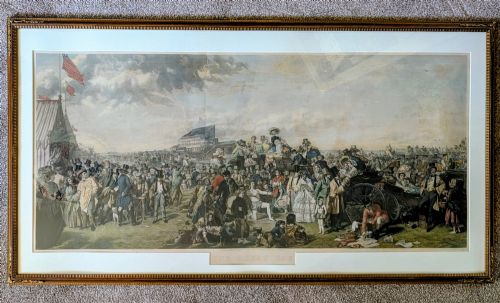
Subjects range from quiet studies of foals to dynamic scenes of the Derby Day and coastal roads, all unified by their traditional framing. Each item preserves a specific chapter of equine history on paper or canvas.
Materials and construction
The primary supports consist of paper, canvas, and glass, carrying printed lithographs, aquatints, drypoints, or oil paints. Artists and publishers utilised traditional techniques such as hand-colouring over black and white plates or direct oil application.
Frames are constructed from wood finished with gold leaf or gilt wood, providing the characteristic metallic border. Glazing appears frequently on works on paper to protect the delicate medium underneath.
Listings feature works spanning the Victorian era through the mid-twentieth century, utilising oil, paper, and wood.
Assessing quality and finish
Quality rests in the crispness of the underlying print line, the depth of the oil pigment, and the originality of the gilt frame. Finer examples display meticulous hand-finishing on the paper and substantial, well-carved wooden mouldings with authentic gilding.
The importance of the subject matter and the skill of the original artist or publisher elevate certain pieces above standard decorative prints. Condition of both the image surface and the surrounding gold leaf determines the overall desirability.
Kurt Meyer-Eberhardt·William Powell Frith·John Alfred Wheeler·John Frederick Herring Snr·Charles Faulkner·Alfred Wheeler·Isaac Cullin·Victor Adam·Edward Lloyd
The Gilt Framed Horse Print Glossary
- Lithograph
- A planographic printing process using a stone or metal plate. This technique allows for detailed tonal gradations popular in nineteenth-century sporting portfolios.
- Drypoint
- An intaglio printmaking process where an image is scratched directly into a metal plate with a sharp needle. It creates soft, velvety lines prized in fine art prints.
- Aquatint
- An intaglio print technique that produces tonal areas resembling watercolour washes. It was frequently used for nineteenth-century sporting and hunting scenes.
- Crystoleum
- A Victorian method of applying a coloured print to the inside of concave glass and then oiling it. This process gives the image a luminous, dimensional quality.
- Equestrian
- Relating to horse riding and horse-drawn vehicles. In art, it denotes subjects focused entirely on horses and their handlers.
Gilt Framed Horse Print: Frequently Asked Questions
How do I date a horse print?
Dating relies on the printing technique, paper quality, and stylistic markers within the image. Victorian works often show hand-colouring and specific typography.
Later twentieth-century photographic sets carry distinct publishing details or framing styles characteristic of their decade.
Are these prints original antiques?
The selection includes period nineteenth-century lithographs, engravings, and original oil paintings alongside twentieth-century photographic plates. Each listing specifies the manufacturing period.
Original works on paper use period printing methods rather than modern digital reproduction.
How should I hang a gilt framed print?
Gilt frames perform best against dark or neutral walls that allow the gold leaf to catch the light. Ensure the wall fixings match the weight of the wooden frame and glass.
Keep pieces away from direct sunlight to prevent fading on the paper and canvas surfaces.
What is a sporting print?
Sporting prints depict rural pastimes, horse racing, hunting, and coaching scenes popular among British collectors. They served as both decoration and records of famous events and animals.
Publishers often issued them in series or matched sets for country houses.