
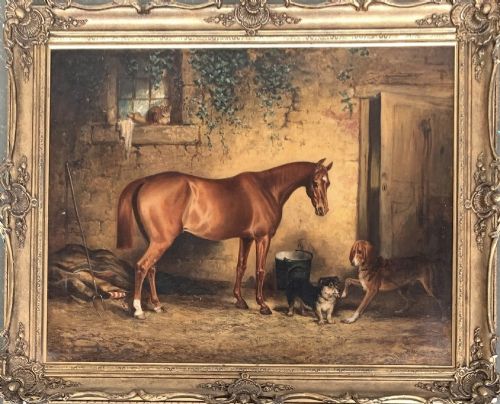
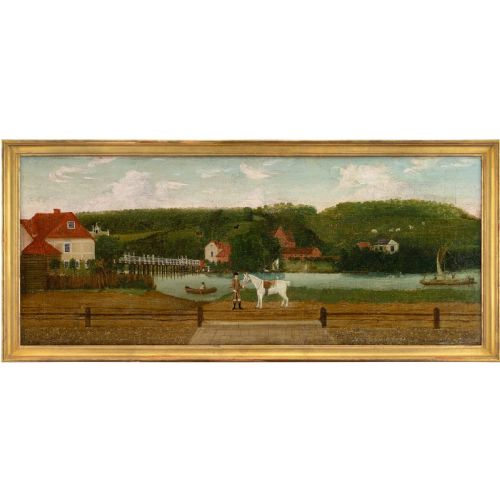
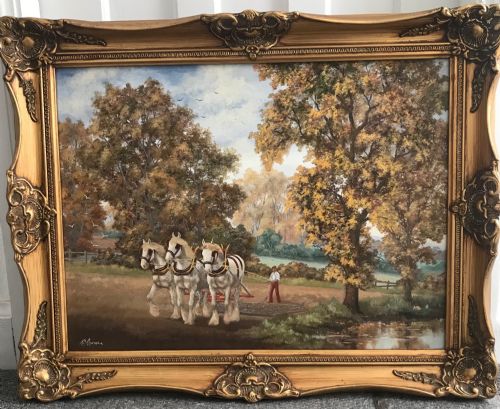
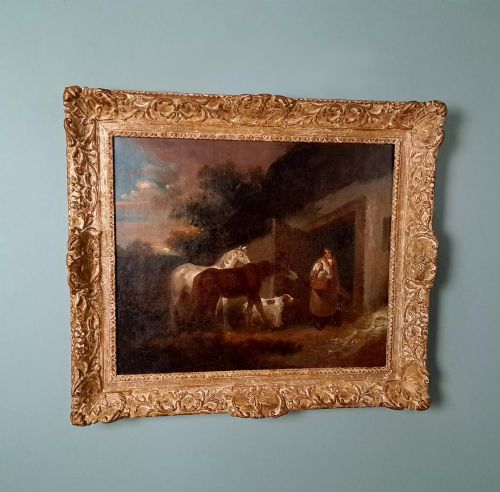
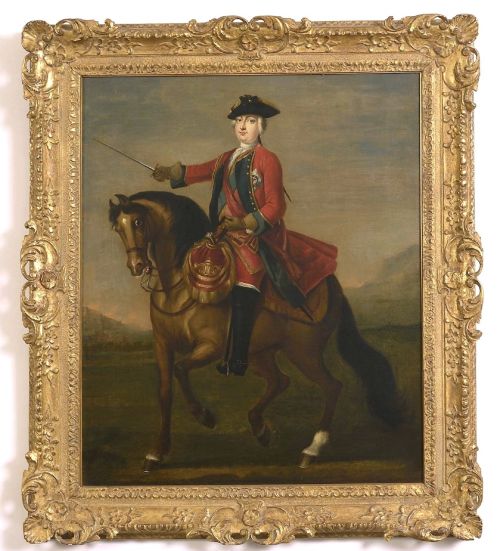
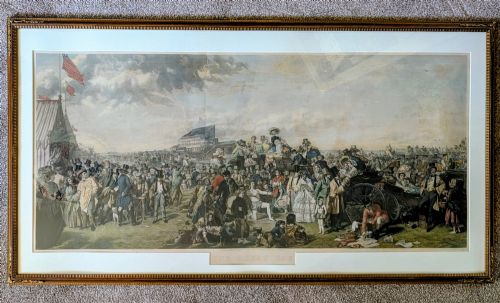
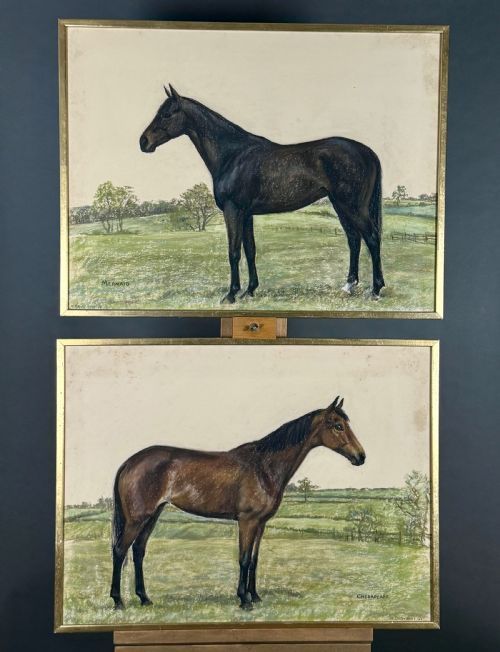
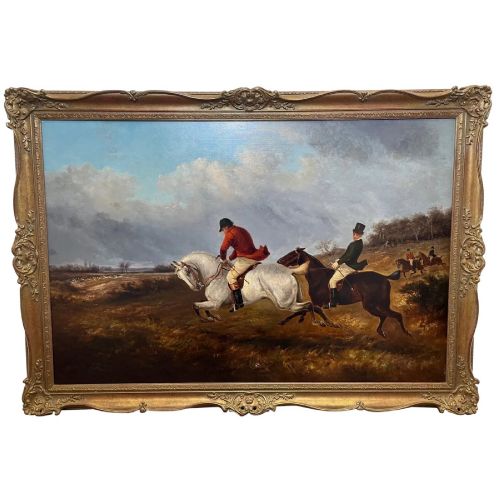
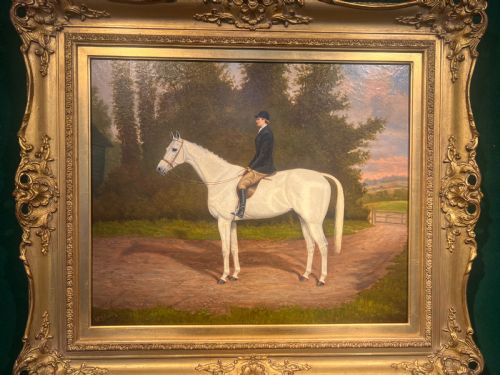
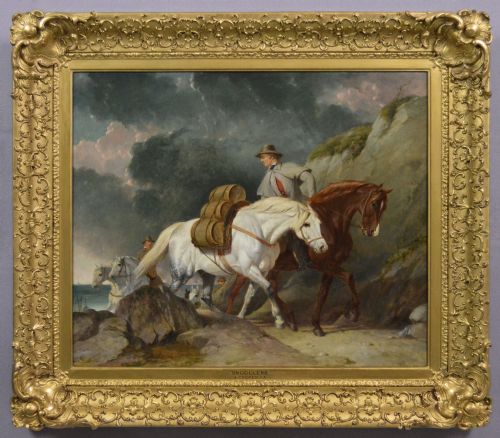
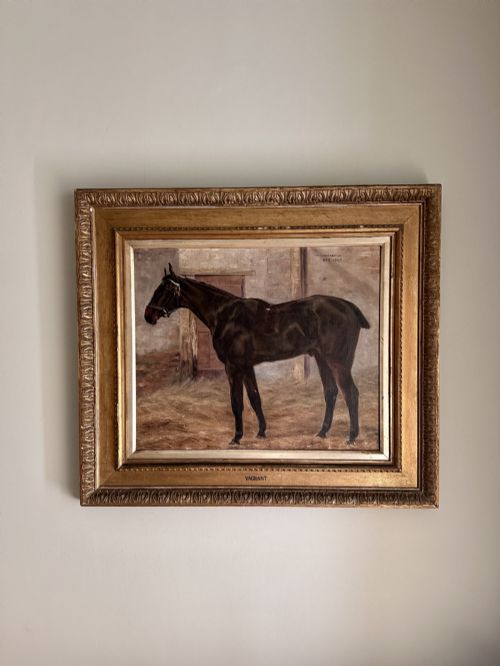
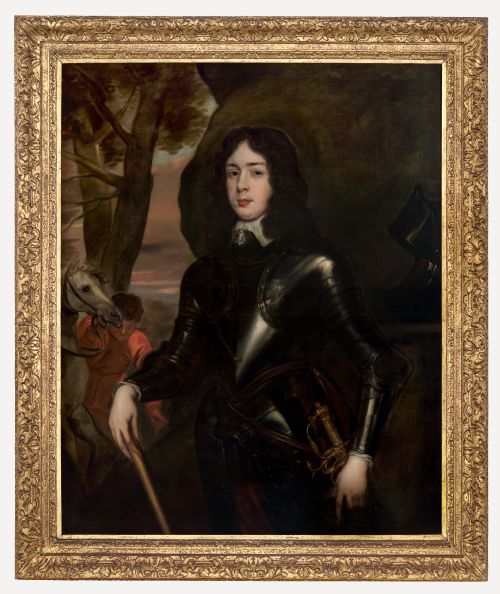
Gilt Framed Horse Painting
When you search for a gilt framed horse painting, you are looking for equine art housed in period wood and gilt moulding.
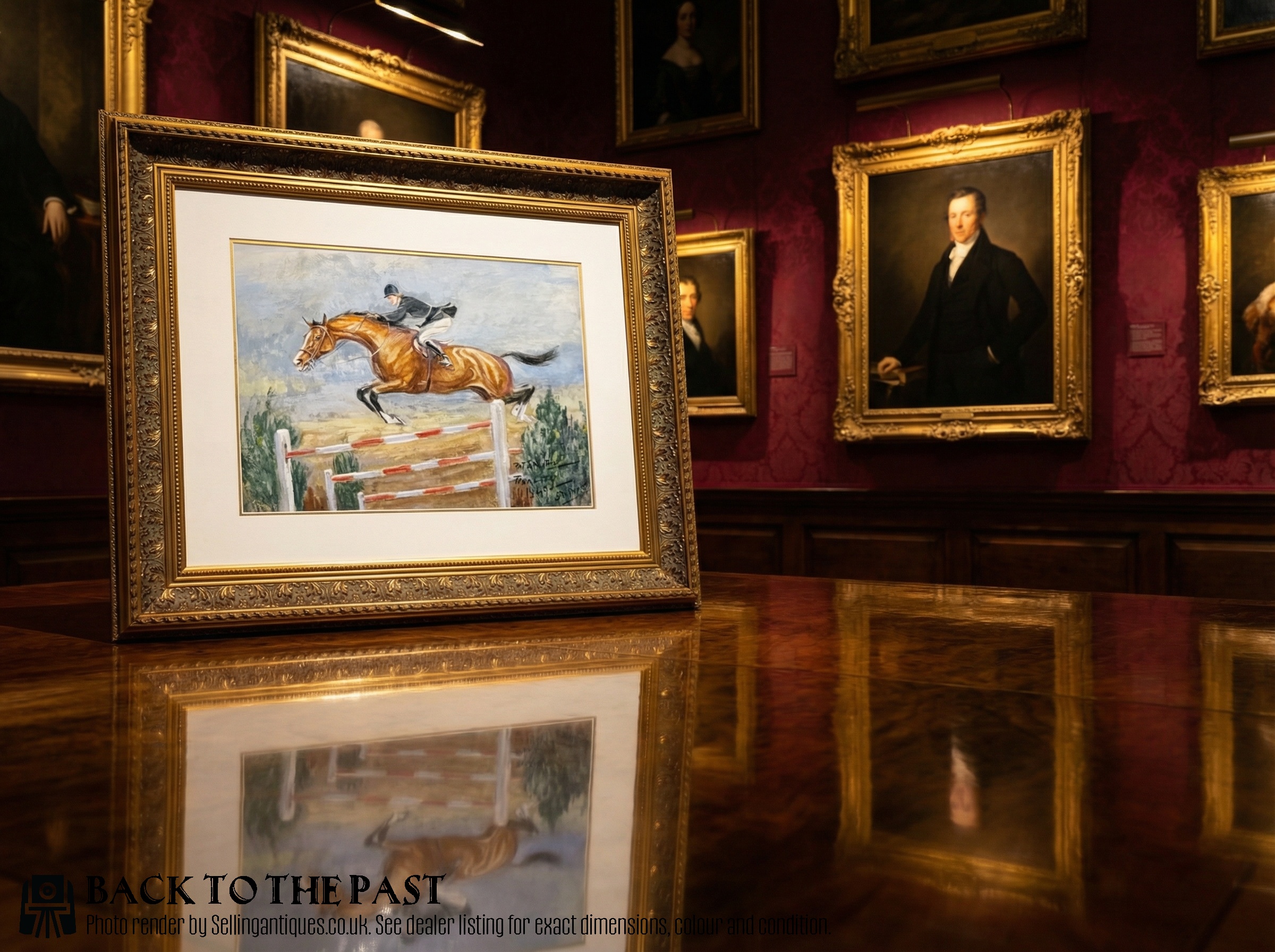
Gilt Framed Horse Painting
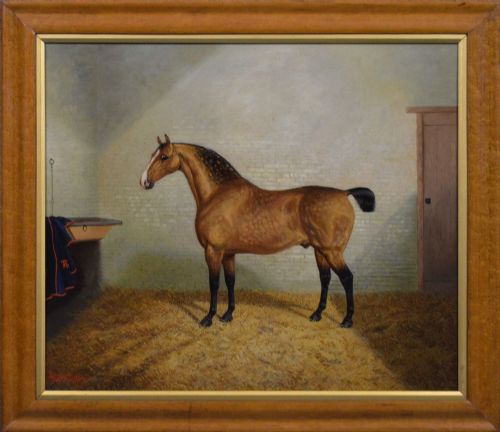
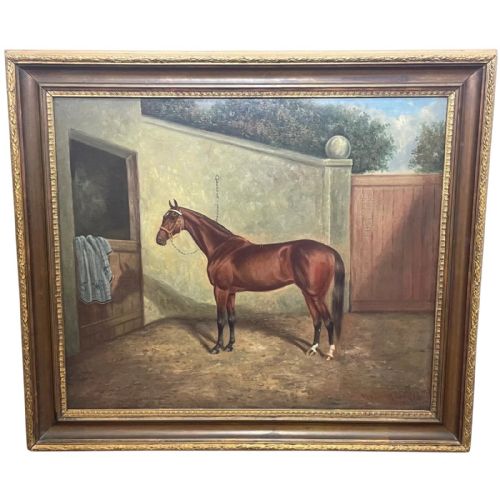
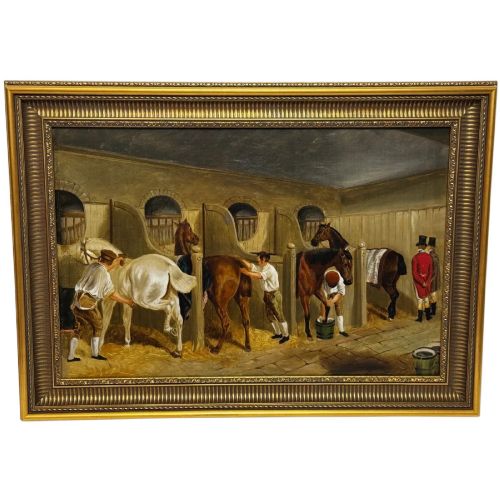
A gilt framed horse painting captures equine subjects through centuries of British realism, Victorian sporting art, and Edwardian equestrian traditions. These works range from intimate studies of individual hunters and racehorses to sweeping coaching scenes and rural landscapes.
The pieces on this page are predominantly oil paintings on canvas or board, accompanied by occasional watercolours and pastels. They span from the Georgian period through the Victorian era and into the mid-twentieth century.
How they were made
Artists relied primarily on oil paint applied to canvas or wood panels, building depth through layered brushwork and careful tonal balance. Paper and pastel also appear in studies where immediacy took precedence over finished oils.
The surrounding frames are constructed from wood finished with applied gilt or giltwood moulding. These frames provide both structural support and the characteristic metallic sheen that defines the presentation.
Gilt Framed Horse Painting Retail Price Guide 2026
Typical asking prices for gilt framed horse painting among the pieces listed under this phrase on Sellingantiques today, from the lower quarter to the upper quarter. They describe what is for sale here now, not the wider market.
Several horses depicted have outlived their jockeys by centuries yet still demand sugar cubes.
What varies in quality
The distinction between standard works and exceptional pieces lies in the anatomical precision of the horse and the handling of light within the composition. Master painters capture muscle tension, alert ears, and distinct expressions that lesser hands render as mere silhouettes.
Frame craftsmanship also signals quality, with deeply carved wooden mouldings and rich gilding elevating the entire presentation. Original frames that complement the exact period of the canvas carry greater artistic harmony.
Henry Barraud·William Joseph Shayer Senior·Thomas Smythe·Albert Clark·Abraham Cooper·John Frederick Herring Snr·George Wright
The Gilt Framed Horse Painting Glossary
- Giltwood
- Wood that has been coated with gold leaf or a gold-coloured metallic finish. This material creates the bright decorative border typical of period picture frames.
- Equine
- Pertaining to horses. This term is frequently used to describe art focusing on horses, stables, and racing.
- Sporting Art
- A genre of painting dedicated to equestrian subjects, hunting, and racing. These works often document specific named racehorses and notable hunts.
- Oil on Canvas
- A traditional painting technique using pigments suspended in drying oils applied to stretched fabric. It allows for rich blending and enduring colour depth.
Gilt Framed Horse Painting: Frequently Asked Questions
What periods do these paintings come from?
The selections span from the eighteenth and nineteenth centuries into the mid-twentieth century. Victorian and Edwardian examples appear frequently alongside Georgian and later works.
Each period brings distinct framing styles and artistic conventions to the depiction of horses.
How do I identify the horse breed in a painting?
Artists often recorded specific conformation traits associated with hunters, shires, and thoroughbreds of their era. Details such as coat colour, build, and documented racehorse names provide clues.
Inscriptions on the canvas or reverse often name the horse directly.
Are the frames original to the paintings?
Many works retain their period gilt frames, which match the age and style of the canvas. Giltwood frames developed alongside the paintings they house.
Checking the wood construction helps determine whether the frame dates to the same era as the artwork.
Where were these equine scenes typically painted?
Subjects range from rural farmyards and coastal paths to established racing stables and estate grounds. British countryside settings dominate the rustic and sporting compositions.
Artists frequently worked on commission for estate owners and racing patrons.