

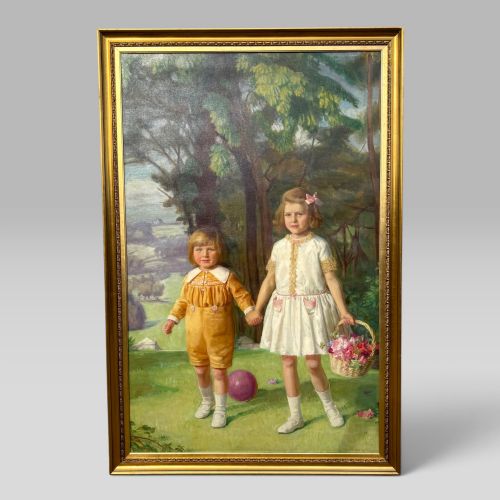

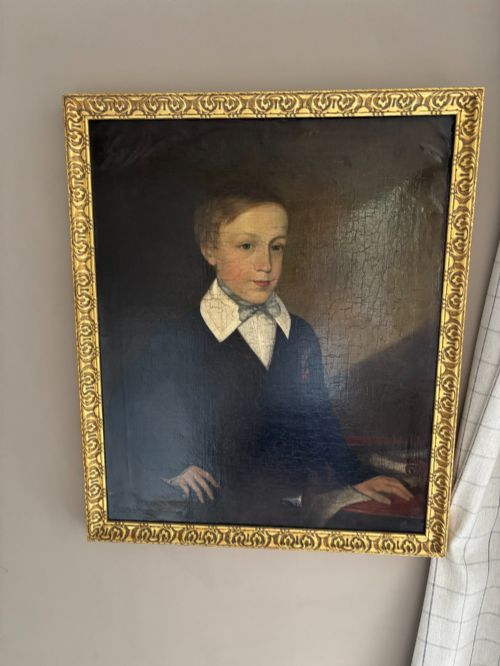
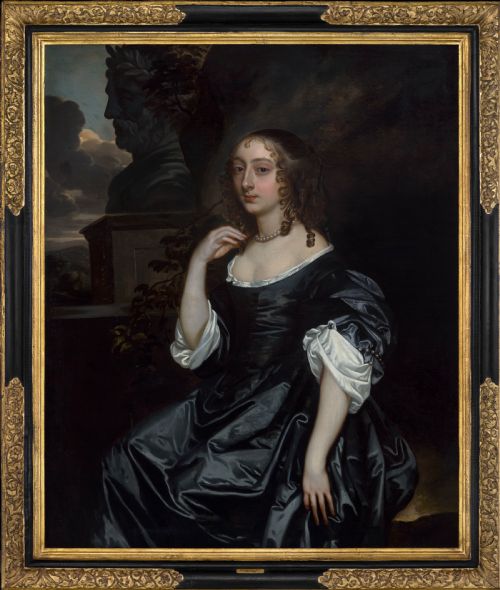
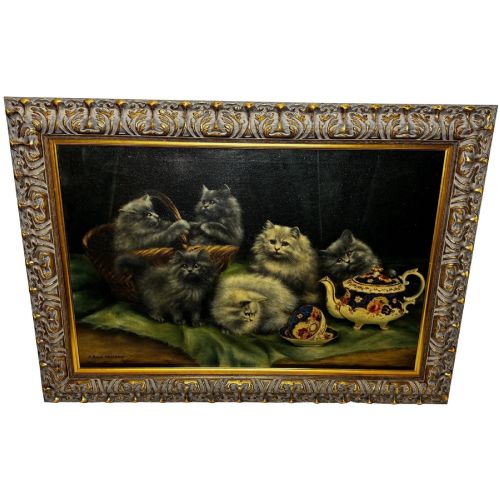
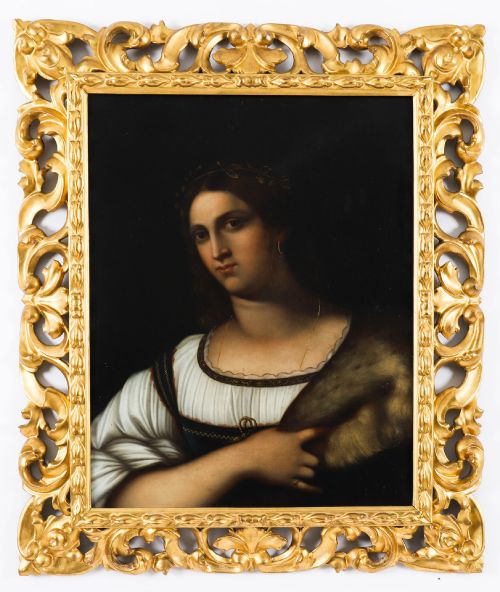
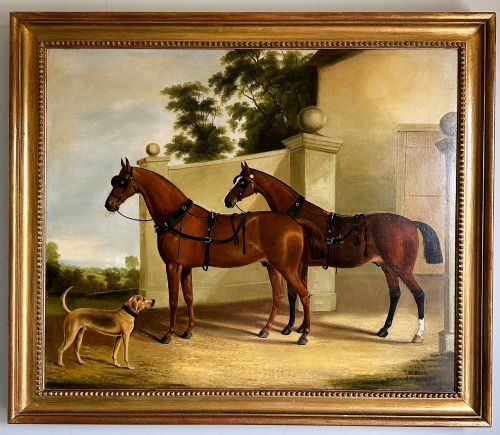

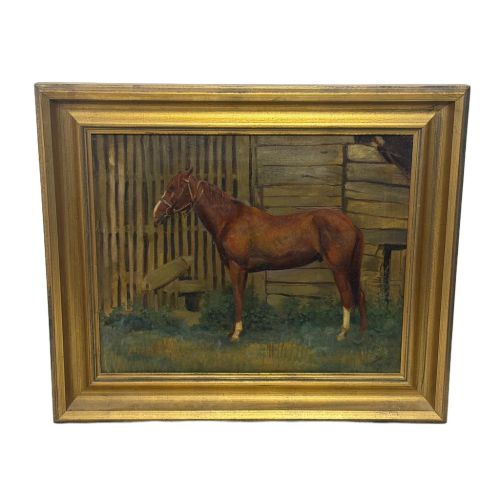

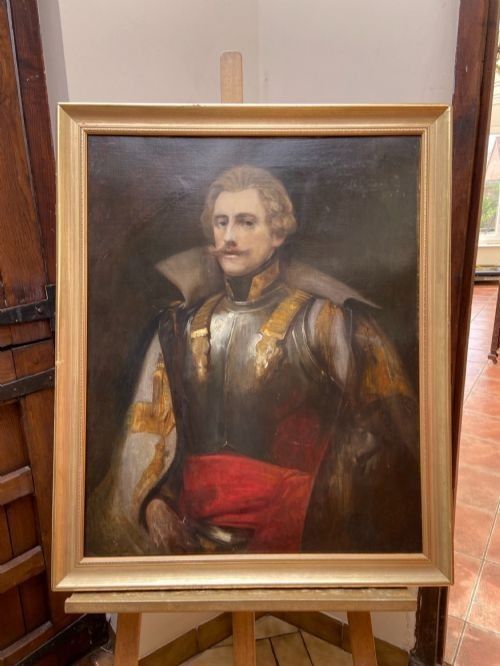

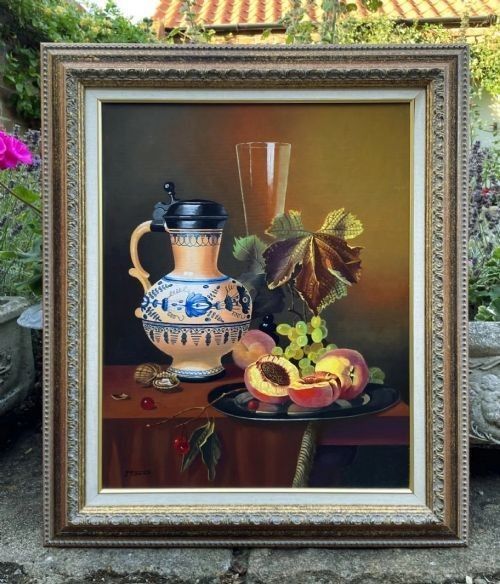


Gilt Framed Canvas Portrait
A gilt framed canvas portrait brings historical depth to a room, presenting painted likenesses secured within ornate, light-reflecting surrounds.
Gilt Framed Canvas Portrait
A gilt framed canvas portrait consists of an oil painting on woven fabric stretched over a wooden support, housed inside a decorative gilded surround. The form spans centuries of artistic practice, recording figures ranging from nobility and military officers to clergy and private citizens.
Most examples encountered on this page originate from the seventeenth, eighteenth, and nineteenth centuries, alongside Victorian and later interpretations. Subjects appear individually or in pairs, depicted in formal attire, uniform, or everyday dress depending on the period.
Materials and construction
The foundation of each piece is oil paint applied to a woven canvas support, using techniques developed across the European schools. Pigments mixed with binding oils allow for fine detail in skin tones and textiles.
Surrounding the canvas is a wooden frame finished with gilt, gold leaf, or giltwood mouldings. This outer housing provides structural stability while enhancing the visual weight of the artwork through reflective metallic surfaces.
Listings feature works spanning the seventeenth century through to the 1960s, executed in oil on canvas with giltwood frames.
Assessing quality
Quality rests upon the skill of the brushwork and the anatomical accuracy of the sitter, where accomplished handling of light, shadow, and fabric texture distinguishes professional commissions from standard school works. The depth of expression in the face and the natural fall of drapery indicate the capability of the artist.
The integrity of the frame also influences the overall standard, with hand-carved and gilded wood mouldings representing superior craftsmanship compared to simpler or later replacements. Preservation of the original canvas surface without excessive intervention maintains the historical integrity of the piece.
Sir Joshua Reynolds·Jean-Baptiste Van Loo·Sir Peter Lely·Lemuel Francis Abbott
The Gilt Framed Canvas Portrait Glossary
- Giltwood
- Wood carved and covered with thin gold leaf or a metallic substitute. This material provides the brilliant, reflective border characteristic of period frames.
- Oil on Canvas
- Pigment suspended in drying oil applied to a woven fabric ground. This medium enabled artists to blend tones smoothly and build rich layers of colour.
- Circle of
- A designation indicating the work was produced by an artist closely associated with a master, working in a similar style during the same period. It reflects the stylistic influence of a prominent painter.
- Attributed to
- A term used when an artwork is considered likely to be by a specific named artist based on stylistic evidence, though lacking definitive documentation.
Gilt Framed Canvas Portrait: Frequently Asked Questions
How should I hang a canvas portrait?
Support the weight securely using appropriate wall fixings rated for the combined mass of the canvas and its heavy wooden frame. Hang the piece at eye level away from direct sunlight and fluctuating heat sources to protect the oil pigments.
Maintain stable indoor humidity levels to prevent the canvas fabric from slackening or the wooden stretcher bars from warping over time. Dust the surface and the gilded mouldings gently with a dry, soft cloth without applying liquid cleaners.
What periods do these portraits represent?
The selection includes works from the seventeenth, eighteenth, and nineteenth centuries, alongside Victorian examples and later twentieth-century interpretations. Each era brings distinct clothing styles, hair designs, and painting techniques.
Early pieces often feature elaborate wigs and formal dress, while later Victorian and nineteenth-century works display softer realism and more varied civilian attire.
Are the frames original to the paintings?
Many portraits retain period frames that match the approximate age and style of the canvas, though framing practices varied over centuries. Giltwood and gold leaf surrounds were frequently paired with formal oil paintings to enhance their visual prominence.
Some pieces may feature replacement frames from later restoration periods while keeping the primary artwork intact. Examining the corner joints and backing helps determine the relationship between the frame and the canvas.
How do I identify the sitter?
Sitters are sometimes identified through inscriptions on the canvas, stretcher bars, or historical records associated with the provenance. Surnames, titles, and dates inscribed on the reverse often provide clues to the identity of nobility, military officers, or clergy.
Unidentified subjects remain common, particularly in works attributed to broader regional schools where personal documentation has been lost over time.