
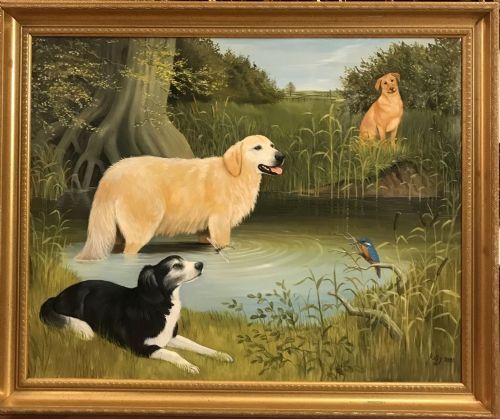


Gilt Framed Canine Art
Gilt framed canine art comprises historic painted and drawn portraits of dogs set within gilded surrounds, offering a direct window into past domestic and sporting life.
Gilt Framed Canine Art
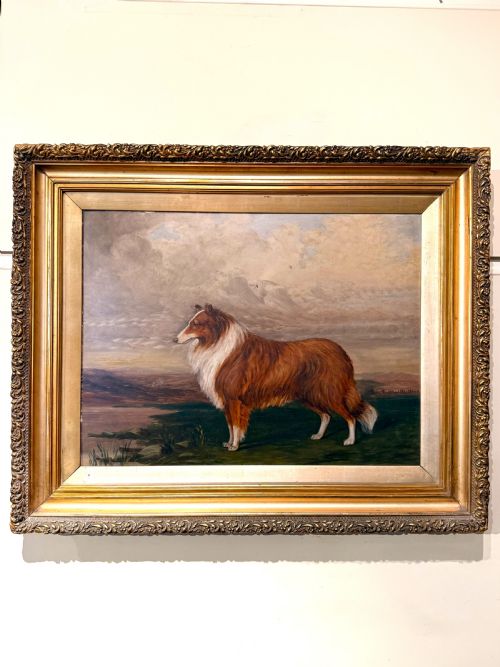
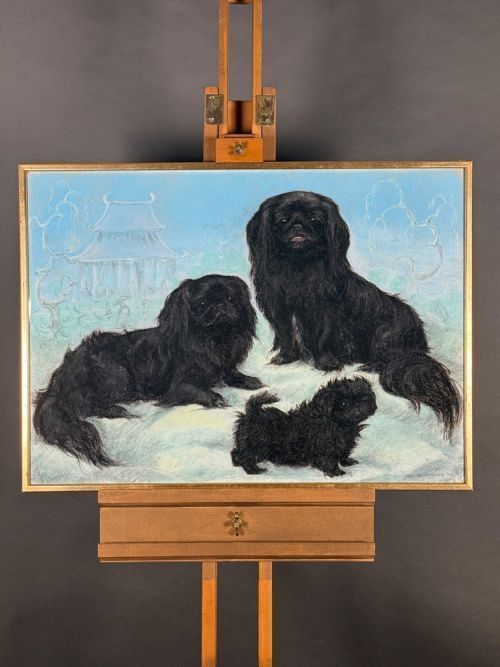
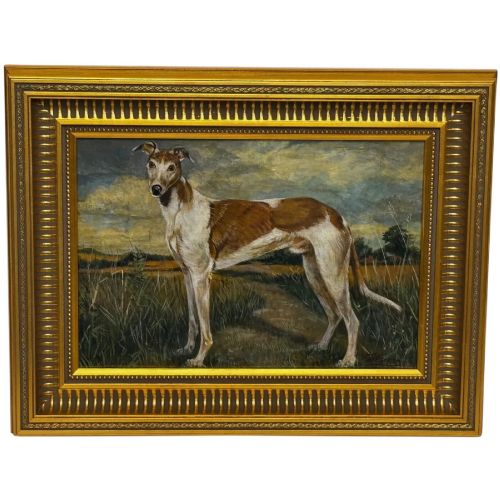
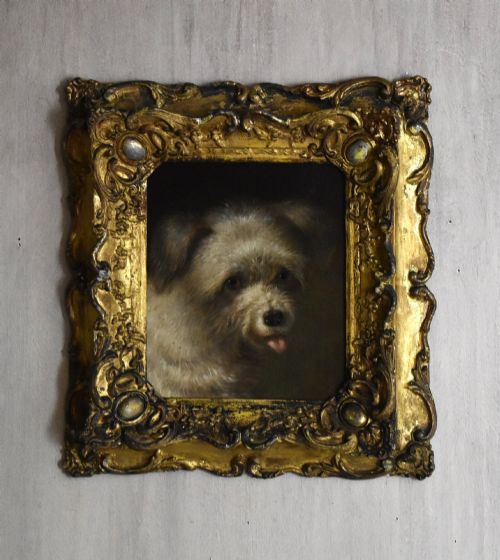
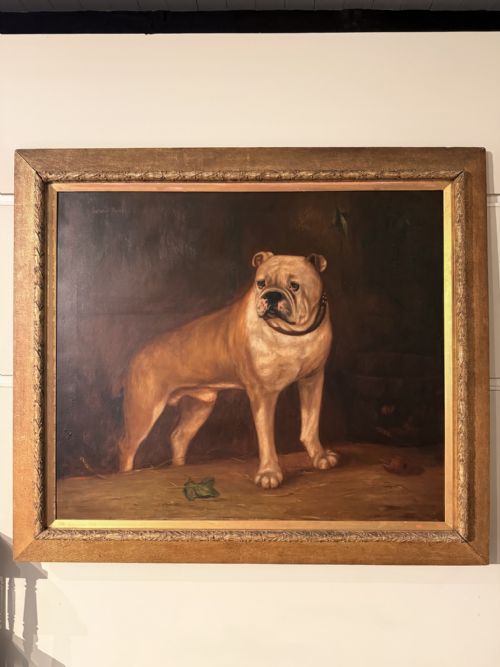
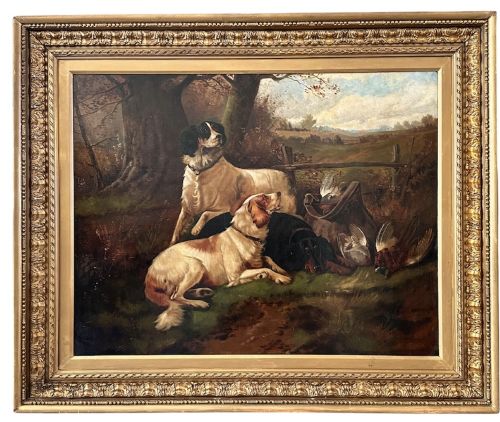
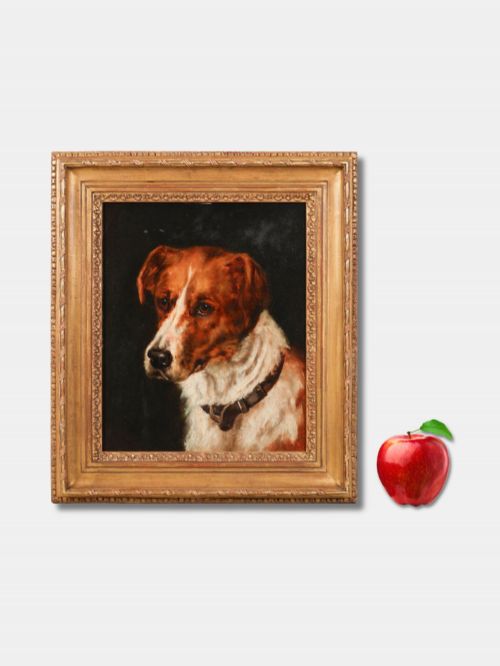
Gilt framed canine art consists primarily of oil paintings, watercolours, and pastel drawings depicting dogs, ranging from solitary terrier portraits to extensive hunting packs. These works span the nineteenth and twentieth centuries, capturing animals in distinct landscapes, stable yards, or domestic interiors.
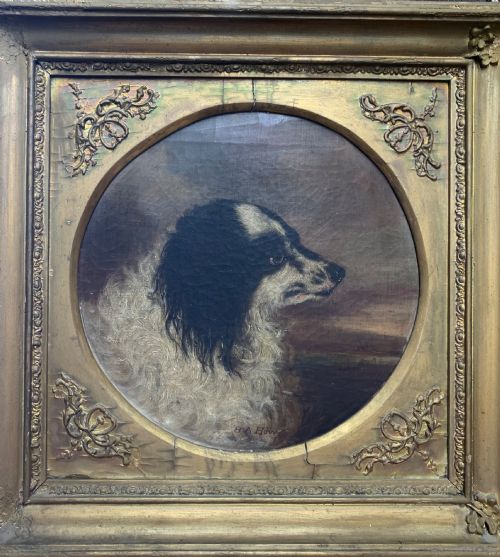
The dominant forms on this page are nineteenth-century Victorian oil paintings and early twentieth-century works produced by British and European artists. Buyers encounter both intimate head studies of individual pets and larger canvases recording prized sporting dogs, working spaniels, and hounds.
Many pieces reflect specific genres such as Victorian sporting art and animal portraiture, often following the compositional traditions established by prominent painters of the era. The enclosing frames are typically constructed of wood finished with gold leaf or giltwood to complement the tonal depth of the canvas.
How they were made
These works rely on traditional painting supports, predominantly oil on canvas or oil on board, alongside occasional watercolours and pastels on paper. Pigments were applied by hand to capture the texture of animal coats, light in landscapes, and interior shadows.
Frames are fashioned from timber, frequently carved or moulded, and surfaced with gold leaf, gilt, or gilded wood. This metallic finish brings reflected light to the perimeter of the image, physically defining the boundary of the artwork.
Several canvas subjects capture dogs mid-mischief, guarding rat-trapped barns or staring intently past the frame as if ignoring the artist entirely.
What varies in quality
Quality rests principally on the draughtsmanship and the artist's ability to render the anatomy, expression, and distinct coat texture of the dog. Finer pieces demonstrate precise brushwork in the eyes and fur, whereas lesser examples rely on formulaic repetition.
The harmony between the artwork and its gilt frame contributes significantly to the overall integrity of the piece. Frames that retain their original gilding and proportions without excessive restoration elevate the visual weight of the composition.
Martin Theodore Ward·John Sargent Noble·John Emms·John Frederick Herring Senior·LM Webb·Arthur Wardle·William Barraud·Sir Edwin Landseer·Colin Graeme Roe·Valentine Thomas Garland·John Trivett Nettleship·Jules Chardigny·George Earl·Florence Mabel Hollams·Philip Eustace Stretton·James Ward
The Gilt Framed Canine Art Glossary
- Giltwood
- Wood carved and coated with gold leaf, metal powder, or a gold-coloured finish. It provides a reflective, decorative border to the painting.
- Sporting Art
- A genre of painting depicting field sports, hunting dogs, horses, and rural wildlife. It reflects the social pursuits of the nineteenth century.
- Oil on Board
- A painting technique where oil pigments are applied directly to a rigid wooden or composition panel rather than stretched fabric.
- Pastel
- A drawing medium consisting of powdered pigment bound into a stick form. It produces a soft, matte surface requiring protective glazing.
- Provenance
- The documented history of ownership surrounding an artwork. It helps establish authenticity and historical context.
Gilt Framed Canine Art: Frequently Asked Questions
How do I hang a heavy gilt frame?
Heavy gilt frames require secure fixings anchored directly into wall studs or masonry using appropriate picture hooks rated for the weight.
Position the wire or D-rings evenly to ensure the painting hangs flush and stable against the wall surface.
Are these paintings original or copies?
The selection includes original hand-painted works from the nineteenth and twentieth centuries alongside period copies executed after prominent painters like Sir Edwin Landseer.
Examining the canvas texture, medium application, and backing materials helps determine whether a work is an original composition or a contemporary study.
How should I clean a gilded frame?
Dust gilded wooden frames gently with a soft, dry brush to prevent accumulation without disturbing fragile metallic leaf surfaces.
Avoid using water, chemical solvents, or abrasive cloths, as these can strip the historical finish from the wood.
What lighting suits a canine oil painting?
Display oil paintings away from direct, harsh sunlight to prevent the fading of pigments and the yellowing of old varnish layers.
Warm, low-intensity picture lights or indirect ambient room illumination enhance the depth of the dark backgrounds typical of Victorian animal portraits.