




Brown Dog Portrait Painting
Brown dog portrait painting captures canine character on canvas across centuries of British and European sporting art.
Brown Dog Portrait Painting
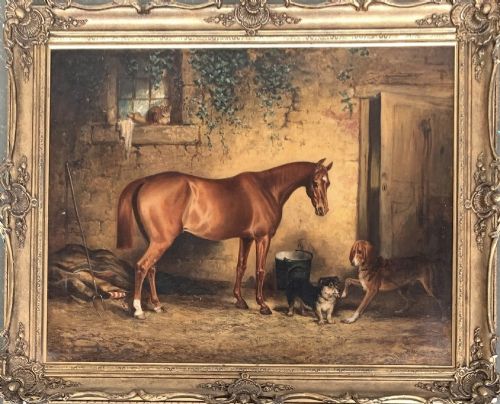
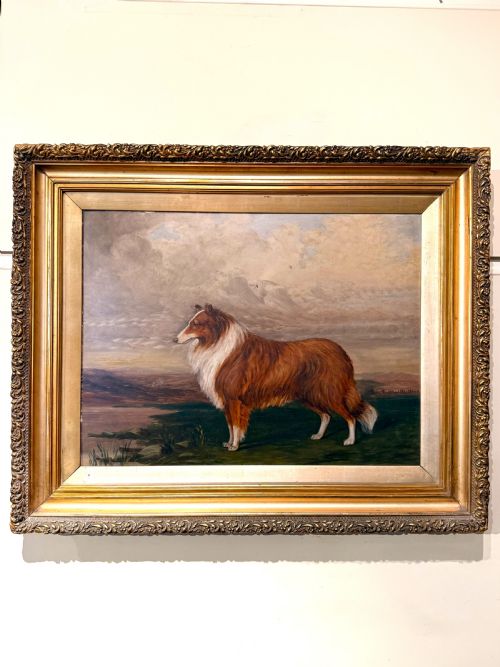
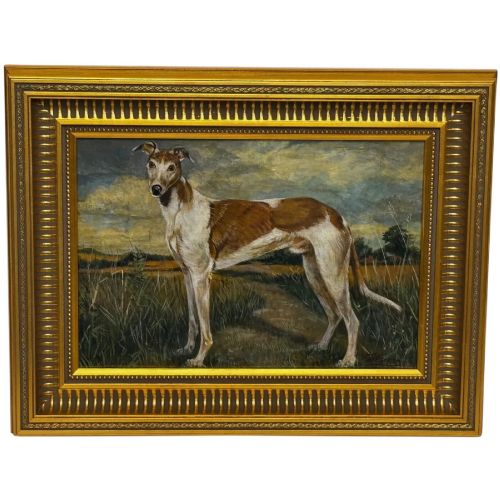
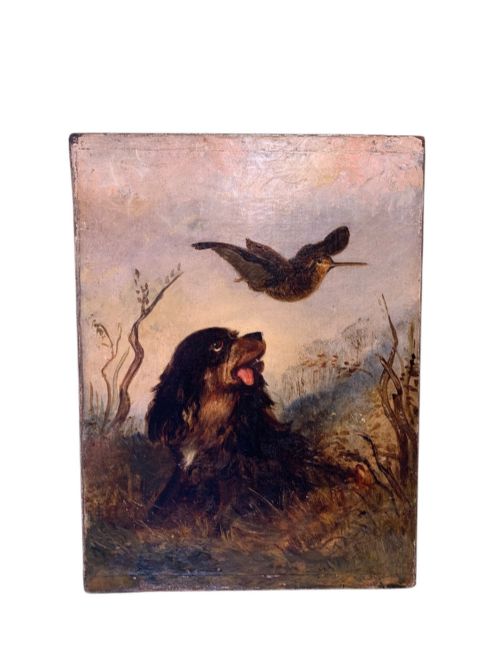
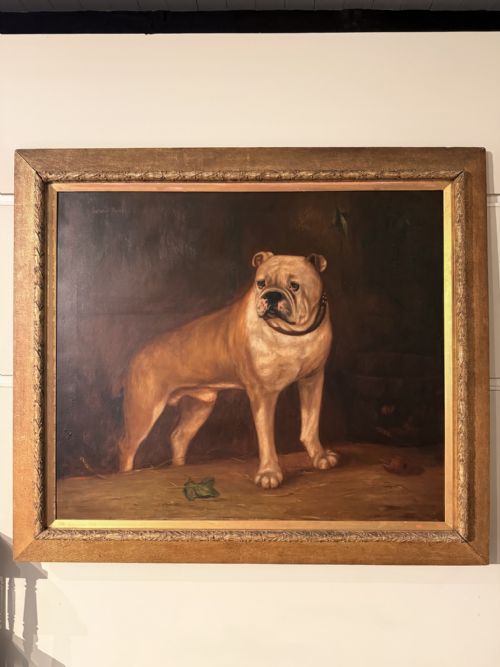
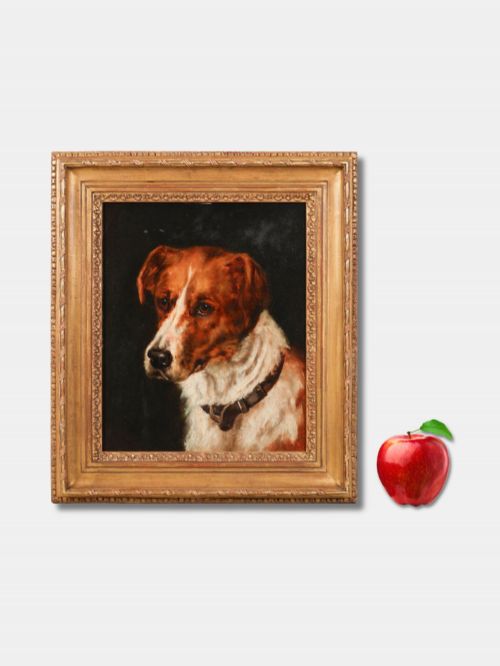
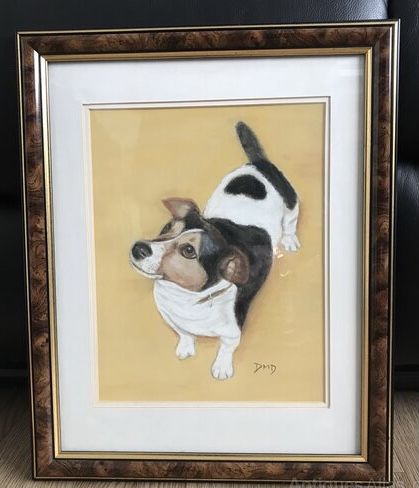
A brown dog portrait painting represents a canine subject rendered in oil or watercolour, created to record a specific animal's personality or breed. Buyers searching for a brown dog portrait painting encounter depictions ranging from spaniels and terriers to gundogs and collies set within landscapes or interiors. These works span periods from the Georgian era through Victorian realism and into the mid twentieth century.
The most common examples on this page are nineteenth century oil paintings on canvas or board, often framed in gilt wood. These pieces reflect the historical British tradition of animal portraiture, where dogs were painted either as working companions or as beloved household pets. The selection includes works by named sporting artists as well as naive school pieces and continental European interpretations.
How they were made
Artists typically applied oil paint to stretched canvas or wooden boards, building up layers of pigment to capture the texture of a dog's coat and the play of light. Many works incorporate gold leaf within the frames, enhancing the visual weight of the presentation.
Listings feature works executed in oil on canvas, oil on board, and watercolour on paper, spanning the seventeenth to the twentieth century.
What varies in quality
The anatomical accuracy of the canine subject and the psychological depth of the expression distinguish finer works from simpler decorative pieces. Master painters capture the intelligent gaze and muscular structure of a hound or terrier with precise brushwork.
The integration of the animal within its background landscape or interior setting demonstrates the artist's skill. Superior execution shows harmony between the subject and the atmosphere, whereas lesser works treat the background as an afterthought.
Henry Barraud·Valentine T Garland·John Emms·Thomas Hicks·LM Webb·George E Sharpe·Sir Edwin Landseer·John Trivett Nettleship·Fannie Moody·Robert Cleminson·Henri Schouten
The Brown Dog Portrait Painting Glossary
- Oil on canvas
- Pigment suspended in drying oil applied to a woven fabric support stretched over a wooden frame. This medium allows for rich colour blending and textured brushwork.
- Watercolour
- A painting method where fine pigment is suspended in a water soluble vehicle on paper. It offers luminous transparency and delicate tonal shifts.
- Gilt
- A thin layer of gold applied to wood or gesso to decorate frames. It adds a reflective metallic border to the artwork.
- Naive school
- Art produced by painters with little or no formal academic training. These works feature charming perspective and direct observation.
- Sporting art
- A genre dedicated to depicting field sports, horses, and hounds. It documents the rural pursuits of past centuries.
Brown Dog Portrait Painting: Frequently Asked Questions
What periods do these paintings date from?
The listings span several centuries, with a strong concentration of nineteenth century and Victorian examples. Pieces range from Georgian works up to mid twentieth century canine portraits.
Earlier works often reflect strict sporting traditions, while later pieces capture domestic pets with distinct personalities.
How should I hang a dog painting?
Consider placing the artwork at eye level in a study, hallway, or living space where the lighting enhances the oil or watercolour medium. Pair the framed piece with traditional interior decor that complements the period.
Ensure the painting is protected from direct sunlight to preserve the integrity of the pigments on canvas or paper.
What dog breeds appear most often?
Terriers, spaniels, collies, and various sporting hounds dominate the subjects of these historical portraits. Artists frequently painted working gun dogs alongside their owners or in rural landscapes.
Both named breeds and charmingly ambiguous farm dogs feature across the different stylistic schools.
Are these works signed by the artist?
Many pieces bear signatures or attributions to established nineteenth and twentieth century animal painters. Other works originate from regional British or European schools without a signature.
Attributions are typically determined by stylistic comparison, subject matter, and historical records associated with the piece.