


Edwardian Equestrian Wall Art
When you search for edwardian equestrian wall art, you encounter historic depictions of horses, riders, and coaching scenes framed for display.
Edwardian Equestrian Wall Art
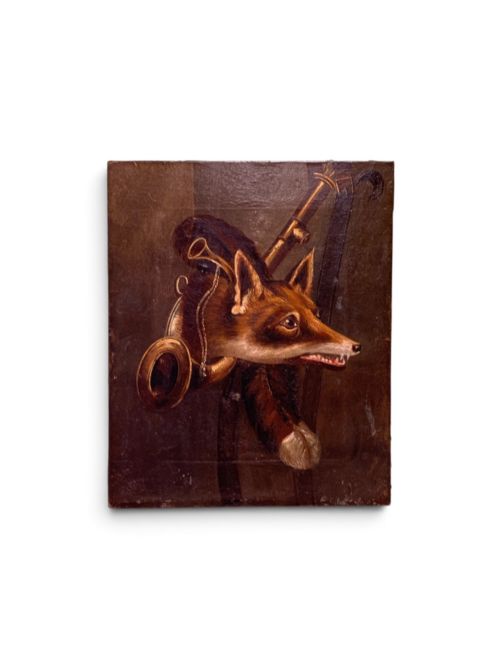
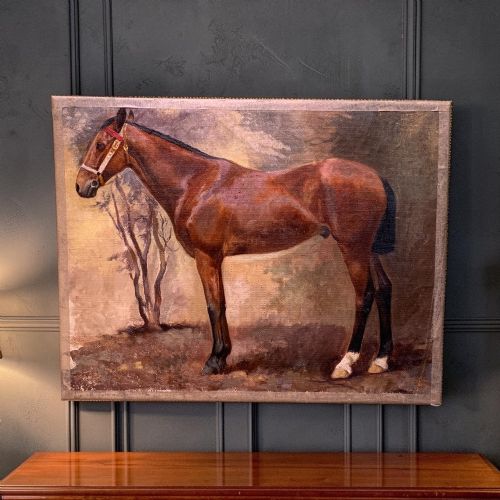
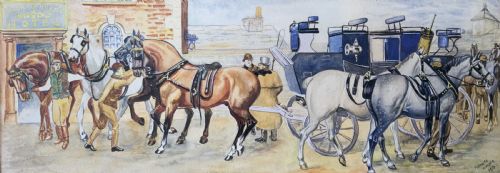
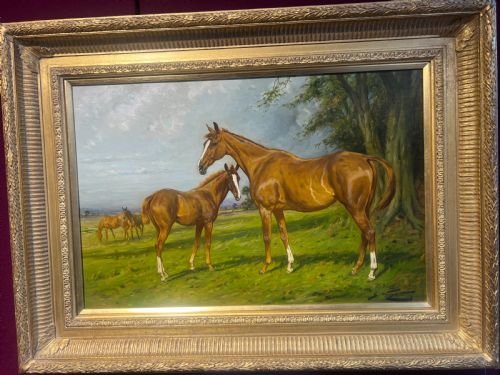
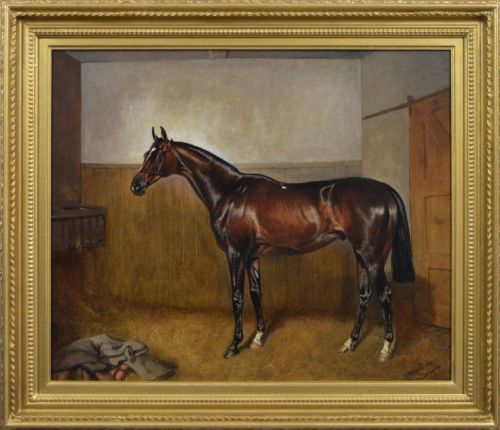
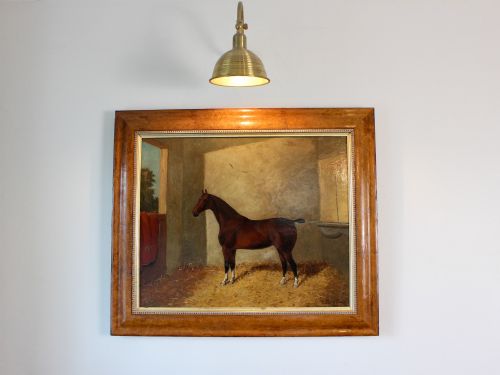
Edwardian equestrian wall art encompasses framed paintings, watercolours, drawings, prints, and crystoleums depicting horses, racing subjects, hunting scenes, and coaching life. These pieces primarily date from the Edwardian era and early twentieth century, alongside Victorian precursors and nineteenth-century works.
The subjects range from named racehorses and royal thoroughbreds in oil paint to lively coaching scenes and hunting watercolours. Buyers find works executed in oil on canvas, chalk, and paper, frequently housed in original oak, walnut, or gilt wood frames.
Materials and Construction
Artists of this period utilised oil paint on canvas or panel, watercolour pigments on paper, and chalk or crayon for detailed drawings. Support materials include paper, canvas, and wood, paired with traditional framing materials such as gilt wood, oak, and walnut.
Techniques range from finely detailed oil portraits of individual racehorses to fluid watercolours and lithographic or chromolithographic print reproductions. Works are often preserved behind glass within period frames that complement the sporting subject matter.
Several pieces capture horses engaged in domestic leisure, racing triumphs, or navigating bustling country fairs.
Judging Quality in Sporting Art
Quality rests upon the artist's ability to render equine anatomy, movement, and character convincingly. Named horses by listed sporting painters display precise handling of form and accurate equine proportions compared to lesser works.
The integrity of the piece depends upon the preservation of the original medium, whether oil on canvas or watercolour on paper, alongside the retention of period framing such as gilt wood or oak.
John Alfred Wheeler·George Wright·John Sanderson Wells·Charles Johnson Payne Snaffles·Philip Henry Rideout
The Edwardian Equestrian Wall Art Glossary
- Crystoleum
- A method of applying a hand-coloured print to glass, convexed and backed with paint, popular in the late nineteenth and early twentieth centuries. This technique creates a luminous, layered image.
- Chromolithograph
- A multicoloured planar print produced using lithographic stones for each ink colour. These prints offered high-fidelity reproductions of original sporting artworks.
- Gilt Wood
- Timber carved and surfaced with a thin layer of gold leaf or metallic powder. Such frames are frequently found enclosing nineteenth-century and Edwardian paintings.
- Watercolour
- A painting method in which the pigments are suspended in a water-soluble vehicle. Artists used this medium on paper for rapid studies and finished hunting scenes.
Edwardian Equestrian Wall Art: Frequently Asked Questions
What periods do these pieces date from?
The selection spans the Edwardian era and the early twentieth century, incorporating Victorian works and nineteenth-century sporting art. The majority align with the aesthetic of British sporting art from 1880 to 1930.
Artists working across these decades captured rural coaching scenes, racehorses, and hunting subjects using traditional painting and printmaking techniques.
How do I identify a genuine period frame?
Period frames often consist of solid oak, walnut, or moulded gilt wood appropriate to the date of the artwork. They show appropriate signs of age in the timber and finish.
Many pieces retain their original framing from the Edwardian or Victorian periods, which adds context to the artwork.
What subjects are most common?
Portraits of named racehorses, hunting scenes with hounds, and coaching episodes involving stagecoaches and traps predominate. These subjects reflect the strong Victorian and Edwardian culture of equestrian sports.
Artworks also feature military or heavy horses, countryside fairs, and individual animal studies by recognised sporting painters.
How should I hang and care for these works?
Pieces executed on paper, such as watercolours and prints, require protection from direct sunlight to prevent fading. Displaying them in rooms with stable humidity preserves both the canvas or paper and the wooden frames.
Oil paintings on canvas benefit from occasional gentle dusting with a soft, dry brush while avoiding liquid cleaners on aged surfaces.