




Gilt Framed Architectural Print
A gilt framed architectural print brings neoclassical grandeur and historic scale to a room through finely worked engravings and gold leaf moulding.
Gilt Framed Architectural Print
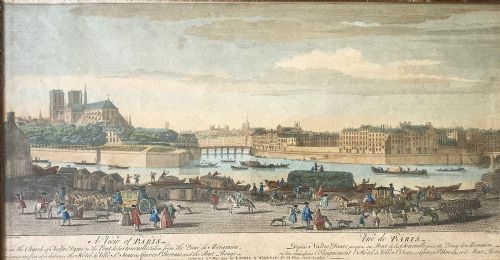
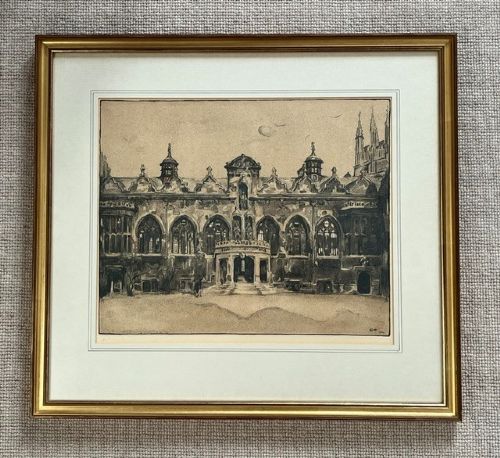
A gilt framed architectural print captures classical buildings, city views and ancient antiquities rendered through ink on paper. These pieces range from eighteenth-century engravings of Roman statues and Vatican loggie to nineteenth-century lithographs depicting castles, churches and foreign kiosks.
Buyers encounter sets of large neoclassical scenes alongside single framed plates of historic London, Paris and country houses. The subjects span eighteenth-century views, Regency prospects and Edwardian cityscapes presented behind protective glass.
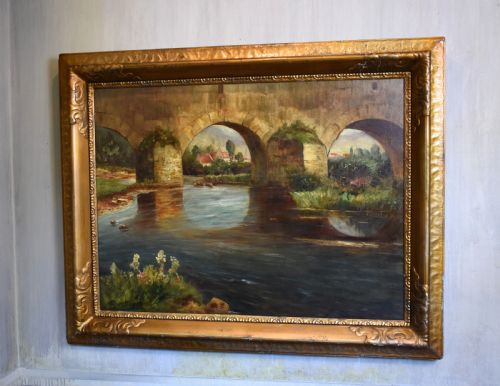
The enclosing frames match the academic ambition of the imagery, utilising polished wood and applied gold leaf to establish a formal presence. They function as historical records of urban development and archaeological discovery preserved through centuries.
Materials and Technique
The core material is paper bearing ink, monochrome wash, drypoint etching, or original hand colouring applied to engraved lines and lithographs. Artisans combined copperplate engraving and later lithographic methods to duplicate intricate architectural details with precision.
Mounting and framing involved seasoned wood joined at the corners and finished with gold leaf or gilt wood coatings. Protective glass was fitted to guard the delicate paper and watercolours from atmospheric moisture and handling.
Some nineteenth-century lithographs capture the Besiktas Kiosk on the Bosphorus, proving that historic interior design inspiration travels far.
Evaluating Quality
Quality rests upon the crispness of the engraved line or the register of the lithographic stone, where sharper impressions reveal the hand of skilled printmakers. The fidelity of original hand colouring and the preservation of the paper stock dictate the optical strength of the image.
The integrity of the gilt frame contributes substantially to the overall standard, depending on the survival of the original gold leaf and the harmony between the moulding and the era of the print.
Sir William Nicholson·David Roberts RA·Franz Reder-Broili·Francis Dodd·Francesco Piranesi
The Gilt Framed Architectural Print Glossary
- Engraving
- A printmaking technique where an artist cuts lines directly into a metal plate with a sharp tool to hold ink. This method produces precise architectural details that endure across multiple impressions.
- Lithography
- A planographic printing process based on the repulsion of oil and water on a limestone slab or metal plate. It enabled the production of nuanced tonal ranges and coloured architectural scenes.
- Gilt Wood
- Timber treated with a thin layer of gold leaf or metallic powder to create a lustrous surface. It frames works on paper with reflective warmth.
- Neoclassical
- A style rooted in the architecture and motifs of classical antiquity, frequently depicted in eighteenth and nineteenth-century prints. It emphasises symmetry, columns and classical proportions.
- Drypoint
- An intaglio printmaking method where an artist scratches a design directly into a metal plate with a hard needle. This creates a distinctive velvety burr along the printed line.
Gilt Framed Architectural Print: Frequently Asked Questions
What periods do these framed prints come from?
The pieces span the eighteenth century, the Georgian and Regency eras, the Victorian period, and into the early twentieth century. They encompass historical production methods ranging from hand-coloured copperplate engravings to Edwardian lithographs.
Each period imparts distinct characteristics to the paper stock, the printing technique employed, and the profile of the surrounding gilt frame.
How were architectural prints historically displayed?
Owners historically hung these framed works in libraries, studies, and formal reception rooms to signal scholarly taste and an appreciation for travel. Large formats were often arranged in matched sets along long walls to create a sweeping decorative narrative.
The inclusion of gold leaf framing elevated records of buildings and ruins into formal decorative art suitable for domestic display.
How do I care for a gilt framed print?
Protect the piece by placing it away from direct sunlight, which causes fading on older paper and watercolours. Maintain stable indoor humidity to prevent the paper from warping and to protect the wooden frame structure.
Clean the glass gently with a dry cloth, avoiding liquid sprays that might seep beneath the rebate and damage the paper or the inner gilt edges.
Are these prints original period pieces?
The inventory consists of period works printed during the eighteenth, nineteenth, and early twentieth centuries rather than modern reproductions. This includes original engravings, period lithographs, and contemporary watercolours recorded across the listed items.
Every piece bears the physical indicators of its specific manufacturing era, from plate marks to period framing materials.