




Regency Architectural Painting
Regency architectural painting brings domestic spaces structured views of classical buildings, historic sites, and interior scenes.
Regency Architectural Painting
Regency architectural painting encompasses framed artworks, naive oils, and painted wall plaques depicting buildings and townscapes from the nineteenth century. Buyers seek these works to add historic depth and classical perspective to a room.
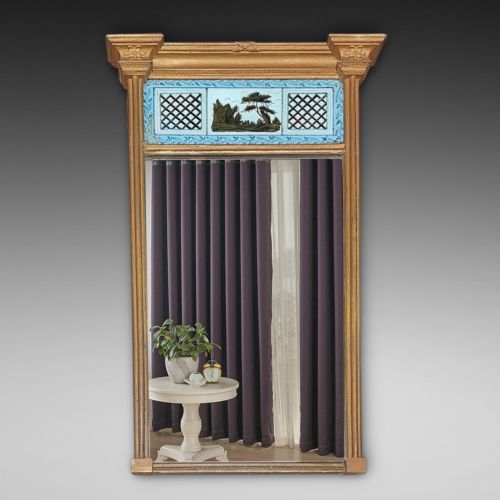
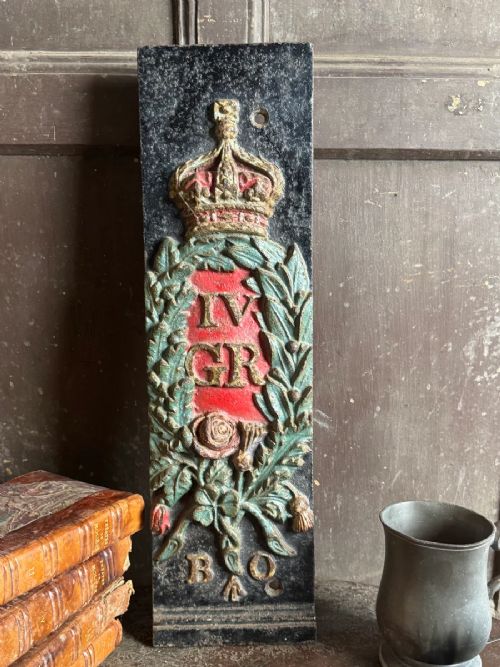
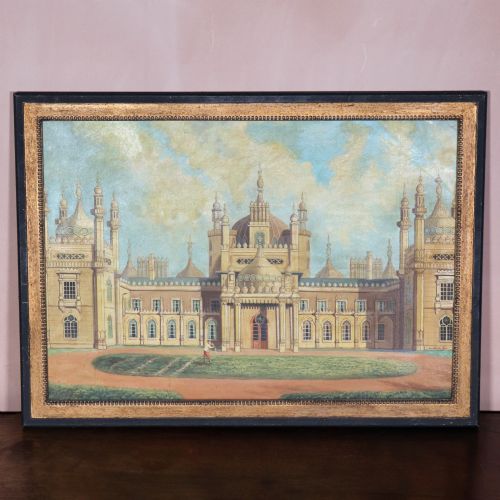
The pieces appearing on this page include oil paintings of churches and royal pavilions, monochrome ink with watercolour watercolours of specific houses, and painted architectural wall plaques. Such works often combine structural precision with the softer hand of naive art or Regency chinoiserie.
Origins span the Georgian era through to the early twentieth century, incorporating styles like the Norwich School and English naive art alongside formal Regency design. Overmantel mirrors and wall plaques with painted architectural elements also form part of this diverse category.
How they were made
Makers utilised oil paint, watercolour, and monochrome ink on paper, canvas, and wooden panels to achieve precise architectural renderings. Painted wall plaques additionally employ cast iron or wood as a sturdy base for the decorative surface.
Frames and surrounding structures frequently incorporate wood and giltwood, sometimes paired with mirror glass and verre eglomise panels. These materials support both the fine brushwork of traditional oils and the bolder pigments of naive wall plaques.
Materials documented across the items include oil paint, watercolour, giltwood, cast iron, and verre eglomise.
What varies in quality
Quality rests in the precision of the perspective and the clarity of the brushwork across canvas, paper, or wood. Finer examples display deliberate handling of light and shadow on classical facades and church stonework.
The condition of the painted surface and its housing, whether an untouched oil painting or a framed watercolour, dictates the integrity of the piece. The skill evident in naive or Norwich School interpretations determines how successfully the architectural subject is captured.
John Thirttle
The Regency Architectural Painting Glossary
- Verre eglomise
- A process of cold gilding and painting on the reverse side of glass. This technique creates a reflective, metallic background often found in Regency mirrors.
- Naive art
- Artwork produced by artists without formal academic training, typically characterised by a charming disregard for strict perspective. Pieces in this style rely on direct observation and bold colour.
- Overmantle mirror
- A large mirror designed to hang specifically above a fireplace mantelpiece. They frequently incorporate painted panels or giltwood frames.
- Monochrome ink
- Drawing executed in a single colour of ink, often combined with washes of watercolour. This medium suits detailed architectural studies and topographical records.
- Giltwood
- Wood that has been coated with a thin layer of gold leaf or gesso and gold paint. It provides a bright, reflective border for paintings and mirrors.
Regency Architectural Painting: Frequently Asked Questions
What subjects do these paintings show?
The artworks depict specific buildings, churches, townscapes, and royal pavilions from the nineteenth century. Subjects range from detailed architectural watercolours of country houses to naive oil paintings of young figures set against structural backdrops.
Some pieces take the form of painted wall plaques or dummy boards reflecting particular design styles like Brighton Pavilion chinoiserie. Each work captures a distinct facet of historical architecture.
How do I date a Regency architectural painting?
Dating relies on examining the materials, framing methods, and stylistic cues present in the artwork. Pieces from the Regency and Georgian periods often feature specific pigments, paper types, and giltwood framing techniques typical of the early nineteenth century.
Inscriptions on the reverse or within the composition, such as named locations like Pippbrook House or Christ Church, also help anchor the work to a specific era. Comparisons with Norwich School or naive art conventions provide further chronological context.
Where were these pieces displayed?
Original oil paintings and watercolours hung in domestic parlours, libraries, and formal reception rooms as expressions of topographical interest and classical taste. Framed artwork brought exterior views indoors during a period fascinated by architecture.
Painted wall plaques and overmantle mirrors served as decorative architectural elements within grand interiors. They were positioned to enhance the sense of space and light in Regency homes.
How should I care for an antique painted plaque?
Care requires keeping the painted surface away from direct sunlight and maintaining stable humidity levels in the room. Dusting should be done gently with a dry, soft cloth without applying liquid cleaners.
For pieces incorporating wood, giltwood, or cast iron, avoiding abrasive materials preserves the original finish. Professional framing checks help secure fragile paper or panel supports over time.