


Monochrome Ink Watercolour
Monochrome ink watercolour works capture light and shadow through disciplined tonal washes, offering a restrained British aesthetic.
Monochrome Ink Watercolour
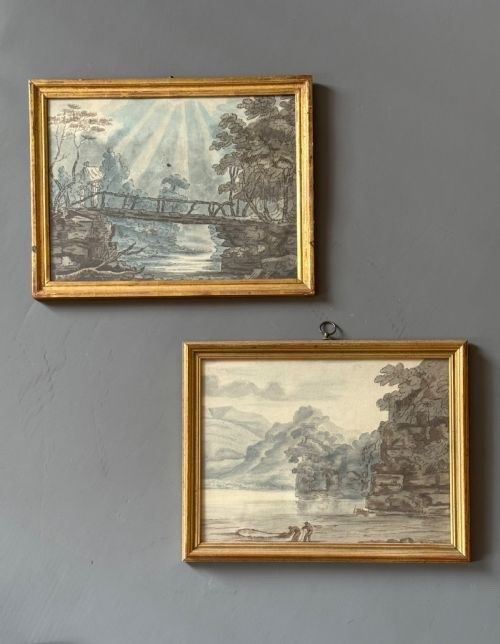
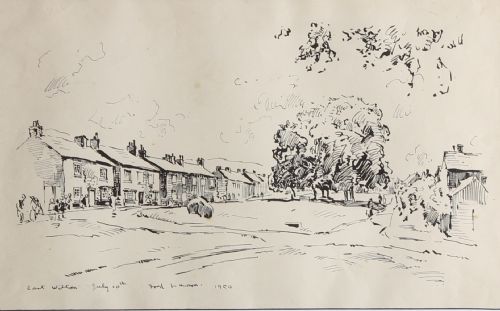
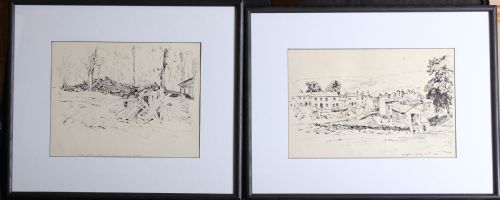
Monochrome ink watercolour works span from the eighteenth century through to the mid-twentieth century, capturing architectural views, rural landscapes, and coastal scenes. Buyers seeking monochrome ink watercolour examples will frequently encounter British regional landscapes, townscapes, and pastoral sketches.
The selection ranges from Georgian topographical views to twentieth-century British works by named artists. These pieces primarily take the form of original drawings, wash paintings, and preparatory sketches executed on paper.
How they were made
Artists laid down initial composition lines using graphite pencil before applying iron gall or carbon-based ink for the primary outlines. Sepia ink and black monochrome pigments provided the foundational structure for these drawings.
Watercolour washes and monochrome washes were diluted to varying opacity to build atmospheric depth and shadow. Works were typically preserved beneath glass and housed within wood, giltwood, or simple period frames.
The listings span the eighteenth, nineteenth, and twentieth centuries, incorporating both named British artists and anonymous topographical draftsmen.
What varies in quality
The control of the wash distinguishes superior examples from hurried sketches, particularly in how shadow and stark light interact across architectural stone and water. Tonal graduation relies entirely on the artist's restraint and handling of diluted pigment.
Paper quality and the stability of the ink influence longevity, with lower grades showing acidification or heavy fading. Stronger pieces display confident pen work beneath the wash that retains clarity across centuries.
Fred Lawson·Stanley Orchart·Edward Dayes·Owen Bowen·Arthur E Gonne·Thomas Lound·Claude Lorrain
The Monochrome Ink Watercolour Glossary
- Monochrome
- Execution in a single colour or shades of a single colour, typically black, grey, or sepia ink. This limitation places emphasis on tone rather than hue.
- Wash
- A thin, transparent layer of diluted watercolour or ink spread across paper to create smooth areas of tone or shadow. It forms the atmospheric background of many landscapes.
- Sepia
- A reddish-brown pigment derived from the ink sac of the cuttlefish, widely utilised in nineteenth-century drawings. It offers a warmer tonal range than standard black carbon ink.
- Topographical
- Depicting a specific real-world place, building, or landscape with factual accuracy. These works often serve as historical records of changing rural and urban environments.
Monochrome Ink Watercolour: Frequently Asked Questions
What is monochrome ink watercolour?
These works combine pen and ink line work with diluted monochrome or sepia washes on paper. They rely on contrast and tone rather than full colour.
The medium was favoured by British artists for rapid topographical studies, landscape sketches, and detailed illustrative work from the Georgian era onward.
How should I frame these works?
Original watercolours on paper require conservation mounting to keep the sheet away from direct contact with the glass. Acid-free materials prevent long-term degradation.
Period wood or giltwood frames suit nineteenth-century pieces, provided the internal mount protects the paper from humidity and trapped moisture.
How do I date a drawing?
Dating relies on stylistic markers, paper watermarks, inscriptions, and the nature of the framing. Georgian pieces often display different paper weights compared to twentieth-century examples.
Signatures, artist biographies, and titled subjects such as specific castles or regional markets also help anchor the work to a particular decade.
Where were these pieces displayed?
Historically, smaller drawings and wash sketches were kept in portfolios by collectors rather than hung permanently on walls. Finished watercolours were framed for domestic display in parlours and studies.
Illustrative works often originated from magazine commissions or topographical surveys before entering private collections.