
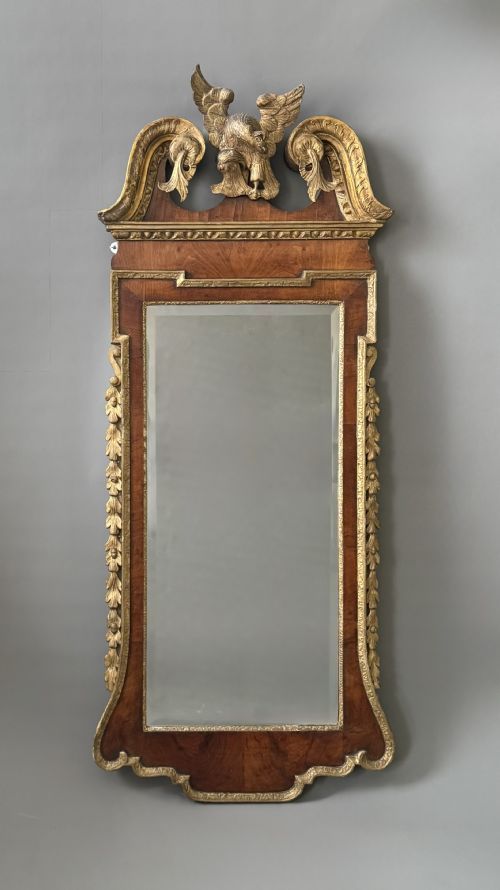
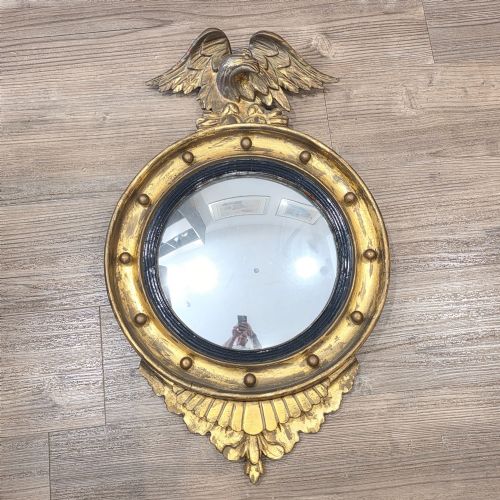
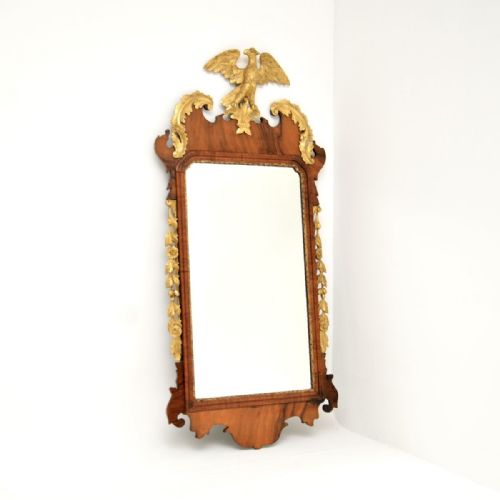
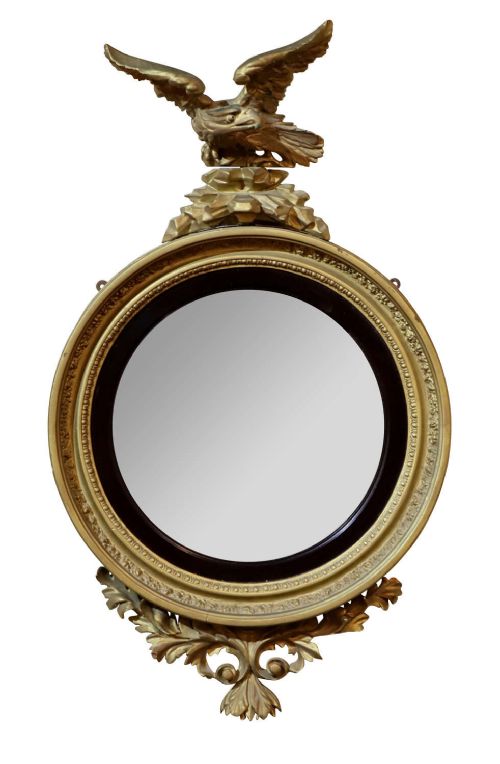




Gilt Eagle Wall Mirror
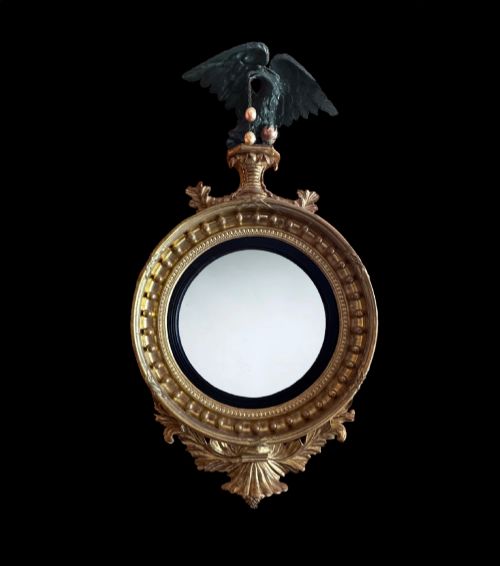
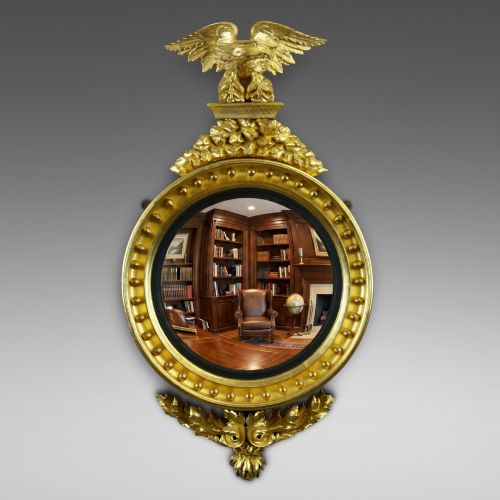
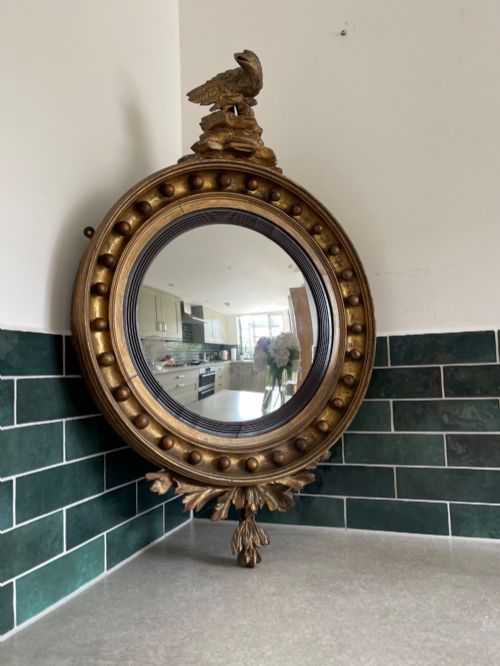
A gilt eagle wall mirror brings intense focus to a room through circular convex glass and a commanding crested bird.
Gilt Eagle Wall Mirror
A gilt eagle wall mirror combines classical symbolism with practical reflection, most frequently appearing in this selection as a circular convex form dating from the Regency period or the nineteenth century. These pieces draw the eye immediately, historically placed to monitor a room or catch ambient light from multiple candles.
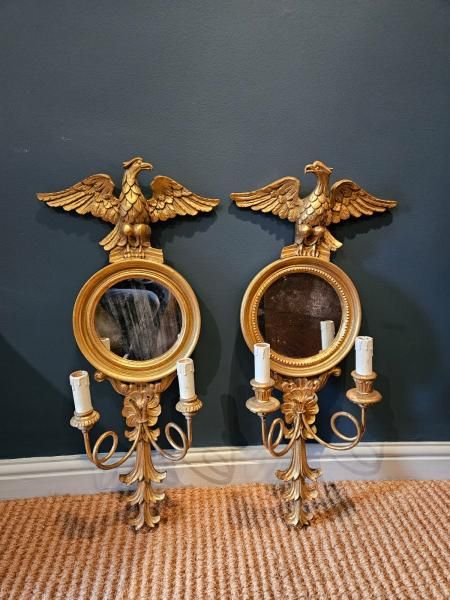
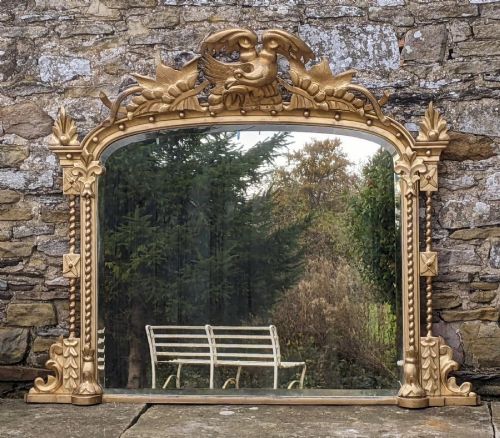
The materials span from traditional giltwood and gesso to mahogany and walnut frames, sometimes accented with ebonised wood or brass details. Alongside round convex examples, the listings include rectangular overmantel mirrors, pier mirrors, and wall sconces spanning the Georgian, Victorian, and Edwardian eras.
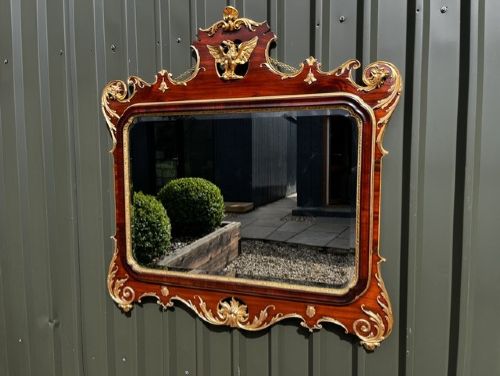
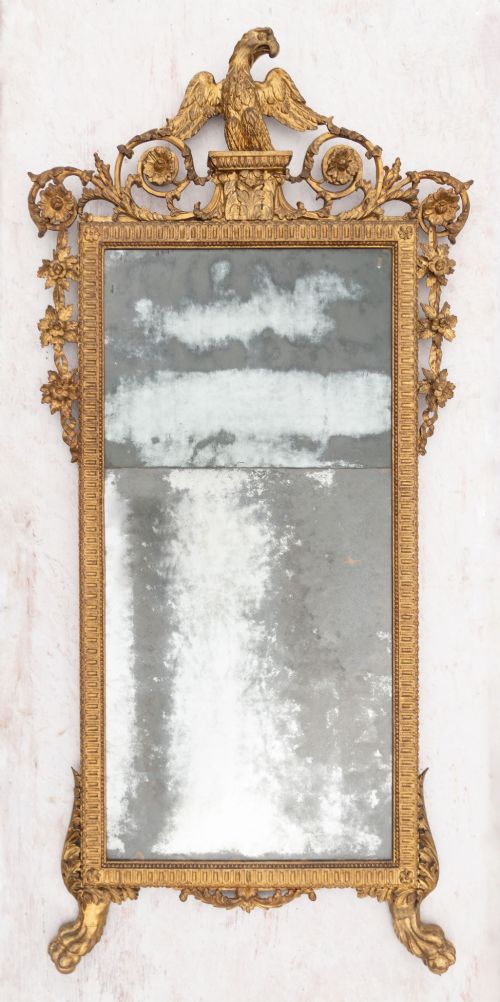
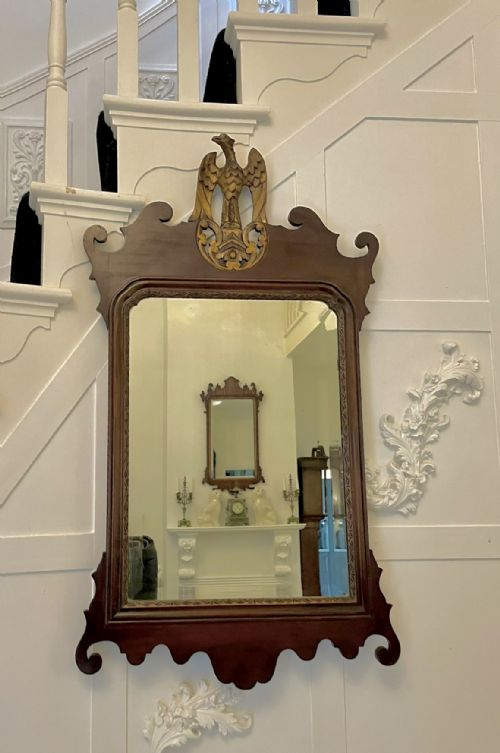
Makers often drew on earlier design vocabulary, producing George II and Chippendale style revivals alongside authentic eighteenth-century works. Whether surmounted by a large spread eagle or a hoho bird crest, each piece relies on carved timber and reflective glass to alter the perceived space of an interior.
How they were made
Makers shaped frames primarily from woods such as mahogany, walnut, and soft timbers, applying layers of gesso to build up intricate surface ornament before gilding with gold leaf. This combination allowed artisans to carve deep relief details like the characteristic spread eagle surmount and delicate fretwork surrounds.
Glass production relied on blowing or casting methods that resulted in heavy convex plates or Vauxhall mirror glass, held securely within rebated wooden frames. Brass fittings and candle arms on girandole models were cast and secured to support the heavy glass and gilded structure safely.
Listings feature periods spanning from the Georgian and Regency eras through to Victorian, Edwardian, and twentieth-century revivals.
What varies in quality
The distinction between standard and exceptional pieces rests in the depth and sharpness of the carved details, particularly the anatomical precision of the eagle surmount and the crispness of the giltwood or gesso enrichment. Early examples show finer proportion in the frame mouldings and superior integration of the crest to the main circular body.
Originality of the mirror glass and the stability of the foundational wood influence the standing of a piece. Fretwork cut from mahogany or walnut requires clean lines and intact corners, while the preservation of the original gilded surface dictates historical integrity.
The Gilt Eagle Wall Mirror Glossary
- Convex mirror
- A round looking glass with an outward-curving surface that produces a wide-angle reflection of the entire room. These forms were especially popular during the Regency period.
- Giltwood
- Timber carved and coated with gold leaf over a prepared gesso ground. This finish provides the characteristic metallic brilliance seen on traditional frames.
- Gesso
- A plaster-like mixture applied to wooden frames and carved to create raised ornamental details before gilding. It allows for sharp, intricate surface decoration.
- Girandole
- A wall mirror featuring attached candle sconces that reflect and multiply candlelight. These fittings often project forward from the sides of the frame.
- Parcel gilt
- A finish where portions of the wooden frame, such as mahogany or walnut, remain exposed while other designated areas receive gold leaf. This technique creates a contrasting two-tone appearance.
Gilt Eagle Wall Mirror: Frequently Asked Questions
Where should I hang a convex mirror?
Convex mirrors project a wide view of an interior, making them effective opposite a window or above a fireplace mantelpiece.
Their curved glass draws light into darker corners, so positioning them at eye level in reception rooms allows for the best visual impact.
How do I identify a Regency convex mirror?
Regency examples typically feature circular frames surmounted by a carved eagle, often accompanied by reeded ebonised inner bezels and ball ornaments.
They date from the early nineteenth century and rely on heavy giltwood construction paired with deep convex glass.
What is the difference between a pier mirror and an overmantel mirror?
Pier mirrors are tall, narrow glasses designed to hang on the wall space between two windows. Overmantel mirrors are broader horizontal pieces built to sit directly above a fireplace.
Both types utilise carved giltwood or mahogany frames but serve distinct architectural placements within historic rooms.
Are these mirrors made of solid gold?
No, the frames consist of carved timber covered in a very thin layer of gold leaf applied over a gesso base. The underlying material is usually wood such as pine, mahogany, or walnut.
This traditional technique provides the appearance of solid gold while keeping the heavy frame structurally manageable for wall hanging.