
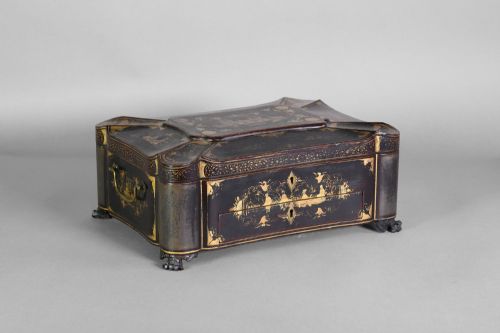
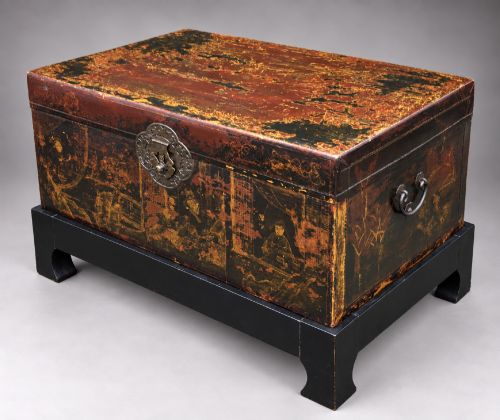
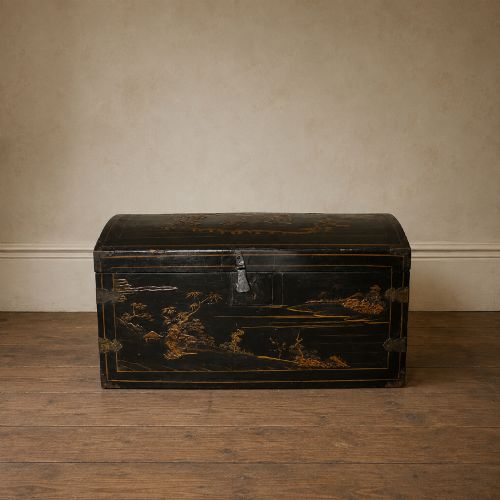
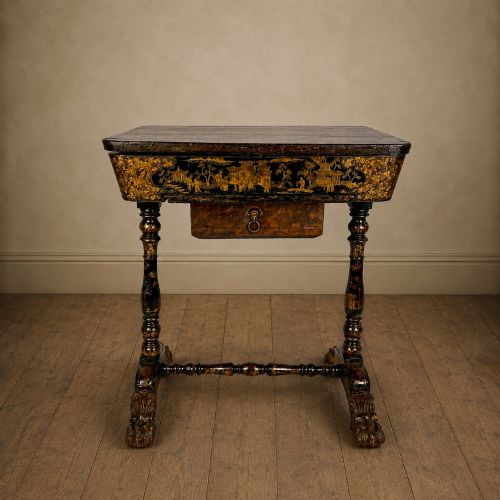
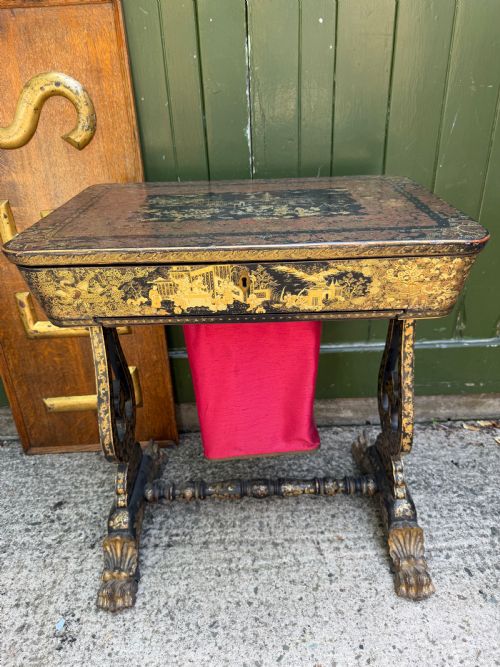


Gilt Chinoiserie Box
These gilt chinoiserie box examples bring hand-painted narrative scenes and rich black lacquer into a room, offering practical storage with striking visual depth.
Gilt Chinoiserie Box
A gilt chinoiserie box brings together traditional lacquerwork and European taste, appearing in forms ranging from small tea caddies and table cabinets to large blanket boxes, trunks, and work tables. When searching for a gilt chinoiserie box, a buyer typically encounters pieces originating from Chinese Export workshops alongside Regency adaptations and later 19th and early 20th-century interpretations.
The objects span multiple centuries of production, including 18th-century coffers, Regency sewing tables, and 19th-century jewellery boxes. Their primary function remains storage, yet their decorative schemes turn ordinary containers into focal points for a room.
How they were made
Construction relies on wood carcasses prepared with layers of lacquer, forming a smooth base for subsequent decoration. Artisans applied gold leaf and paint to build up intricate scenes of figures, landscapes, and floral motifs.
Hardware such as brass hinges, locks, and handles provided functional reinforcement while complementing the metallic highlights of the painted surface. Skilled joinery ensured the stability of larger trunks, chests, and stands over generations of use.
Listings feature wood, lacquer, gold leaf, brass, and paint across forms including trunks, work tables, tea caddies, and table cabinets.
What varies in quality
Quality rests upon the depth of the lacquer layers and the crispness of the gilded decoration. Finer pieces display meticulous brushwork in the figures and landscapes, whereas simpler items rely on repetitive stencilled patterns.
The integrity of the wooden carcass and the preservation of the original painted surface dictate the overall standard. Examples that retain their original brass mounts and structural stability command greater appreciation from collectors.
The Gilt Chinoiserie Box Glossary
- Chinoiserie
- European interpretation and imitation of Chinese and East Asian artistic traditions, popular in furniture and decorative objects. This style heavily influences the surface decoration of the pieces found here.
- Lacquer
- A durable finish applied to wood in multiple layers, derived from natural tree sap or specialised resins. It creates a glossy, resilient surface ideal for intricate gilding.
- Gilt
- Covered thinly with gold leaf or gold paint to highlight specific design elements. This technique adds luminance against dark background finishes.
- Coffer
- A chest or box traditionally used for storing valuables, often fitted with a hinged lid. Historical examples frequently feature sturdy wooden construction.
- Tea Caddy
- A small container designed specifically to store tea leaves safely. These often feature internal compartments and secure lids.
Gilt Chinoiserie Box: Frequently Asked Questions
What is a gilt chinoiserie box?
A gilt chinoiserie box is a decorative container finished with lacquer and detailed with gold leaf or paint depicting Asian-inspired motifs.
These pieces range from tea caddies and jewellery boxes to larger trunks and work tables produced across the 18th, 19th, and early 20th centuries.
How were these boxes used originally?
They served as secure containers for valuable personal items, sewing equipment, tea leaves, or documents.
Many examples doubled as display pieces in formal rooms, reflecting the owner's taste for exotic trade goods and decorative craftsmanship.
How do I care for black lacquer?
Keep lacquer surfaces away from direct sunlight and extreme temperature fluctuations to prevent cracking or warping.
Dust gently with a soft, dry cloth and avoid chemical polishes that can damage the delicate gilt decoration.
How do I tell an 18th-century box from a 19th-century one?
Dating relies on examining the construction methods, wood types, hinges, and the specific style of the painted motifs.
Earlier pieces often show hand-forged hardware and distinct lacquer formulations compared to later Regency and Victorian adaptations.