
Gilt Ceramic Urn Pair
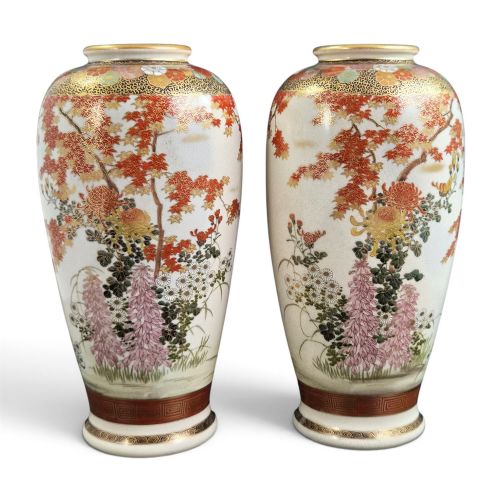
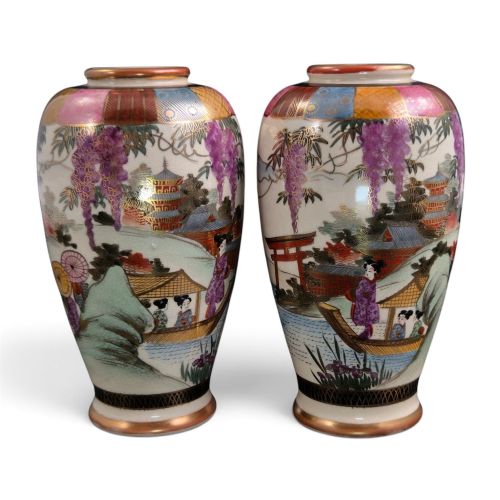
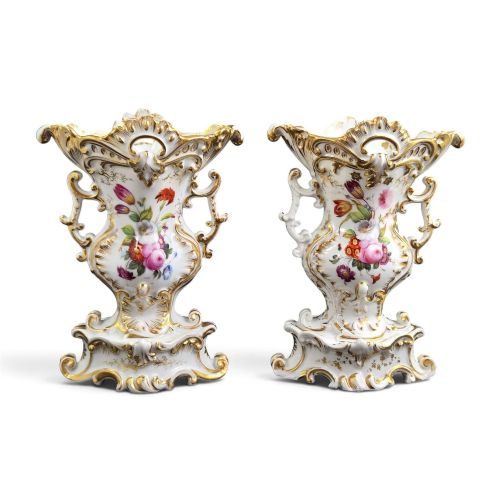
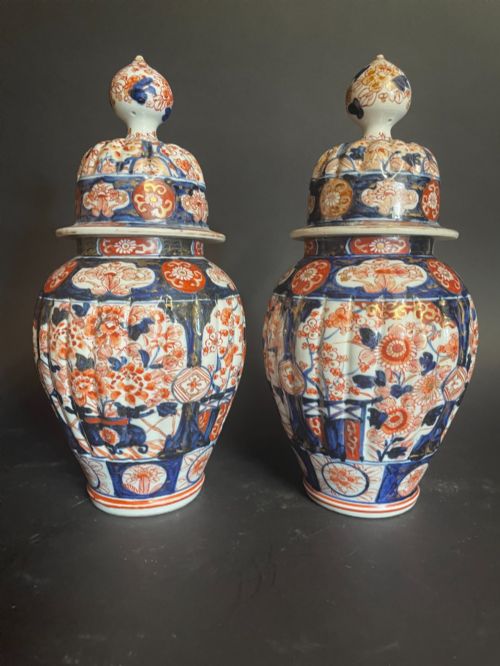
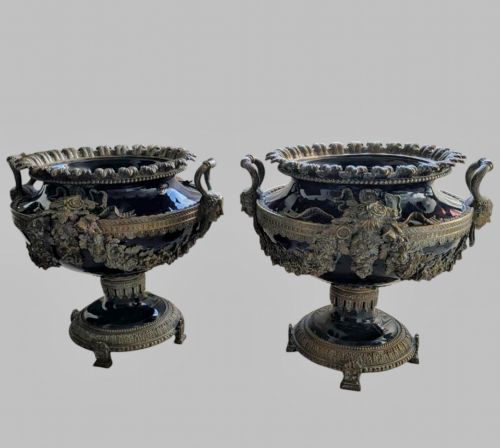
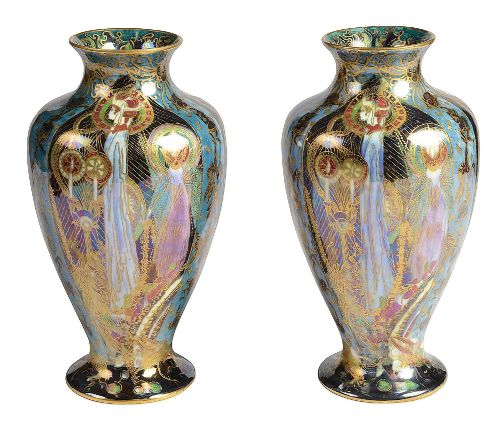
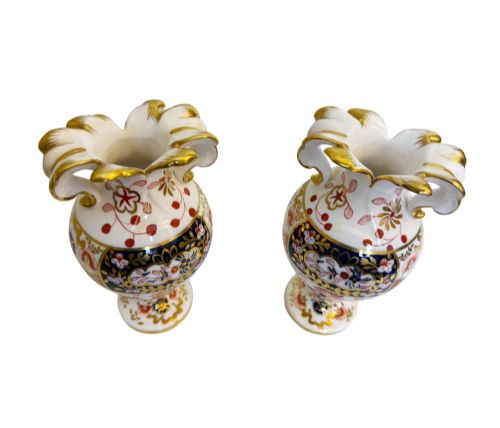
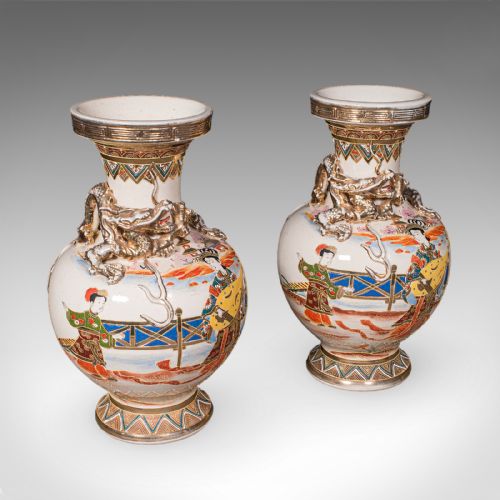
These gilt ceramic urn pair selections bring together nineteenth century European porcelain and Japanese Satsuma earthenware decorated with gold leaf and enamel.
Gilt Ceramic Urn Pair
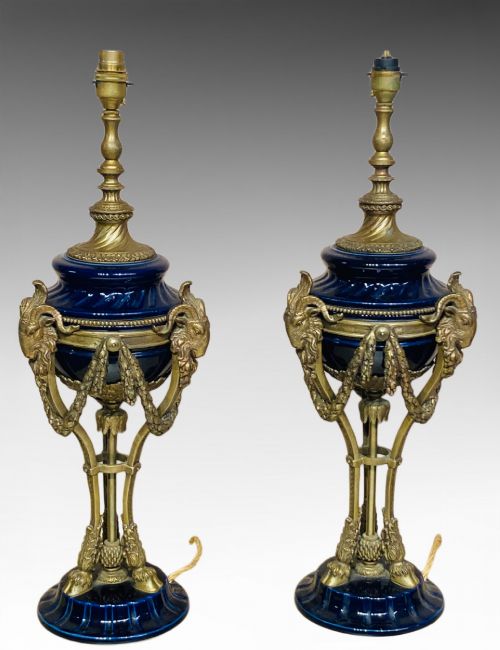
A gilt ceramic urn pair gathers matching decorative vessels intended for display across nineteenth and early twentieth century interiors. These objects appear in forms ranging from traditional baluster vases and lidded jars to campana shapes and converted table lamps.
The pieces divide principally between European factories working in neoclassical or rococo revival styles and Japanese workshops producing Satsuma, Kutani and Imari wares. Japanese ceramic pairs frequently feature intricate enamel scenes enhanced with gilt highlights across hexagonal or baluster bodies.
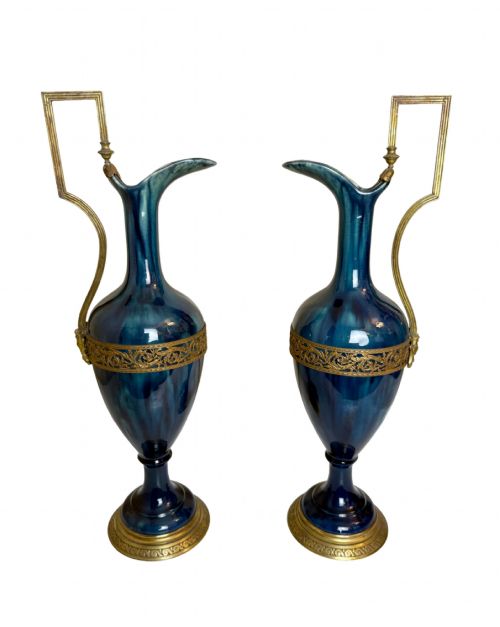
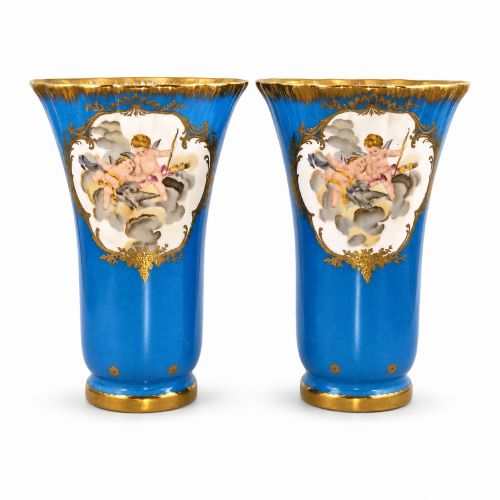
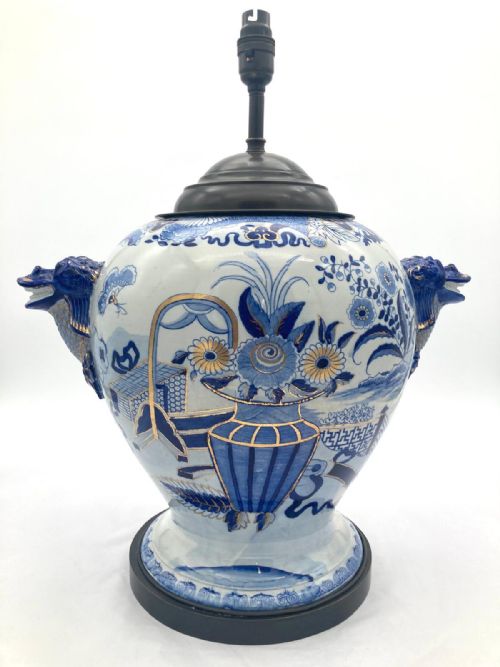
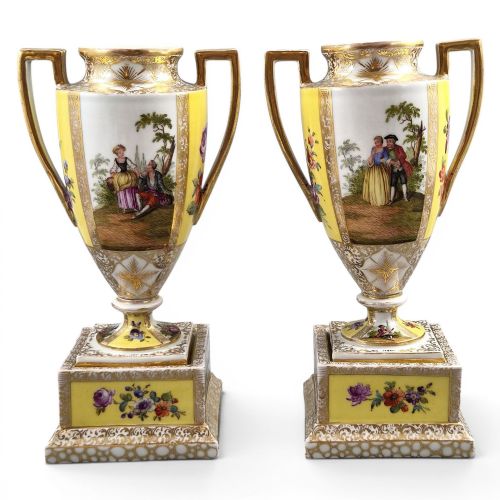
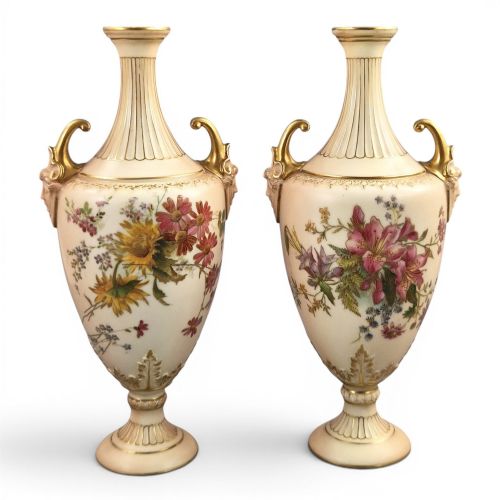
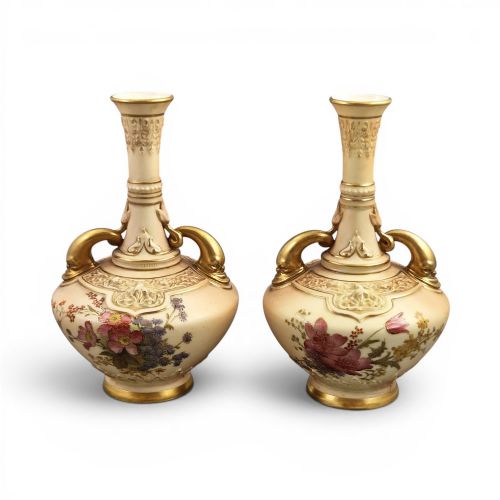
European examples include French bleu céleste porcelain, English ironstone and Wedgwood lustre wares alongside blush ivory pieces from Royal Worcester. Many surviving pairs retain ormolu mounts, gilt bronze trim or bespoke bases added during the nineteenth century.
Standards of Craftsmanship
Quality rests upon the precision of the hand painting and the crispness of the modelled ceramic form. Superior pairs display finely detailed brushwork in the enamel and gilding without blurring or fading.
The consistency of the glaze and the alignment of the matching pair indicate the skill of the original workshop. Exhibition quality pieces show exceptional depth in the gold leaf and meticulous attention to secondary decorative borders.
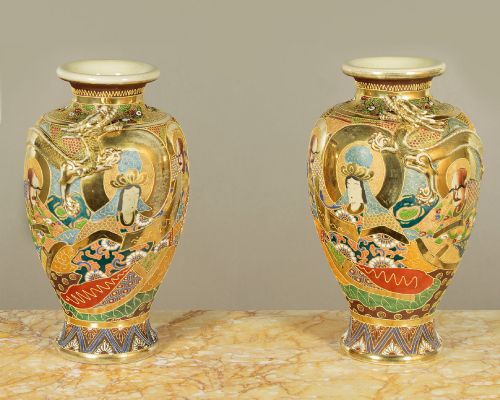
Several Satsuma vases hide miniature painted Rakan and dragons among the gold clouds, rewarding close inspection with tiny hidden faces.
Jacob Petit·Royal Worcester·Kinkōzan·Helena Wolfsohn·Spode
The Gilt Ceramic Urn Pair Glossary
- Satsuma
- Japanese earthenware pottery featuring a ivory-coloured crackle glaze decorated with fine enamel and gilt motifs. This ware gained immense popularity during the Meiji period for export markets.
- Ormolu
- Gilded bronze mounts attached to ceramic vessels to provide handles, bases or decorative rims. French makers utilised this technique extensively during the nineteenth century.
- Campana
- An antique vase shape resembling an inverted bell with flared rims and handles. These classical forms appeared frequently in nineteenth century European porcelain.
- Moriage
- A Japanese ceramic decorating technique where enamel is piped in raised dots and lines to create textured patterns. This method often incorporates heavy gilding.
- Baluster
- A tall vase form with a rounded lower body tapering to a narrow neck and flared rim. The silhouette mimics architectural balusters found on staircases.
Gilt Ceramic Urn Pair: Frequently Asked Questions
How do I clean antique gilt ceramics?
Dust these surfaces gently with a soft dry brush to protect delicate gold leaf and enamel decorations. Avoid liquid cleaners, abrasive cloths or chemical solvents which damage historic glazes.
Keep pieces away from direct sunlight and areas prone to high humidity to preserve the integrity of the ceramic body and mounts.
Were these urns originally used for plants?
Most decorative urns and vases served purely as interior display ornaments on mantelpieces, consoles or cabinets. Jardinieres and certain large jars accommodated potted plants or floral arrangements.
Many nineteenth century examples were later adapted into table lamps with wiring running through the base.
How can I tell Satsuma ware from other Japanese pottery?
Satsuma ceramics display a distinct fine crackle glaze over a cream-coloured earthenware body. The hand painted decoration relies heavily on elaborate enamel work and extensive gold leaf highlights.
Kutani and Arita wares utilise porcelain bodies with different colour palettes, typically focusing on iron red and deep cobalt blues.
What does ormolu mounting indicate?
Ormolu mounts signify high-end European decorative arts, particularly French porcelain production from the nineteenth century. These gilded bronze additions enhanced the status and visual weight of the ceramic vessel.
French and English makers added these mounts to protect rims and provide architectural structure.