


Gilt Ceramic Lamp
A gilt ceramic lamp brings together hand-painted earthenware or porcelain and metal mounts to light a room with old-world texture.
Gilt Ceramic Lamp
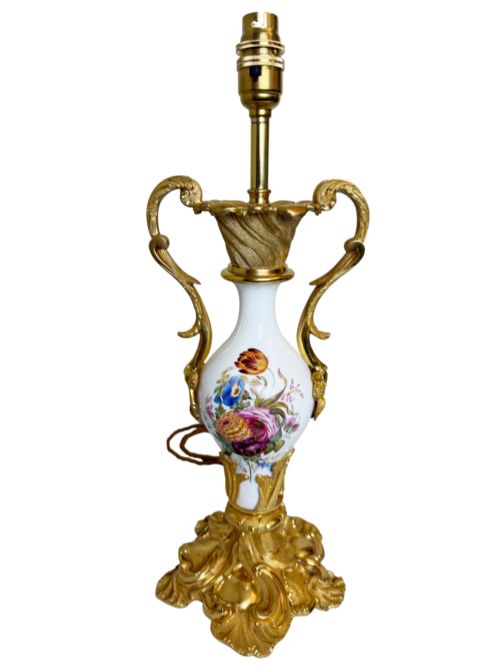
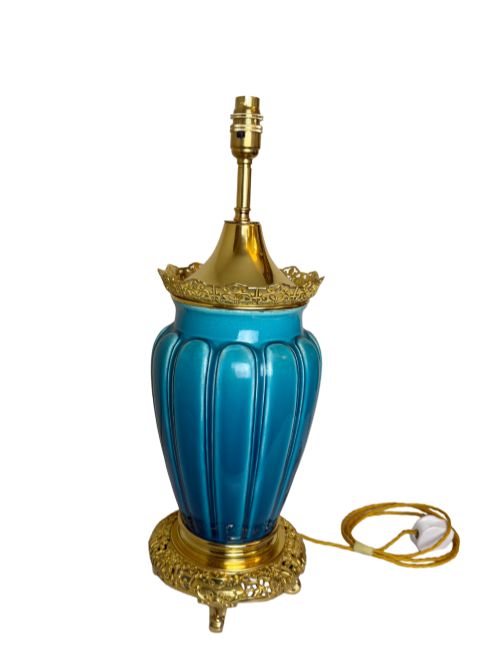
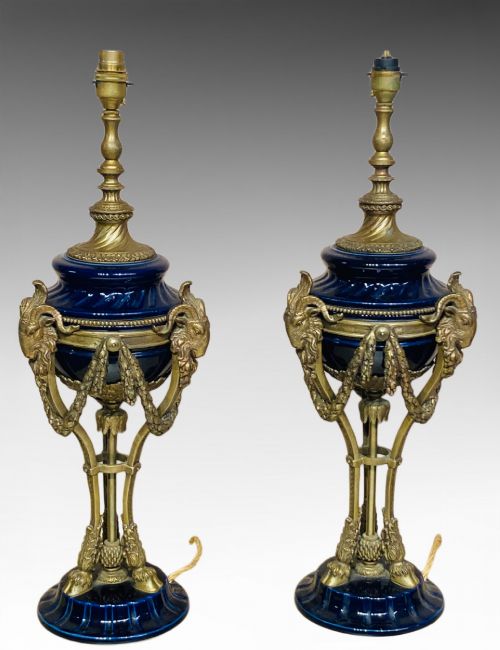
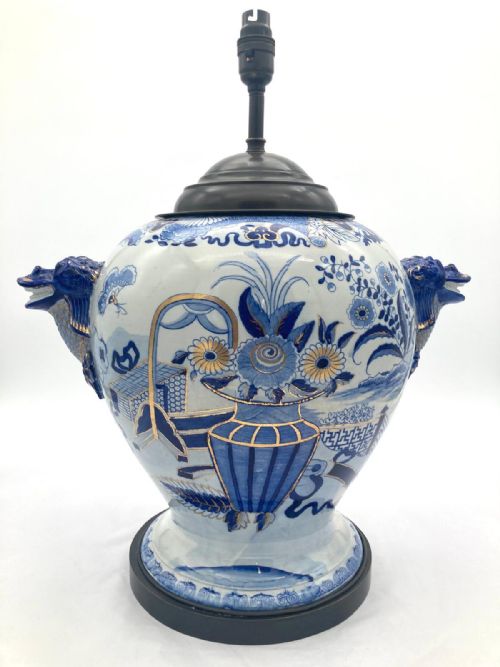
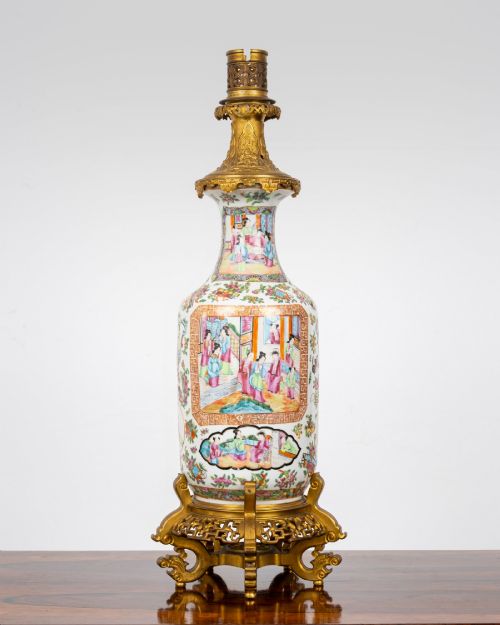
A gilt ceramic lamp usually takes the form of a converted vase, an antique jar, or a purpose-made porcelain body paired with metallic elements. These pieces span the eighteenth, nineteenth, and early twentieth centuries, with a strong representation of Chinese export wares, Japanese Satsuma and Imari, and European porcelain houses.
The ceramic bodies often arrive glazed in powder blue, turquoise, famille rose, or cobalt white, while the metallic additions supply structural support and decorative framing.
Many items begin life as decorative vessels before conversion into table lamps, retaining their original hand-painted motifs such as florals, figures, or intricate patterns beneath the electrical fittings.
Materials and construction
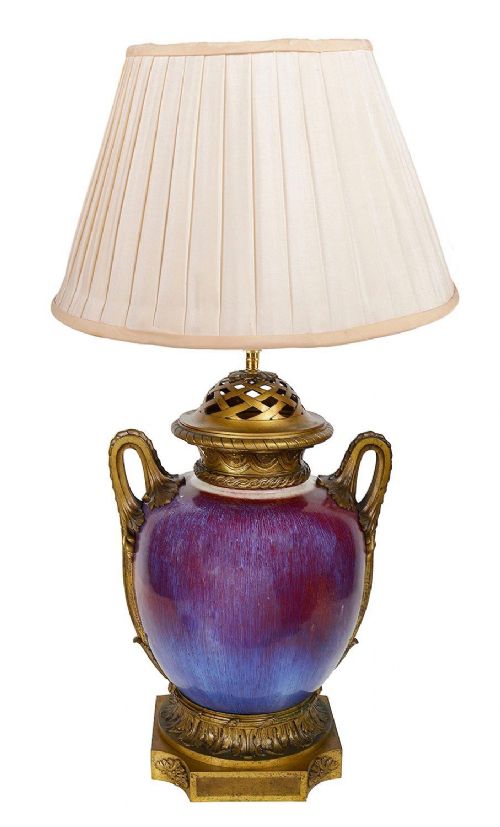
Makers combined fired ceramic or porcelain bodies with cast metal components, utilising brass, gilt bronze, or ormolu for mounts, bases, and neck fittings. The gilding process applied thin layers of gold or gold-coloured finish to highlight handles, rims, and bases.
Conversion work involved drilling the base or lower body of an existing vase to thread wiring, securing the electrical components between custom metal mountings and handmade fabric or silk shades.
Many of these lamps started life as dinner table centrepieces or mantel ornaments before getting a second career with a lightbulb.
Judging quality and craftsmanship
Quality rests in the crispness of the hand-painted ceramic details and the weight and chasing of the metal mounts. Finer examples display precise brushwork on the porcelain alongside solidly cast ormolu or gilt bronze that fits the contours of the vessel exactly.
Conversion methods also dictate standard; professional mounting preserves the integrity of the antique ceramic body without damaging the original glaze or painted scenes.
Hicks and Meigh·Samson
The Gilt Ceramic Lamp Glossary
- Ormolu
- Finely ground gold applied in a mercury amalgam to bronze mounts. This technique provides a rich, durable golden finish found on nineteenth-century French and English pieces.
- Famille Rose
- A palette of opaque enamel colours dominated by pink, introduced to Chinese porcelain during the Qing dynasty. It appears frequently on decorated vase lamps.
- Satsuma
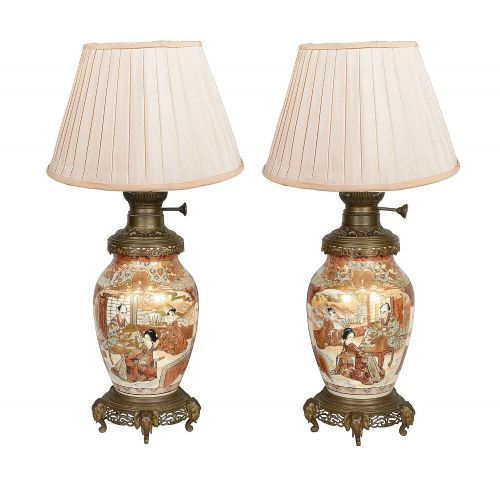
- Earthenware originating from the Satsuma province of Japan, typically finished with a ivory crackle glaze and dense polychrome and gilt decoration. These pieces are often converted into lamps.
- Toleware
- Painted sheet metal used for decorative items and lamp components. It brings matte or gloss colour to brackets andchandeliers.
- Rose Medallion
- A distinct style of Chinese export porcelain featuring segmented panels of figures, birds, and flowers outlined in green and gold. It decorates many nineteenth-century lamp bases.
Gilt Ceramic Lamp: Frequently Asked Questions
How are antique vases converted into lamps?
Artisans drill a careful hole through the ceramic base or lower foot to feed the electrical cord upward through the centre of the vessel. Metal mounts and threaded brass stems then secure the bulb fitting at the top.
This method allows decorative vessels to serve a functional purpose while keeping the original glazed body largely intact.
How do I care for my gilt ceramic lamp?
Dust the ceramic body and any fabric shades gently with a soft, dry cloth on a regular basis. Avoid harsh chemical cleaners or abrasive pads that might wear away delicate hand-painted enamel or surface gilding.
Keep the metal mounts polished only with dry, non-abrasive cloths to preserve their historic finish.
How do I identify Japanese Satsuma pottery?
Japanese Satsuma pieces present an ivory or cream-coloured earthenware body covered in a fine network of crackled glaze. They are further distinguished by densely applied enamel designs enhanced with raised gold leaf.
These ceramics appear frequently as converted table lamps from the nineteenth century.