


Gilt Carved Wood Settees
These gilt carved wood settees bring formal seating from the eighteenth, nineteenth, and twentieth centuries into your interior.
Gilt Carved Wood Settees
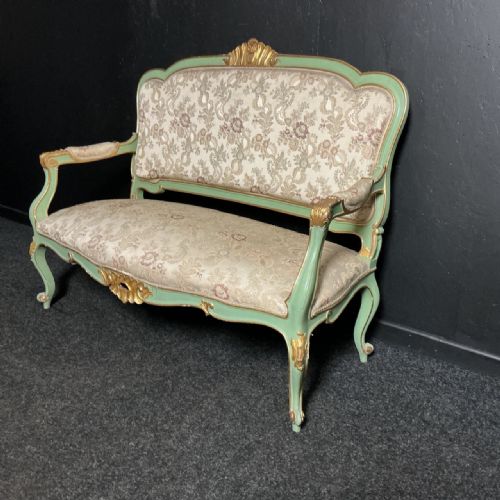
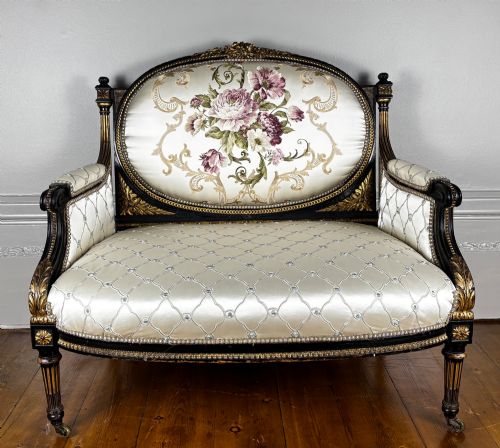
When you search for gilt carved wood settees, you find grand seating designed for formal reception rooms and parlours. These large seats range from eighteenth-century English designs to nineteenth-century French salon pieces and later twentieth-century interpretations. The selection leans heavily towards French taste, including Louis XV and Louis XVI styles alongside Victorian revivals.
You will encounter pieces described variously as sofas, settees, canapes, and salon suites. The physical forms vary from carved giltwood frames with exposed timber to painted and parcel gilt surfaces upholstered in silk damask and other textiles. These seats accommodate two or more occupants, functioning historically as focal points in wealthy domestic interiors.
How they were made
Maker's workshops built these frames from timber, employing skilled carvers to shape intricate decorative motifs directly into the wood. Craftsmen then applied gold leaf or paint finishes to the carved surfaces, creating the characteristic giltwood appearance seen on pieces from the eighteenth century onwards. Structural integrity relied on robust joinery hidden beneath the decorative exterior.
Upholstery completed the piece, utilising traditional stuffing techniques covered in textiles such as silk damask and patterned fabrics. Later additions often feature replacement coverings while retaining the original carved wooden skeleton beneath. The combination of carved timber and rich upholstery defined the standard method of production across all periods.
Listings feature pieces spanning from the eighteenth century through the nineteenth and twentieth centuries, predominantly showcasing French and English aesthetic traditions.
What varies in quality
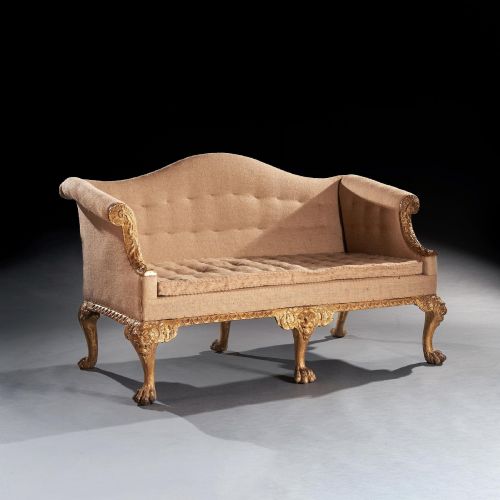
Quality rests primarily in the crispness and depth of the wood carving across the frame. Master carvers produced fluid, confident lines on eighteenth-century pieces like the George II giltwood sofa, whereas lesser examples show shallower, mechanical detailing. The refinement of the gilt finish itself, whether burnished gold leaf or painted surfaces, distinguishes superior pieces from standard workshop output.
Proportion and structural balance also separate the top tier of settees from ordinary examples. Pieces with harmonious dimensions, such as canapes described with desirable proportions, maintain visual elegance despite their substantial size. The quality of the underlying timber and the preservation of original framing elements dictate the standing of each piece.
Giles Grendey
The Gilt Carved Wood Settees Glossary
- Giltwood
- Timber coated with a thin layer of gold leaf. This finish defines the reflective, opulent surface characteristic of formal European seating.
- Canape
- An ornamental sofa or settee originating in France. These pieces typically feature exposed wooden frames and upholstered backs and seats.
- Rococo Revival
- A nineteenth-century movement emulating the asymmetrical curves and shell motifs of the eighteenth-century Rococo period. Furniture from this era displays flamboyant carved woodwork and exuberant shaping.
- Damask
- A reversible figured fabric traditionally woven in silk or wool. It frequently appears as the upholstery material on formal nineteenth-century salon seating.
Gilt Carved Wood Settees: Frequently Asked Questions
What is a gilt carved wood settee?
A gilt carved wood settee is a large, formal seat featuring an exposed wooden frame decorated with carving and a gold finish. These pieces were historically designed for reception rooms and salons.
They accommodate multiple sitters and often feature upholstered backs and seats covered in silk damask or decorative textiles.
How do I date a settee?
Dating relies on identifying the stylistic markers, such as the straight tapered legs of Louis XVI designs or the curved, asymmetrical lines of Rococo Revival pieces. Materials and construction methods also help place a piece within the eighteenth, nineteenth, or twentieth centuries.
Examining the timber and the application of the gilt finish provides further clues to the period of manufacture.
Where were these settees used?
These pieces served as formal seating in the principal rooms of large houses, mansions, and townhouses. They were positioned in salons, drawing rooms, and parlours to receive guests and display wealth.
Their decorative gilt frames and luxurious upholstery ensured they functioned as centrepieces of interior decoration.
How do I live with antique gilt seating?
Live with these settees by placing them out of direct sunlight to protect fragile giltwood surfaces and silk damask upholstery. Position them where their substantial size and decorative presence can be appreciated without obstructing daily movement.
Regular, gentle dusting preserves the gold leaf, while careful use prevents wear to antique fabrics.