
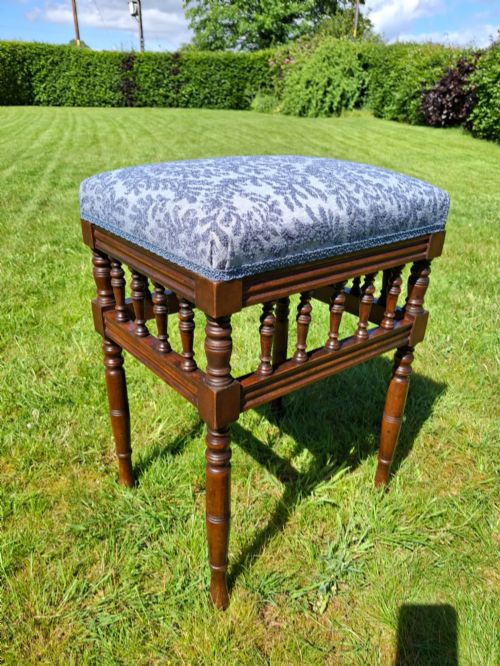


Blue Upholstered Bench
A blue upholstered bench offers flexible seating, bringing rich colour and historic character into a room through varied period forms.
Blue Upholstered Bench
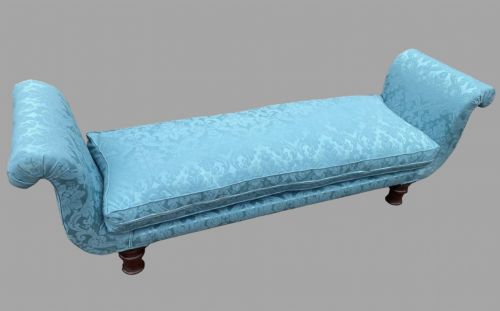
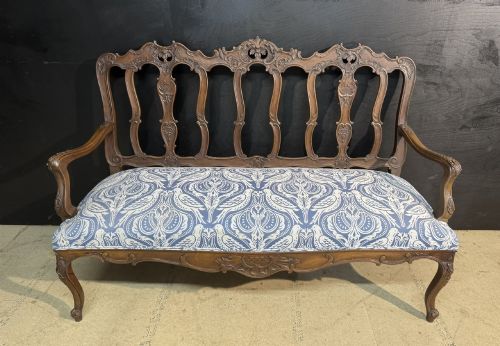
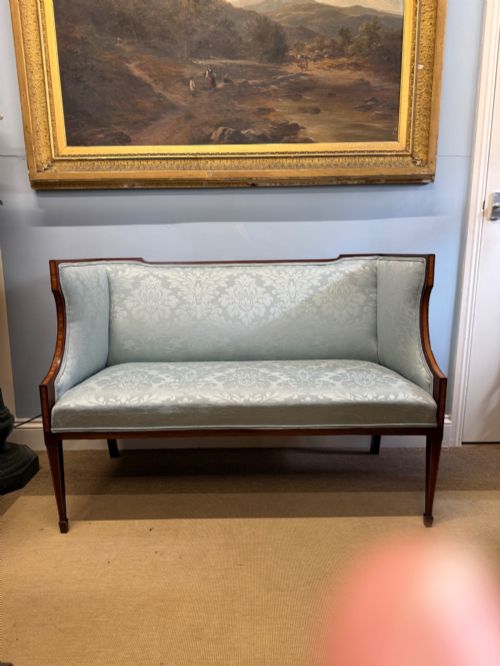
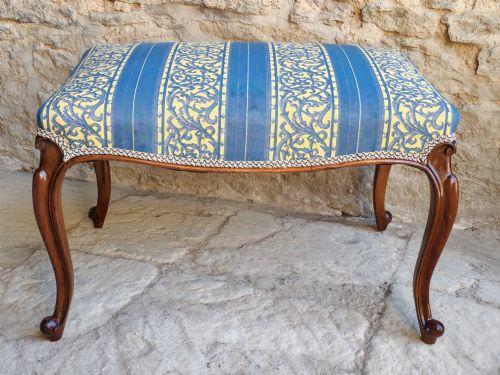
A blue upholstered bench encompasses a wide range of seating forms designed for various rooms, from large settees and small window seats to piano stools and ottomans. These pieces emerge from the nineteenth century, the Edwardian era, and the nineteen-twenties and thirties, spanning styles such as Victorian, Regency, Louis XVI, and Rococo Revival.
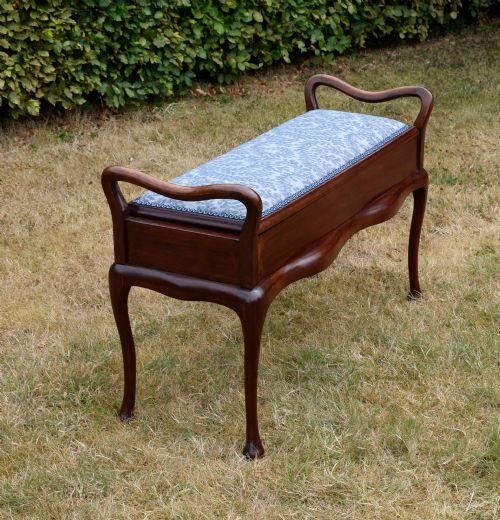
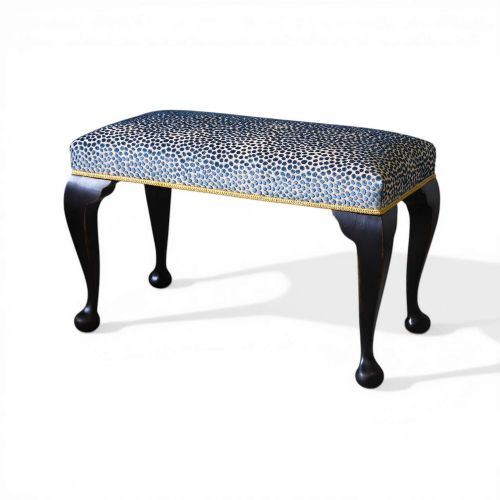
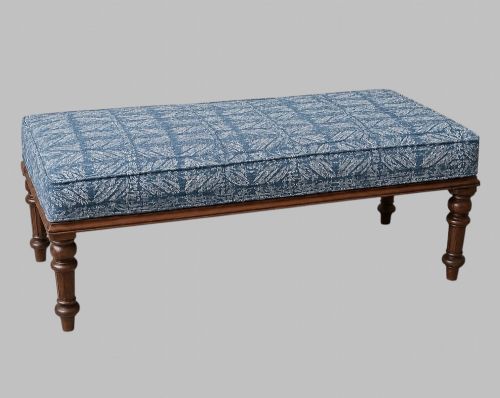
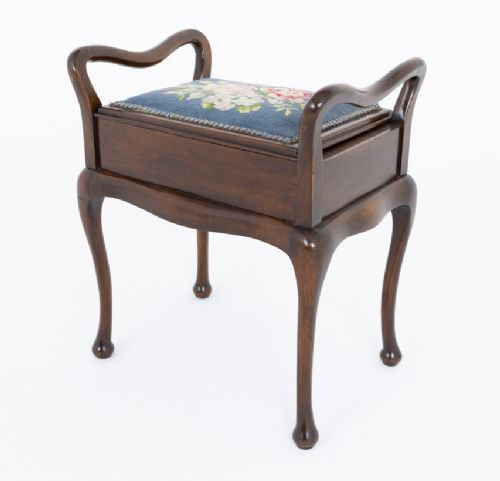
The version most commonly met on this page is the walnut or mahogany stool or settee upholstered in fabric, velvet, or textile. Buyers find examples ranging from compact dressing table stools to expansive three-seater couches and conversation seats.
Many of these forms serve specific historic functions, such as piano stools for music rooms or window seats positioned beneath glazing. They adapt easily to modern interiors while retaining the distinct proportions of their original periods.
Materials and construction methods
Makers utilised solid timbers such as mahogany, walnut, rosewood, and ebonised wood to build the structural frames of these seats. These woods often display carved details, turned legs, or fluted supports characteristic of their respective periods.
Upholstery materials include textured fabrics, plush velvets, and specialist textiles, sometimes accented with details like tassel trims or button backs. Frames frequently employ traditional joinery methods suited to the wood type and the stylistic demands of the design.
Periods represented on the page include the Victorian era, the Edwardian period, the Regency era, and the nineteen-twenties.
Distinctions in quality and execution
Quality separates through the crispness of timber carving, the selection of dense hardwoods like rosewood and walnut, and the precision of structural joinery. Finer pieces show greater harmony between the frame's architectural proportions and its decorative elements.
The standard of upholstery and the choice of covering fabric also dictate the tier of a piece. Finer examples maintain disciplined tension in the padding and utilise durable, historically sympathetic textiles that respect the integrity of the frame.
The Blue Upholstered Bench Glossary
- Window seat
- A long, narrow bench designed specifically to sit within the recess of a window. These pieces often feature upholstered tops and wooden frames.
- Conversation seat
- An upholstered piece designed for two or more people to sit facing different directions while conversing. Early Victorian examples often use rosewood frames.
- Lit Bateau
- A French bed or daybed style translating to boat bed, characterised by scrolled ends of equal height. Nineteenth-century examples occasionally function as daybeds.
- Canape
- An upholstered sofa or settee with a wooden frame, common in French eighteenth-century and nineteenth-century revival styles. These often exhibit carved walnut or giltwood structures.
- X-Framed stool
- A stool supported by intersecting diagonal legs forming an X shape. This classic form provides strong structural support beneath an upholstered seat.
Blue Upholstered Bench: Frequently Asked Questions
What rooms suit a blue upholstered bench?
These benches fit naturally into bedrooms as dressing table seats, hallways as compact hall benches, or living rooms as extra seating options.
Their varied lengths and forms allow them to sit beneath windows or alongside larger sofas without dominating the floor space.
How do I identify a Victorian piece?
Victorian pieces frequently utilise mahogany or walnut timbers, often featuring carved wooden details or button-backed upholstery.
Proportions tend to be sturdy and substantial, reflecting the manufacturing methods and stylistic preferences of the mid to late nineteenth century.
Are these benches comfortable for daily use?
Many examples are designed for relaxed sitting, utilising padded upholstered tops and supportive wooden frames.
Stools and piano stools offer firm support, while larger settees and couches provide softer cushioning suitable for extended lounging.
What is the difference between a stool and a settee?
Stools provide backless, single-person or duet seating designed for dressing tables, pianos, or short rest periods.
Settees and couches incorporate backs and sometimes arms, accommodating multiple people for longer periods of relaxation.