
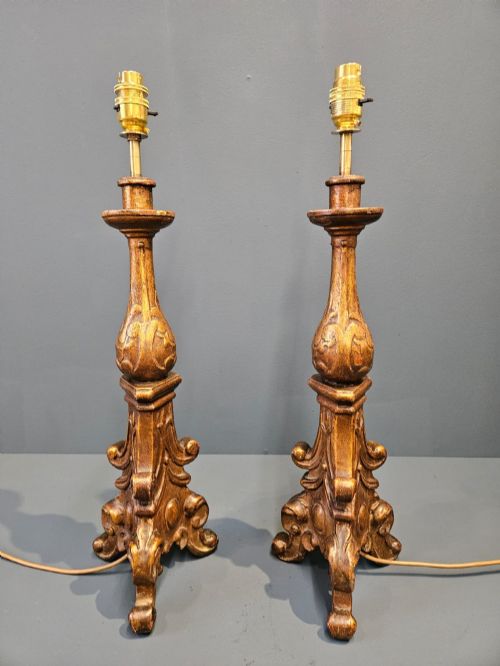


Gilt Candlestick Table Lamp
These gilt candlestick table lamps bring a warm metallic glow and classical proportion to a room, sourced from past centuries.
Gilt Candlestick Table Lamp
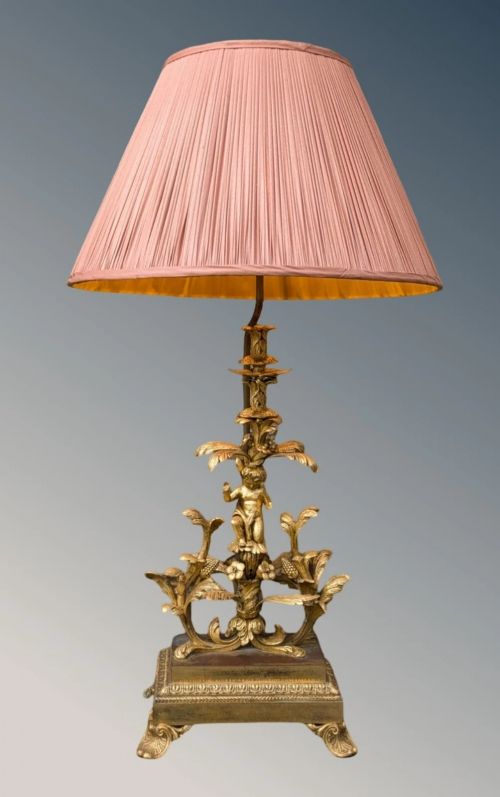
A gilt candlestick table lamp combines historical illumination fittings with decorative metallic or gilded surfaces. These pieces frequently originate from the nineteenth century, often adapting earlier lighting forms into functional modern lamps.
The selection ranges from French Empire ormolu and carved Italian giltwood to English brass and Spanish altar candlesticks. Many survivors began life as church candlesticks, candelabras or desk lamps before conversion.
Buyers meet pairs as well as single examples, spanning styles from Rococo Revival and Neoclassical to Victorian and French Chateau. These objects serve as prominent decorative focal points on tables, desks and sideboards.
Materials and construction
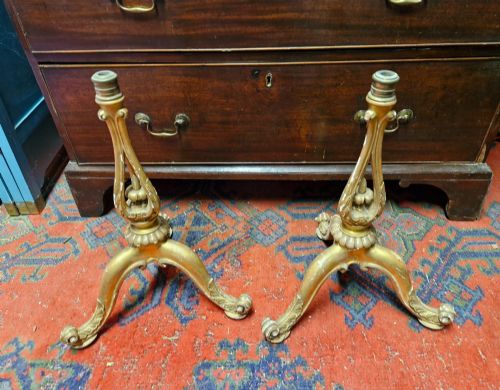
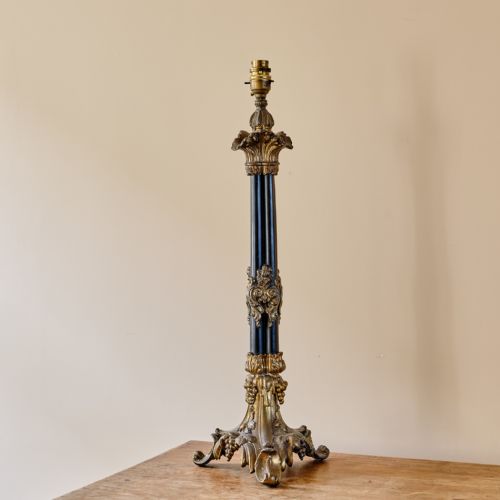
Construction relies heavily on cast metals such as bronze, brass and ormolu, alongside hand-carved wood finished with gesso, silver leaf or gold leaf. Artisans shaped these materials into columns, tripod bases and figural mounts.
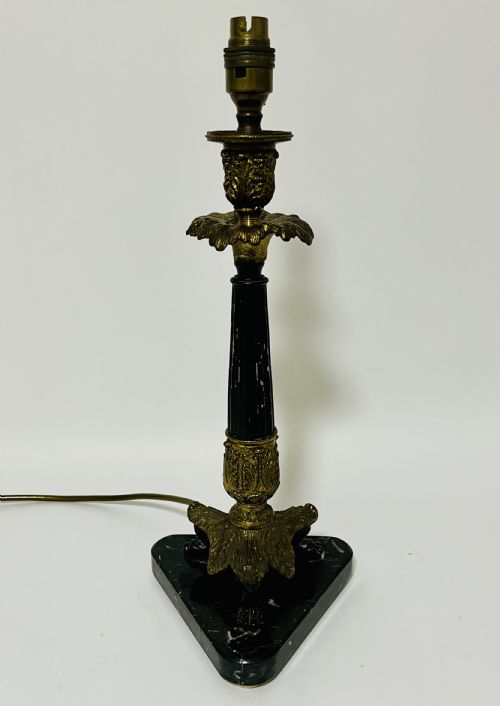
Many items incorporate secondary elements like marble bases, blue glass or toleware, demonstrating diverse workshop practices across continental Europe and England. Gilding was applied meticulously to metallic bases or carved wooden surfaces to catch ambient light.
Some tall altar candlesticks spent centuries holding candles in dim European churches before trading incense for electricity.
Factors determining quality
Quality rests upon the crispness of the casting in bronze and ormolu, or the depth and detail of hand-carved gesso and giltwood. Superior examples exhibit finely chased surface details and well-balanced proportions.
The integrity of the original gilding and the authenticity of the conversion from a candlestick or candelabrum to an electric lamp influence desirability. Pieces reflecting distinct regional styles like French Empire or Italian Baroque command strong interest.
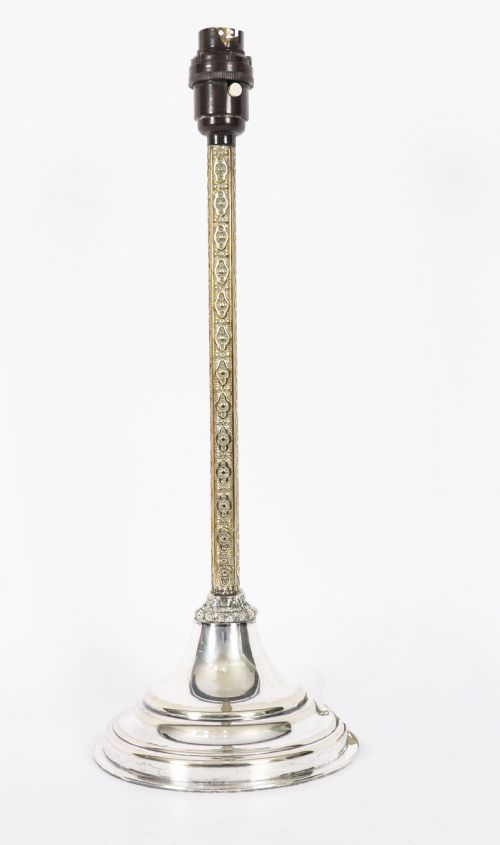
Mappin & Webb
The Gilt Candlestick Table Lamp Glossary
- Ormolu
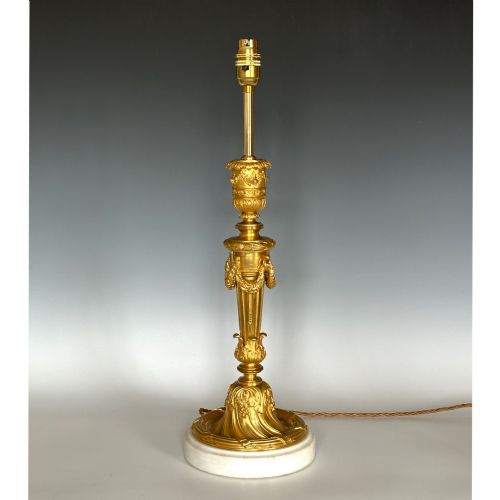
- Finely ground high-carat gold applied to a bronze base, creating a rich golden finish common in French decorative arts. This technique flourished during the eighteenth and nineteenth centuries.
- Giltwood
- Timber carved and coated with gold leaf or powder over a prepared gesso ground. It provides a warm, reflective surface for decorative furniture and lighting.
- Bouillotte lamp
- An adjustable metal desk lamp with a central shaft and a painted shade, traditionally used for card games. Examples often incorporate brass or toleware materials.
- Pricket candlestick
- A candleholder featuring a central spike upon which the candle is mounted rather than dropped into a socket. These often date from ecclesiastical or altar contexts.
- Candelabra
- A branched lighting fixture holding multiple candles, frequently converted later into electric table lamps. They offer a larger visual presence than single candlesticks.
Gilt Candlestick Table Lamp: Frequently Asked Questions
Are these lamps converted from real antiques?
Many listings derive from genuine period candlesticks, altar pieces and candelabras produced in the eighteenth and nineteenth centuries. These items were later adapted to house electrical components while retaining their original metal or wooden bodies.
Conversion methods vary, but the primary structure remains historically intact, preserving the original patina, carving and cast ornamentation created by period workshops.
How do I identify French Empire style?
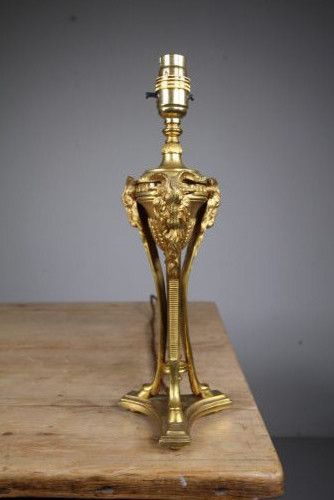
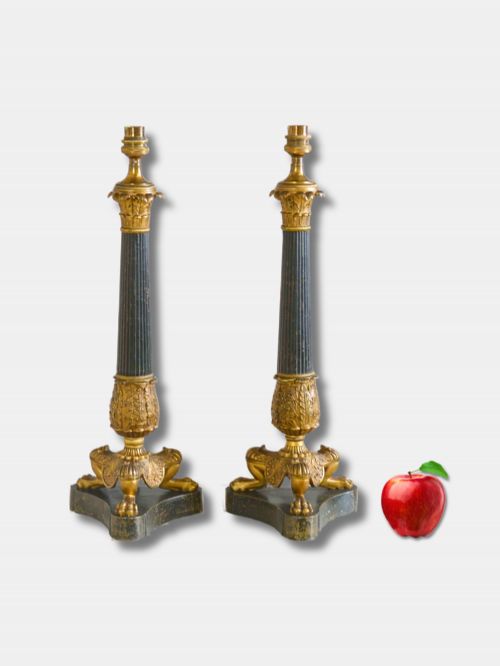
French Empire pieces typically display classical military motifs, laurel wreaths, lions' paw feet and crisp ormolu mounts against dark bronze. The aesthetic reflects early nineteenth-century neoclassical design trends.
Proportions are bold and architectural, drawing inspiration from ancient Greek and Roman forms adapted for European salons and chateaux.
Do these lamps come in pairs?
The inventory includes both matched pairs and individual table lamps. Pairs are particularly common among altar candlesticks, tripod bases and column lamps.
Single lamps often originate from desk lamps, bouillotte designs or larger candelabras that survived independently over the centuries.
What materials were used besides ormolu?
Construction materials extend beyond ormolu to include carved giltwood, solid brass, bronze, gesso, timber and occasional accents of marble or blue glass. Hand-carved wooden examples often feature applied silver leaf or gold leaf.
Different European regions favoured distinct materials, such as carved wood in Italy and Spain, and cast bronze or ormolu in France.