



Gilded Carved Wooden Lamps
Gilded carved wooden lamps bring warmth and historical texture to a room, catching light across surfaces shaped by hand over centuries.
Gilded Carved Wooden Lamps
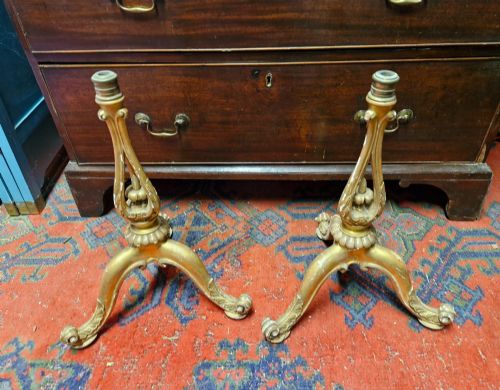
When you search for gilded carved wooden lamps, you encounter a diverse array of lighting forms ranging from tall floor standards and pricket sticks to table bases and multi-light chandeliers. These pieces span several centuries, with items originating from English, French, Spanish, and Italian workshops.
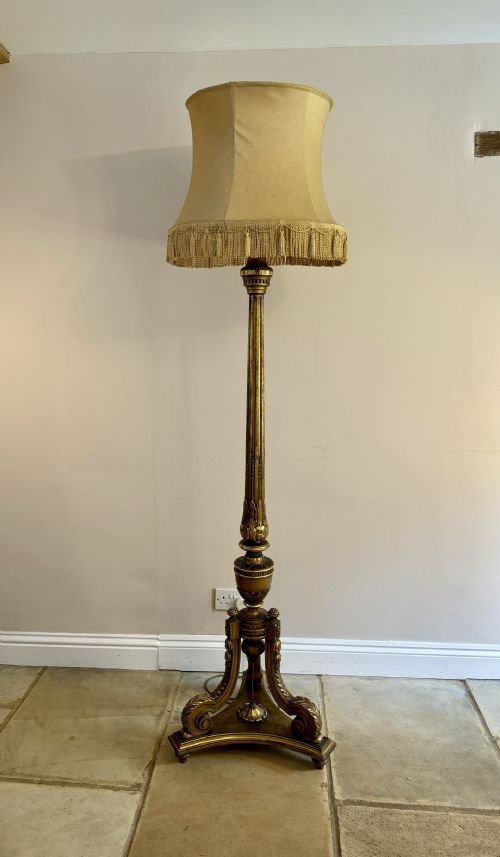
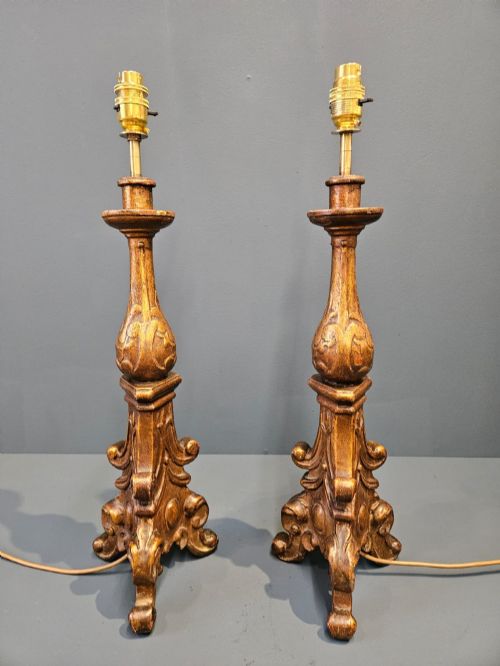
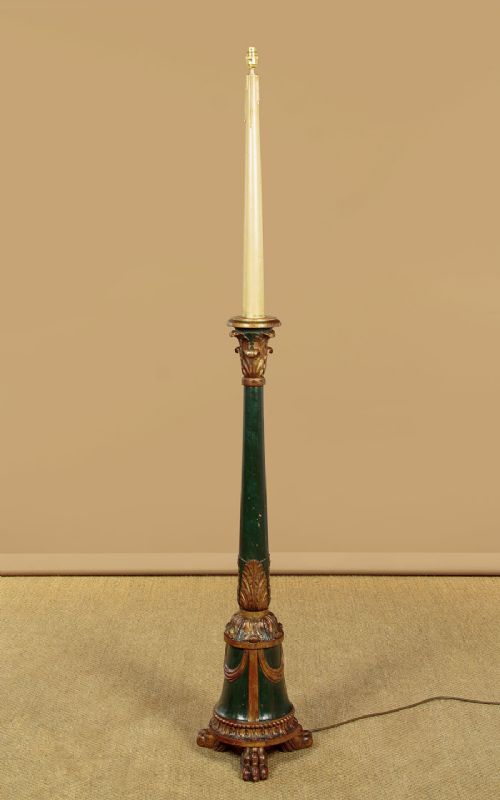
The most common examples on this page are standard lamps and floor lamps dating from the nineteenth century up to 1930. Buyers often find pairs of carved wooden bases, alongside grander Italian Florentine and Venetian pieces featuring traditional polychrome finishes.
Earlier pieces from the eighteenth century appear alongside Victorian and later Continental designs. The selection covers everything from modest timber candlestick conversions to large decorative chandeliers and wall lights.
Materials and Techniques
Carvers shaped the underlying structure from solid timber, often utilising softer woods that accepted intricate chisel work readily. Artisans applied a layer of gesso over the carved wood to create a smooth, absorbent ground for subsequent decoration.
Workers then applied thin sheets of gold leaf or parcel gilt over the prepared surface, burnishing the metal to achieve a rich metallic sheen. Certain Continental pieces incorporate polychrome paint alongside the gilding to add depth and colour.
Several Italian figures stand ready on their original bases, guarding the corner of your room with preserved polychrome expressions.
Assessing Quality and Craftsmanship
The distinction between ordinary and exceptional pieces lies primarily in the depth and fluidity of the hand-carving. Crisp, undercut foliage and confident figurative details indicate a master hand, whereas softer, shallower moulding suggests mass production or later replication.
The integrity of the original gilt surface also determines value. Patinated gold leaf that shows subtle wear and warmth through the gesso layer holds greater visual appeal than heavy, modern repainting.
The Gilded Carved Wooden Lamps Glossary
- Giltwood
- Wood that has been covered with thin sheets of gold leaf. This finish protects the timber while providing a luminous decorative surface.
- Gesso
- A mixture of gypsum and binder applied to wood before gilding. It fills minor imperfections and creates a smooth base for gold leaf.
- Pricket stick
- A type of candlestick featuring a central metal spike to secure the candle. These bases are frequently converted into modern lamps.
- Polychrome
- The practice of decorating surfaces in multiple colours. Venetian and Italian pieces often combine this technique with gilding.
- Standard lamp
- A tall floor-standing light fixture designed to illuminate a room from a corner or beside furniture.
Gilded Carved Wooden Lamps: Frequently Asked Questions
How do I date a gilded lamp?
Examine the timber species, the tool marks left by the carver, and the composition of the gesso beneath the gold leaf. Older pieces often show hand-tooling and distinct wear patterns that differ from twentieth-century machining.
Compare the stylistic motifs, such as Baroque scrolls or Neoclassical husks, against known period design vocabulary. Hardware fittings and wiring channels also provide clues to the age of conversion.
Can these lamps support heavy shades?
Most floor and standard lamps possess sturdy wooden shafts capable of bearing standard fabric shades without tipping. Ensure the weighted base remains secure and balanced before mounting large shades.
Consult a professional electrician if you need to adapt the harp or bulb holder to accommodate modern heavyweight shades safely.
Are these pieces converted from candlesticks?
Many taller table lamps and smaller standards began life as altar sticks, prickets, or decorative candlesticks. Artisans adapted these items for electrical wiring during the twentieth century, often running cords discreetly through the centre.
Conversions remain standard practice and do not diminish the historical interest of the carved wooden base.