


Tall Brass and Gilt Lamp
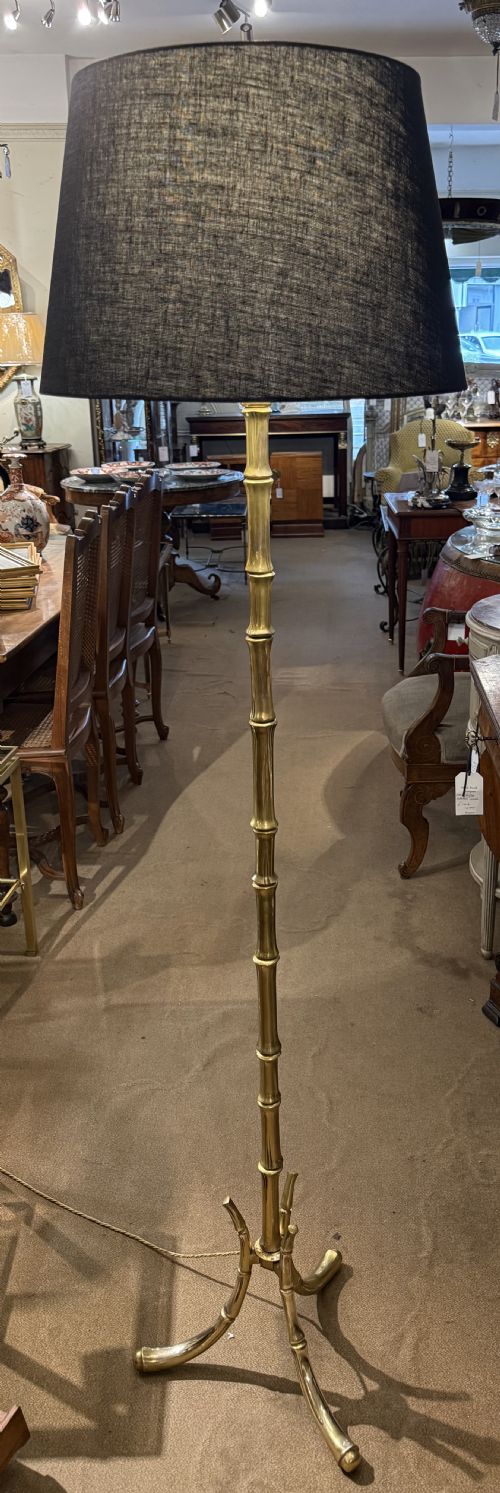
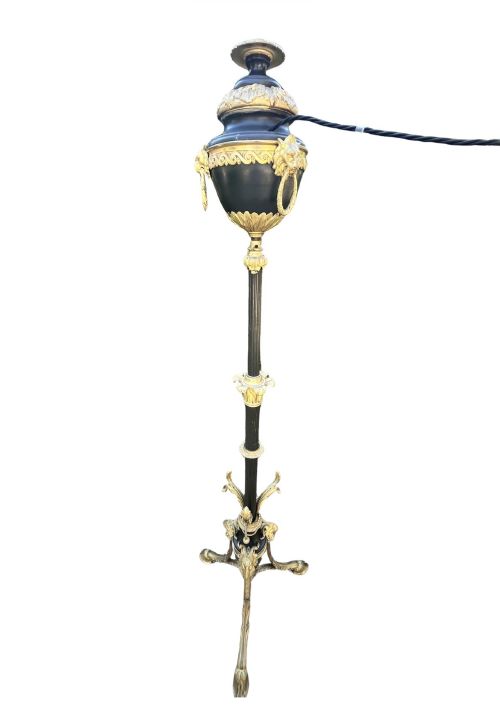
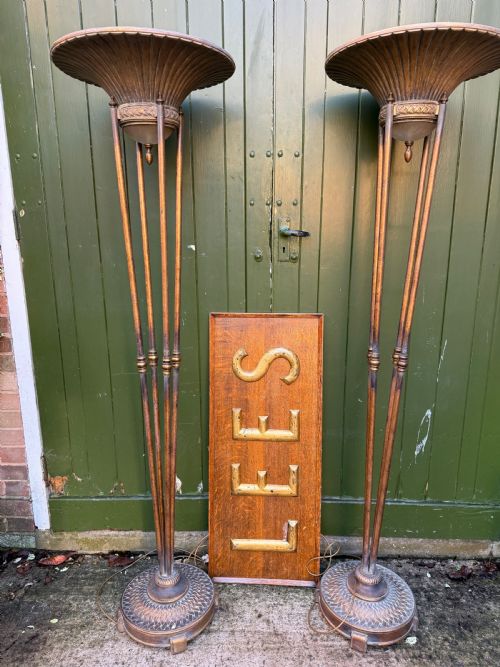
These tall brass and gilt lamp pieces bring height and warm reflection to a room, offering both character and presence.
Tall Brass and Gilt Lamp
When you search for a tall brass and gilt lamp, you are looking at substantial lighting fixtures designed to anchor a room with height and metallic warmth. The selection spans floor-standing standards and imposing table lamps, often originating from Victorian workshops or continental makers.
The versions you are most likely to meet on this page include standard lamps, floor lamps, and converted church candlesticks dating from the nineteenth century through the early twentieth century. Styles range from French Neoclassical columns to Hollywood Regency and Italian Baroque forms.
Makers and designers from various periods utilised brass, ormolu, and gilt bronze to create these statuesque pieces. Many incorporate fabric shades or crystal elements, combining utility with decorative presence.
How they were made
Cast metal forms and brass components provide the structural backbone for these tall lamps, often combined with ormolu and patinated bronze for textural contrast. Foundry workers utilised traditional casting and chasing techniques to shape intricate ornamentation.
Gilt finishes and surface gilding were applied to brass and bronze to achieve a rich metallic lustre that catches ambient light. Cut crystal elements and Paris porcelain bodies appear alongside mahogany and marble in composite designs.
Several tall lamps began life as altar candlesticks, trading quiet Sunday morning contemplation for decades of evening reading.
What varies in quality
The standard of a tall brass and gilt lamp depends upon the crispness of the casting and the depth of the original gilding. Finer examples display sharp, hand-chased detail in the brass and ormolu rather than soft, mass-produced contours.
Proportion and material integrity separate the exceptional pieces from simpler utilitarian conversions. The weight of the metal base and the quality of integrated components like cut crystal or Paris porcelain dictate the overall presence.
Maison Bagues
The Tall Brass and Gilt Lamp Glossary
- Ormolu
- Gilt bronze ornamentation applied to furniture and lighting, popular in French and English neoclassical design. The technique involves applying a fine layer of gold amalgam to a bronze base.
- Standard lamp
- A tall floor-standing lamp designed to illuminate a room from standing height rather than resting on a table. These pieces often feature heavy weighted bases to ensure stability.
- Toleware
- Painted or enamelled metalware, frequently tin or steel, used for lamp bodies and shades in various historical styles. It provides a smooth, opaque surface often finished in black or deep colours.
- Pole screen lamp conversion
- A piece originally manufactured as a movable screen to protect a face from fireplace heat, later adapted into a standing lamp. The tall wooden or brass pole remains the central shaft.
- Patinated bronze
- Bronze that has been treated chemically or naturally aged to produce a specific surface colour and tone. This finish contrasts with bright polished brass and gilt surfaces.
Tall Brass and Gilt Lamp: Frequently Asked Questions
What periods do these tall lamps come from?
The listings here include pieces originating from the nineteenth century up through the 1930s. You will encounter Victorian examples alongside Edwardian and early twentieth-century designs.
Stylistic influences span French Neoclassical, Italian Baroque, and Hollywood Regency aesthetics. Each period brings distinct decorative motifs and manufacturing methods to the metalwork.
Are these lamps converted from other objects?
Some pieces begin life as utilitarian or decorative objects before adaptation into lighting. Examples include church candlesticks and pole screens converted into lamps.
These conversions utilise the original antique standards, preserving the height and structural integrity of the base while updating the wiring for modern use.
What materials are used besides brass?
Makers combined brass with ormolu, gilt bronze, and patinated bronze to achieve varied surface textures. You will also find elements of cut crystal, Paris porcelain, marble, and mahogany.
Fabric components typically appear in the shades accompanying these floor and table standards.
How do I style a tall floor lamp?
These statuesque fixtures work well in corners or beside seating areas where their height can fill vertical space. The metallic finishes reflect light, adding warmth to a room.
Pairing them with appropriate shades helps balance the visual weight of the heavy brass and bronze standards.