
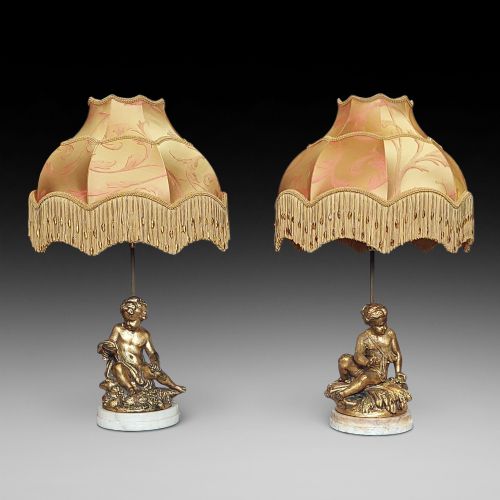


Italian Baroque Table Lamp
These Italian baroque table lamps bring dramatic carved detail and historic presence into a room, offering warm illumination alongside centuries of craftsmanship.
Italian Baroque Table Lamp
An Italian baroque table lamp combines historic carving traditions with electrified lighting, drawing on centuries-old styles seen across eighteenth, nineteenth, and early twentieth-century pieces. When searching for an italian baroque table lamp, buyers encounter everything from eighteenth-century giltwood creations to later revival period stands.
Many examples date from the nineteen-twenties revival period, capturing the theatrical ornamentation of earlier centuries through hand-carved wood and applied gold leaf. Alongside dedicated lamp bases, certain pieces originate from walnut side tables and pier tables adapted for lighting.
Materials and construction methods
Makers shaped these stands from solid walnut or carved wood, applying layers of gesso to create smooth surfaces for gilding. Gold leaf and silver leaf were then meticulously laid over the prepared wooden frames to achieve a brilliant metallic sheen.
Giltwood construction dominates the finer examples, requiring skilled artisans to carve deep acanthus scrolls, cherubic figures, and dolphins by hand. Alabaster mounts and fabric additions complete the structure of these substantial lighting pieces.
Listings span periods from the eighteenth century to nineteen-twenty, utilising carved wood, walnut, gilt metal, and fabric.
Judging quality in historic lighting
Depth and crispness of the hand carving distinguish superior examples from simpler productions, particularly in the rendering of cherubs, dolphins, and floral motifs. Wood that retains its original gilt surface without heavy modern intervention commands greater interest.
Proportion and scale dictate the visual impact of each piece, with taller stands and balanced paired sets demonstrating superior workshop design. The integrity of the underlying walnut or carved wood foundation remains paramount.
The Italian Baroque Table Lamp Glossary
- Giltwood
- Wood that has been coated with gold leaf or gold paint. This technique creates a rich decorative surface typical of baroque furnishings.
- Gesso
- A plaster mixture applied to wood as a base for gilding or painting. It allows artisans to carve intricate details before applying gold leaf.
- Pier table
- A table designed to stand against a wall between windows. Several pieces in this tradition utilise these heavy walnut forms for lamp conversions.
- Alabaster
- A fine-grained mineral stone used for ornamental mounts. It adds contrasting texture and weight to carved wooden lamp bases.
Italian Baroque Table Lamp: Frequently Asked Questions
What periods do these lamps come from?
The pieces span from the eighteenth century through the nineteenth century and into the early twentieth century. Many revival examples date specifically around nineteen-twenty.
Earlier eighteenth-century pieces offer authentic period carving, while later nineteenth and twentieth-century items often reinterpret baroque and rococo aesthetics with grand scale.
How were these lighting pieces originally used?
Many of these items began as oil lamp stands or decorative furnishings before receiving electrical conversions. They stood upon side tables and pier tables to illuminate grand interiors.
Their substantial height and ornate carving made them focal points in formal rooms rather than simple task lighting.
Are pairs commonly found?
Matched pairs appear among the nineteenth and twentieth-century offerings, particularly those featuring cherubic figures and gilt finishes. Pairs provide symmetrical illumination for large mantelpieces or sideboards.
Single tall lamp bases also feature prominently, often representing converted antique oil lamp standards or pier lamp tables.
What materials should I expect?
Construction relies heavily on carved wood, solid walnut, and giltwood finishes enhanced with gold or silver leaf. Gesso is frequently used beneath the metallic leaf to build up ornate relief details.
Additional elements include alabaster mounts and fabric components that complement the carved wooden structures.