
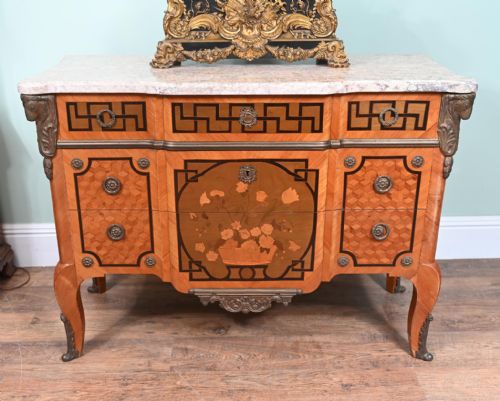


Gilt Bronze Walnut Chest
These gilt bronze walnut chest pieces combine rich timber with heavy cast metal mounts, offering both practical storage and grand decorative presence for the home.
Gilt Bronze Walnut Chest
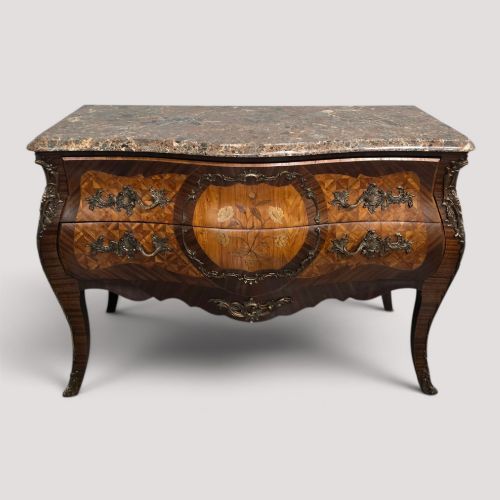
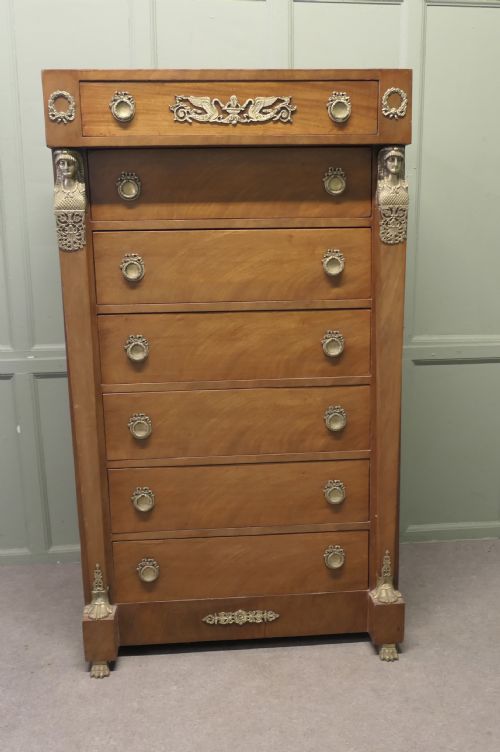
A gilt bronze walnut chest appears in forms such as commodes, tall chests of drawers, and bedside lamp chests, usually originating from French and Italian workshops. The materials combine walnut and burr walnut with gilt bronze or ormolu mounts, often finished with marble tops.
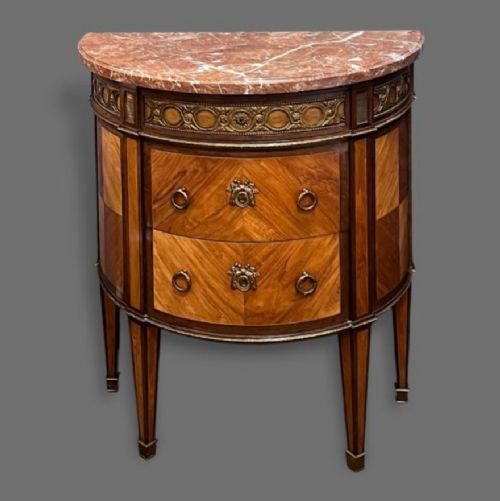
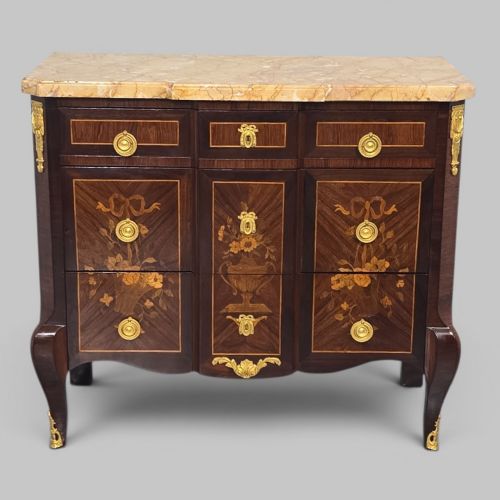
The pieces on this page span the eighteenth, nineteenth, and early twentieth centuries, drawing on Louis XV, Louis XVI, Regency, and Empire styles. Buyers encounter serpentine bombe shapes alongside straight-fronted demi-lune and marquetry inlaid designs.
Makers utilised contrasting timbers like kingwood and tulipwood alongside the primary walnut, creating geometric parquetry patterns or floral marquetry scenes. These surfaces are frequently paired with cast brass or gilt bronze handles and escutcheons.
How they were made
Cabinetmakers constructed these bodies from solid walnut or pine carcases veneered in figured walnut, burr walnut, kingwood, and tulipwood. Marquetry and parquetry designs were hand-cut and pieced together before being glued and scraped flush.
Foundries produced the decorative mounts using the lost-wax casting method in bronze, which were then mercury gilt to achieve a lasting golden sheen. These ormolu mounts were secured to the wooden carcase with threaded pins or screws from the interior.
Listings feature walnut, burr walnut, kingwood, tulipwood, marble, and gilt bronze across eighteenth, nineteenth, and twentieth-century items.
What varies in quality
The refinement of the cast bronze mounts distinguishes standard production from finer work, with superior examples showing crisp chasing and deep relief. Heavier gauge metal and more complex figural or rococo scrollwork indicate higher workshop standards.
Timber selection and the precision of the veneer work dictate the visual depth of the surface, particularly where burr walnut or intricate parquetry is involved. The integration of thick marble slabs with moulded edges also signals a higher tier of construction.
The Gilt Bronze Walnut Chest Glossary
- Ormolu
- Gilded bronze mounts applied to furniture, cast and hand-chased to produce sharp decorative detail. This technique was widely utilised in French cabinetmaking during the eighteenth and nineteenth centuries.
- Bombe
- A bulging, convex furniture shape swelling outwards on the front and sides. It is particularly characteristic of Louis XV and Italian rococo commodes.
- Marquetry
- Decorative veneer patterns formed by fitting together small pieces of different coloured wood. Craftsmen used various exotic timbers to create pictorial or geometric designs.
- Demi-lune
- A half-moon shape with a flat back and a curved front. These pieces fit flush against walls while offering accessible drawer space.
Gilt Bronze Walnut Chest: Frequently Asked Questions
What is a commode?
A commode is a low chest of drawers, typically featuring decorative mounts and a marble top. These pieces were designed primarily for formal reception rooms and bedrooms.
In continental furniture traditions, the term refers specifically to decorative drawer units rather than sanitary cabinets. They often serve as focal points in a hallway or drawing room.
How do I care for walnut veneer?
Walnut veneer requires protection from direct sunlight and sudden humidity changes to prevent warping or splitting. Keeping the timber nourished with appropriate wax maintains its lustre.
Avoid placing wet items directly on the wood or marble surfaces. Gentle dusting with a dry cloth preserves the finish without damaging the delicate marquetry.
Are marble tops original?
Marble tops on these chests were generally fitted during the initial period of manufacture, cut to follow the specific contour of the commode. They provide a durable, decorative surface above the drawers.
Replacement marble slabs do occur over time due to breakage. Examining the underside and the fit against the wooden frame helps determine originality.
What distinguishes Louis XV style?
Louis XV style is characterised by asymmetric curves, naturalistic rococo motifs, and bombe outlines. Furniture from this design vocabulary avoids straight lines in favour of flowing contours.
Ormolu mounts on these pieces often depict C-scrolls, foliage, and shell patterns. The style was revived extensively during the nineteenth century.