
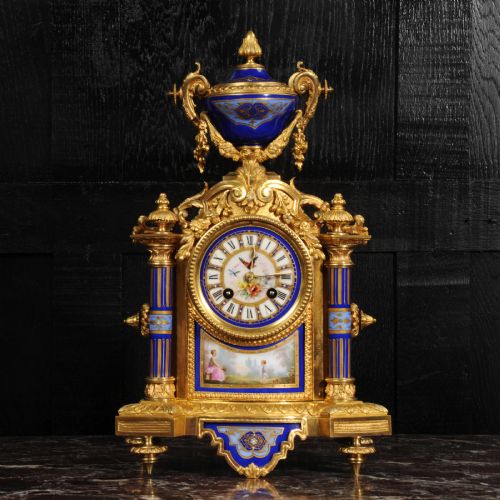
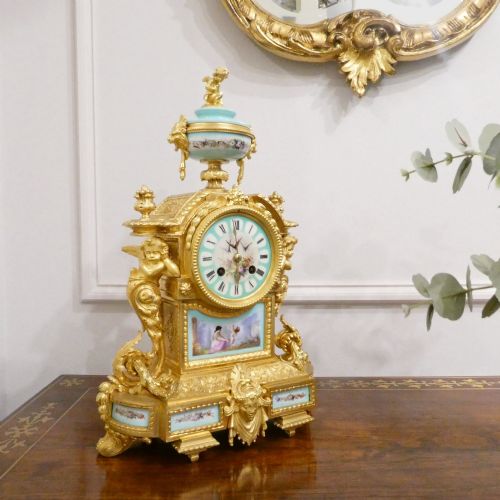
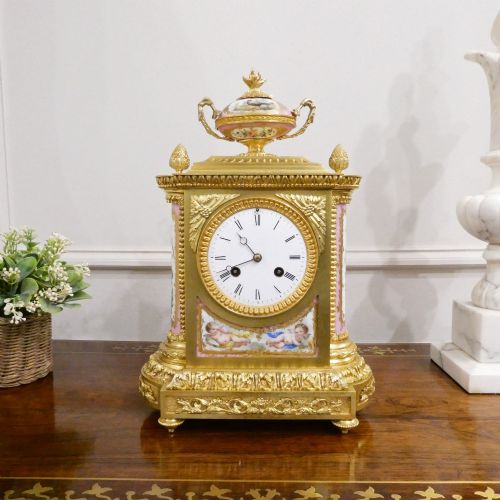
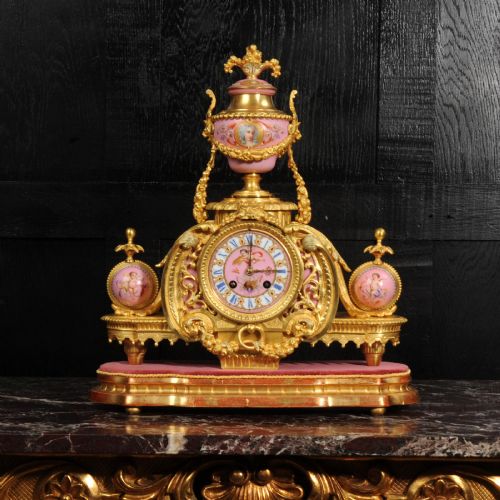
Gilt Bronze Porcelain Table
These pieces combine cast metal and ceramic in domestic furnishings, and a buyer wants one for the rich texture of gilded mountings against painted glazed surfaces.
Gilt Bronze Porcelain Table
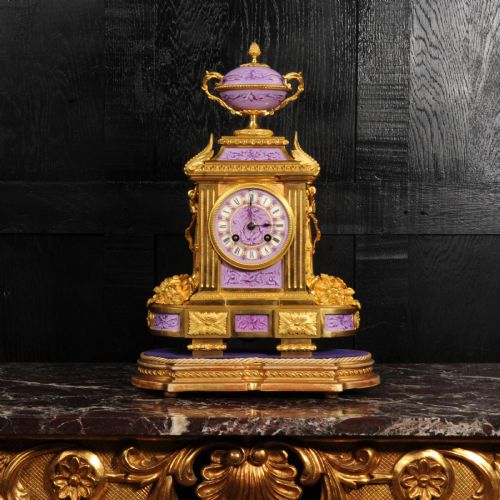
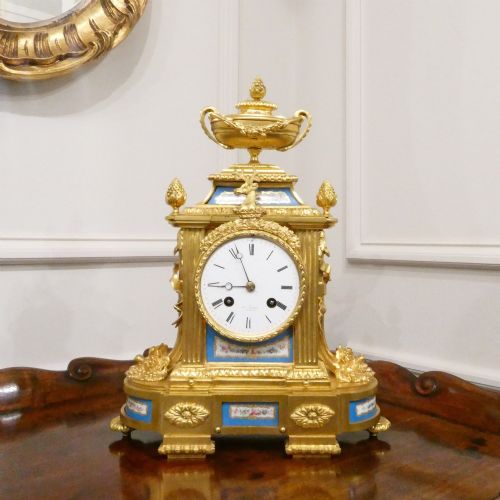
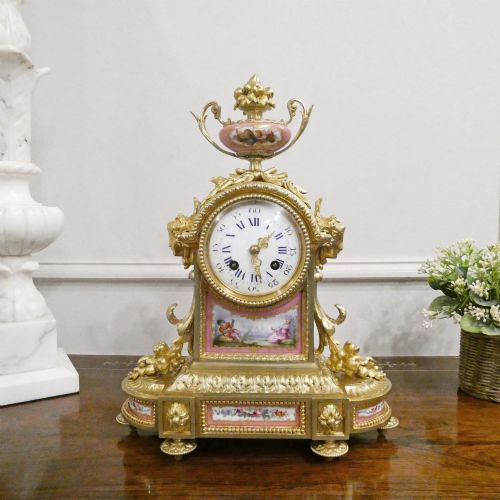
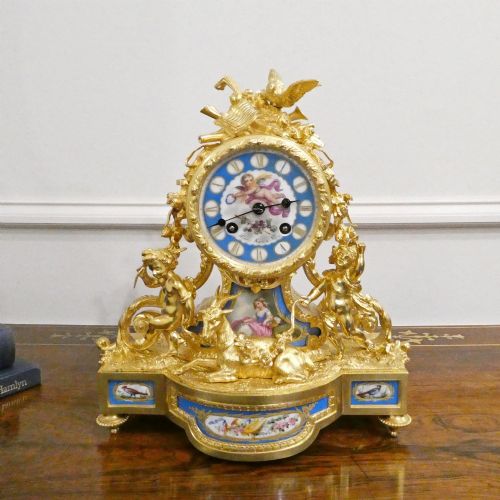
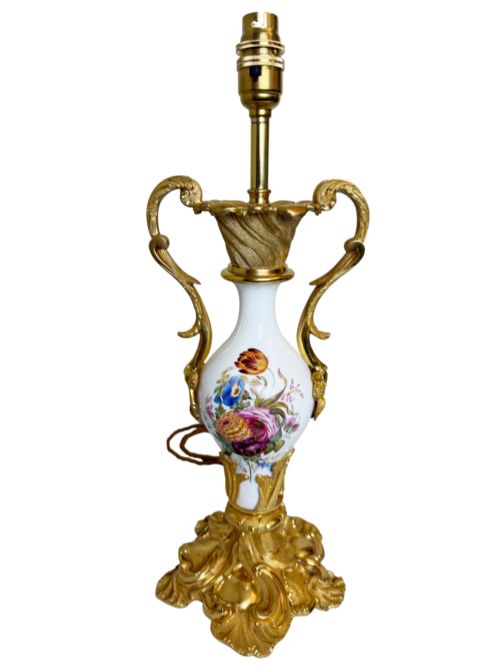
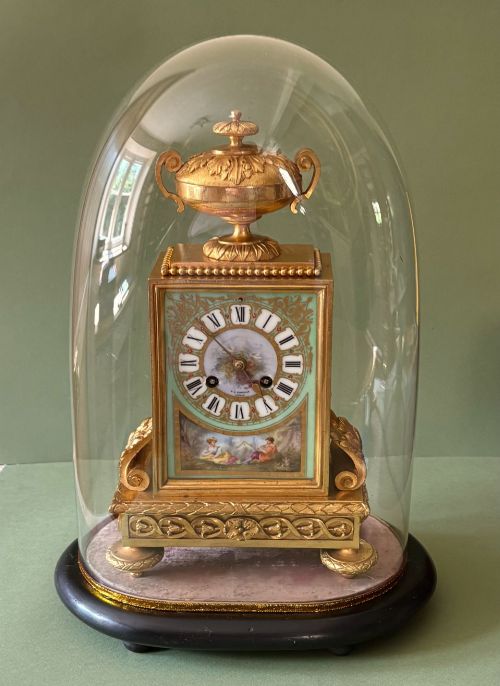
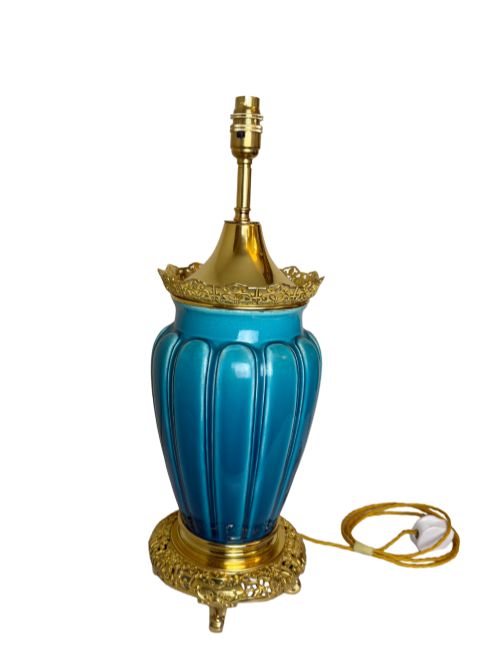
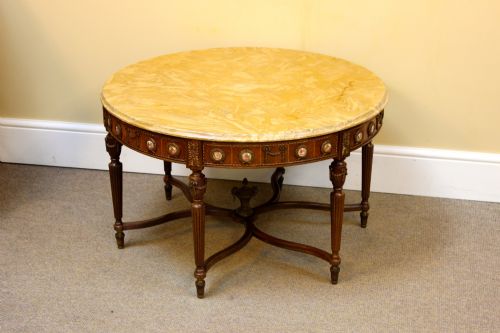
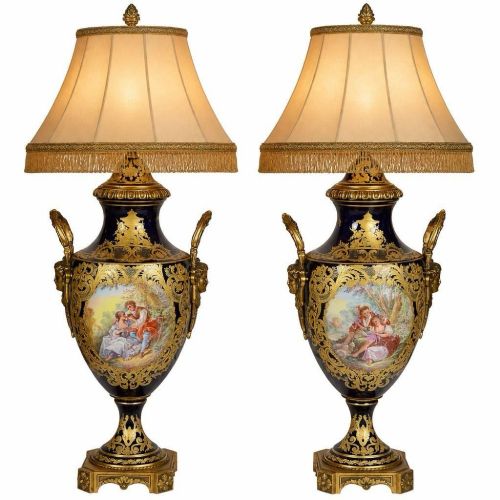
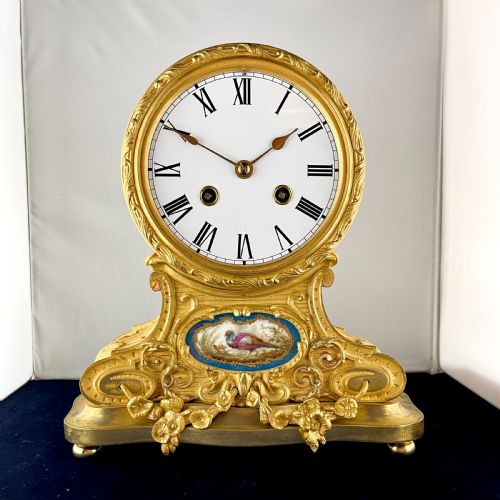
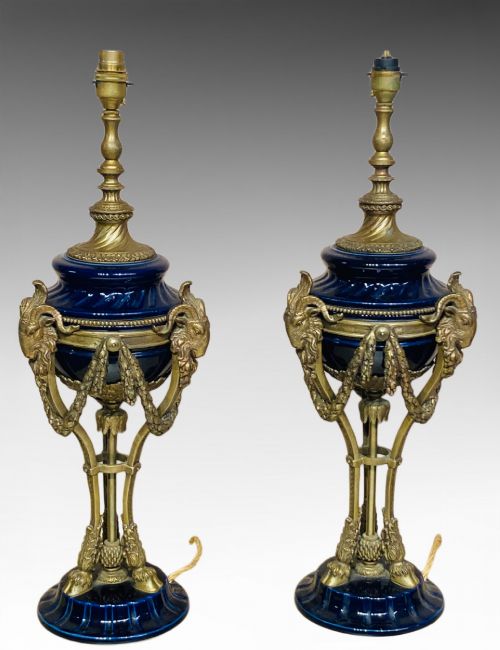
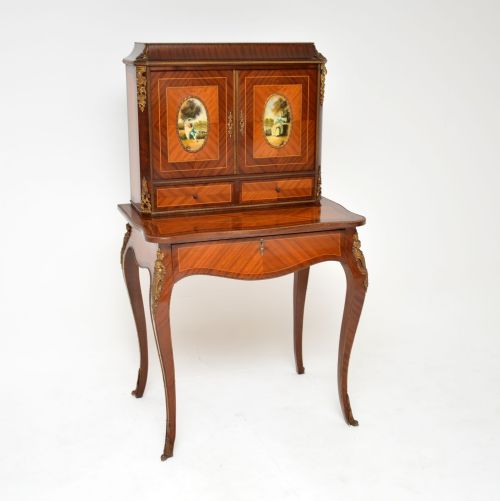
When you search for a gilt bronze porcelain table, you encounter nineteenth-century French and English furnishings that integrate ceramic components with metallic mounts. The selection on this page leans heavily toward mantel clocks, table lamps, jardiniere stands, and desks rather than low dining tables, reflecting how makers applied these materials.
The aesthetic draws on Louis XVI, Rococo Revival, and Napoleon III styles, mirroring elite interiors of the Victorian era. Many items pair turquoise, blue, or green glazed bodies with heavy cast frames, demonstrating the domestic taste for ornate decorative arts.
Makers utilised porcelain plaques, urns, and vases as central panels or structural bodies within writing desks, cabinets, and timepiece cases. These objects demonstrate the nineteenth-century preference for composite decorative pieces that combined metalworking with ceramic arts.
How they were made
Foundry workers cast bronze and brass into intricate mounts, scrolling feet, and foliate bezels, finishing the surfaces with mercury gilt or ormolu. Artisans then fitted these metal mounts tightly around porcelain bodies, plaques, and enamel dials.
Cabinetmakers constructed the wooden carcases of desks, tables, and jardiniere stands using kingwood, tulipwood, and rosewood, often adding marquetry inlay before securing the bronze mounts and porcelain plaques with brass screws.
Listings feature nineteenth-century French and English pieces using porcelain, gilt bronze, ormolu, kingwood, and glass.
What varies in quality
The integration of the ceramic elements also dictates worth. Hand-painted porcelain panels with detailed floral or figurative scenes, particularly those bearing factory marks or artist signatures, elevate the standard of the entire furnishing.
Japy Freres·Jean Baptiste Delettrez·Achille Brocot·Henry Marc·Etienne Lenoir·PH Mourey
The Gilt Bronze Porcelain Table Glossary
- Ormolu
- Gilded bronze produced by applying a mercury and gold amalgam to a cast bronze object and heating it until the mercury vaporised. This technique creates a distinctive warm lustre found on nineteenth-century mounts.
- Sèvres
- A French porcelain manufactory known for soft-paste and hard-paste ceramic bodies, frequently decorated with rich blue grounds and hand-painted reserves. Pieces often feature faux or genuine factory marks.
- Jardiniere
- An ornamental stand or container designed to hold potted plants or flowers. Nineteenth-century examples often incorporate porcelain plaques and ormolu mounts into wood or ceramic bodies.
- Bureau plat
- A freestanding double-sided writing desk with a flat top, commonly finished with a leather insert and mounted with gilt bronze corners and drawer pulls.
- Cartonnier
- A decorative desk-top cabinet with tiers for holding papers and documents, frequently styled to match matching writing tables using wood veneers and metal mounts.
Gilt Bronze Porcelain Table: Frequently Asked Questions
Are the porcelain panels removable?
Most ceramic plaques and vessels are secured permanently into the bronze or wooden frames by pins, bezels, or internal brackets. Dismantling them risks damaging the surrounding material.
Leave structural adjustments to professional conservators who understand nineteenth-century fastening methods.
How do I identify Louis XVI style pieces?
Louis XVI pieces rely on classical symmetry, straight tapering legs, and geometric motifs such as acanthus leaves, bead-reeling, and ribbons. This style contrasts with the asymmetrical curves of earlier Rococo designs.
Look for architectural restraint and classical proportions in the cast bronze mounts.
Can antique lamps be rewired safely?
Many nineteenth-century lamps and candelabras were converted to electricity long after their manufacture, often using modern internal components. You can replace old wiring to meet current safety standards without altering the antique mounts.
Consult a qualified electrician experienced in handling historic lighting fixtures to preserve the original frames.