




Antique Porcelain Centre Table
An antique porcelain centre table combines fine ceramic plaques with rich timber and ormolu mounts to anchor a formal room.
Antique Porcelain Centre Table
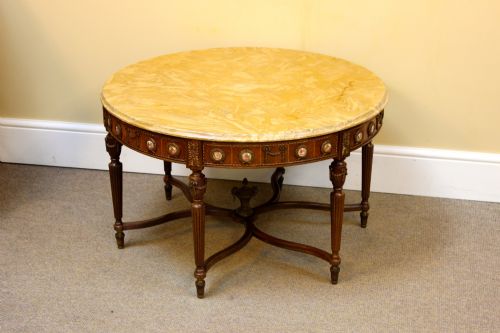
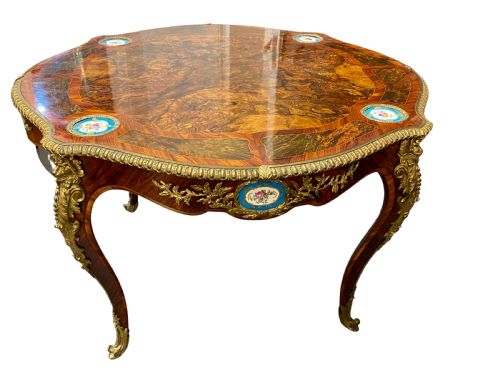
An antique porcelain centre table stands as a decorative platform for display, utilising glazed ceramic panels inset into timber frames with metal mounts. These tables draw on French Rococo Revival, Louis XVI Revival, and Victorian design traditions to create a distinct focal point in a reception room.
The versions most often met on this page date from the nineteenth century and the Edwardian era, incorporating Sevres style porcelain plaques alongside woods such as kingwood, walnut, and amboyna. Alongside proper tables, the selection includes jardinières, comports, and figural centrepieces that share the same material vocabulary.
How they were made
Cabinetmakers constructed the main framework from hardwoods like mahogany, walnut, and kingwood, frequently employing marquetry or ebonised finishes to set off the metallic decoration. Ormolu mounts and brass framing were then cast and chased to edge the timber tops and protect the legs.
Porcelain elements, often painted in the Sevres style, were fired separately before being fitted directly into the table surface or mounted as decorative vessels. Gold leafing and enamel details were applied to highlight the ceramic surfaces and complement the gilt bronze mounts.
Several pieces feature cherubs perched atop shells, proving that Victorian makers knew exactly how to lean into maximum charm.
What varies in quality
Quality rests on the crispness of the ormolu casting and the depth of hand-painting on the porcelain plaques. Finer examples display rigorous detail in the bronze chasing and more complex ceramic decoration, rather than simple transfer printing.
The choice of timber veneer and the precision of the marquetry inlay dictate the overall finish of the piece. Tables with solid structural integrity and carefully matched wood grains command greater attention than those with hasty construction.
Eugene Clauss of Paris·Holland and Son·Royal Dux
The Antique Porcelain Centre Table Glossary
- Ormolu
- Gilt bronze mounted on furniture or decorative objects. This technique involves applying a fine layer of gold to a bronze base.
- Kingwood
- A dense, richly figured Brazilian timber utilised for decorative veneers in fine cabinetmaking. It displays dark violet and brown striping.
- Marquetry
- The art of applying thin pieces of veneer to a structure to form decorative patterns. Craftsmen use various woods to create pictorial designs on table tops.
- Jardiniere
- An ornamental stand or container designed to hold plants or flowers. These items often match the aesthetic of contemporary centre tables.
Antique Porcelain Centre Table: Frequently Asked Questions
Where did people place centre tables?
These tables traditionally stood in the middle of a large reception room or parlour rather than against a wall. They served as a surface for display items such as vases, albums, or small lamps.
Because they were finished on all sides, occupants could walk around the piece and view the porcelain plaques and ormolu mounts from any angle.
How do I identify a Sevres style plaque?
Sevres style plaques typically feature hand-painted pastoral scenes or floral panels set against a deep blue or turquoise ground, highlighted with gold leaf. They are integrated directly into the timber top or apron of the table.
These ceramic insets mimic the eighteenth-century French royal factory output, though many nineteenth-century revival pieces were produced by other European potteries.
What woods were used for these tables?
Cabinetmakers utilised exotic and decorative hardwoods such as kingwood, walnut, amboyna, and mahogany for the main structure and veneers. Ebonised wood also appears to provide a dark, contrasting background for gilt mounts.
These timbers were chosen for their grain patterns and ability to take a high polish, enhancing the overall richness of the furniture.
How do I care for antique porcelain and ormolu?
Maintenance requires gentle dusting with a soft, dry cloth to protect both the ceramic glaze and the delicate gold leaf on the bronze mounts. Moisture should be kept away from wooden veneers and metal joints to prevent tarnishing and warping.
Harsh chemical cleaners will strip the gilt surface from the ormolu and damage the painted porcelain, so professional conservation products are best avoided unless advised.
What is the difference between a centre table and a coffee table?
Centre tables are taller pieces designed for nineteenth-century formal rooms to display decorative objects at standing or passing height. They feature elaborate porcelain and ormolu decoration intended to be viewed from above.
Modern coffee tables sit much lower to serve seating areas, though some antique examples have been adapted down in height over time to suit contemporary living spaces.