



French Porcelain Side Table
A french porcelain side table brings together gilt metal and hand-painted ceramic plaques in a single piece of antique furniture.
French Porcelain Side Table
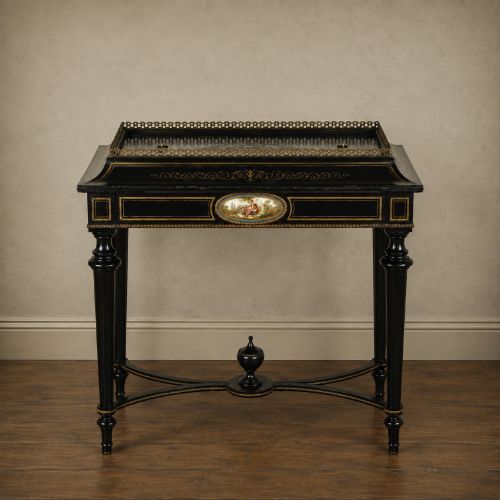
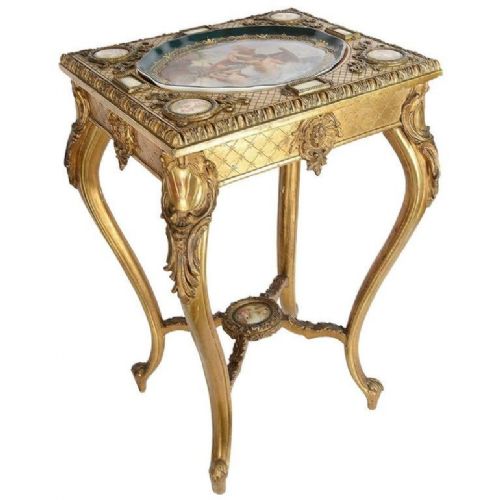
When you search for a french porcelain side table, you encounter occasional tables, writing desks, and jardinière stands spanning the eighteenth, nineteenth, and early twentieth centuries. The pieces on this page lean heavily toward nineteenth-century Napoleon III and Louis XV or Louis XVI revival designs.
Most examples incorporate ceramic elements into wood structures such as kingwood, rosewood, ebonised wood, and burr walnut. Alongside traditional side tables, the listings include related forms like table lamps and tiered étagères featuring similar materials.
How they were made
Cabinetmakers constructed the wooden carcasses using timbers like satinwood and kingwood, often applying marquetry inlays or brass mounts. Ormolu and gilt bronze mounts were cast and chased to frame the ceramic plaques securely.
Porcelain plaques, frequently painted in the manner of Sèvres or Vienna factories, were set directly into the tabletops or drawers. Ebonised wood and marble also appear in combination with gilt metal to build these decorative surfaces.
Some tables double as indoor garden stands, proving that nineteenth-century plants deserved furniture as fancy as their owners.
What varies in quality
The refinement of the ormolu mounts and the detail within the hand-painted porcelain plaques dictate the standing of an individual piece. Finer examples display crisply cast bronze work and delicate brushwork on the ceramic panels.
The choice of underlying timber and the precision of the marquetry inlay further separate standard production from superior craftsmanship. Heavier secondary woods and simpler cast mounts indicate a more utilitarian workshop origin.
Sevres·Vienna
The French Porcelain Side Table Glossary
- Ormolu
- Gilded bronze used for decorative mounts and furniture trim. It provides a bright golden surface finish.
- Marquetry
- Fitted pieces of wood veneer arranged in decorative patterns on a furniture surface. This technique creates pictorial designs across tabletops.
- Étagere
- An open piece of furniture with multiple tiers for displaying objects. These often feature decorative wood and metal framing.
- Jardinière
- A decorative stand or container designed to hold plants. Examples here often incorporate porcelain plaques and metal mounts.
- Cartonnier
- A stationary case or desk accessory for holding papers. They occasionally feature leather panels and gilt bronze mounts.
French Porcelain Side Table: Frequently Asked Questions
How are porcelain plaques mounted?
Porcelain plaques are typically set into recessed channels within the wooden top of the table. They are secured with bezels or metal mounts that hold the ceramic firmly in place.
These mounts protect the vulnerable edges of the painted porcelain from chipping during daily use.
What woods were used?
Cabinetmakers utilised exotic and native timbers including kingwood, rosewood, satinwood, and burr walnut. Ebonised wood also appears frequently on nineteenth-century pieces.
Many tables combine these fine veneers with marquetry patterns to frame the porcelain inserts.
How do I identify Louis styles?
Louis XV style furniture is characterised by curved cabriole legs and asymmetrical rococo bronze mounts. Louis XVI style pieces introduce straighter lines and neoclassical symmetry.
Revival pieces from the nineteenth century often blend these classic eighteenth-century motifs with contemporary construction methods.
Where were these placed?
These small tables served as occasional pieces in nineteenth-century salons and drawing rooms. They were positioned beside seating or against walls to display decorative items.
Writing tables and game tables also doubled as functional furniture for light correspondence and leisure.