




Gilt Bronze Planter
A gilt bronze planter brings botanical luxury to an interior, combining gilded metalwork with ceramics or wood to hold plants.
Gilt Bronze Planter
A gilt bronze planter is a decorative vessel designed to display indoor plants or flowers, frequently encountered in nineteenth-century French designs. These pieces often appear as table-top jardinieres, standing plant tables, or ceramic urns fitted with metallic mounts. Styles span French Rococo Revival, Louis XV Revival, and Empire periods, reflecting elaborate historical revivals.
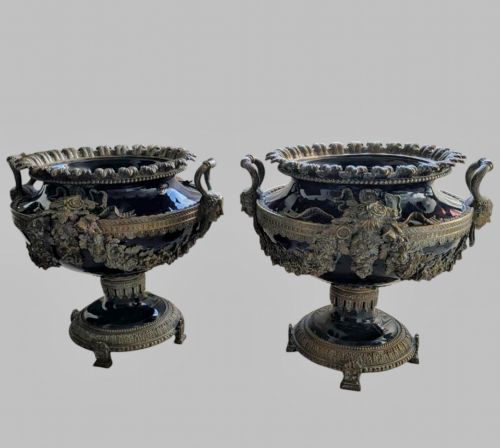
The form frequently incorporates liners to protect the structure from moisture during use. Many examples integrate porcelain plaques, blue ceramic bodies, or cut glass alongside the metal framework. Buyers will find both standalone vessels and larger jardiniere tables designed for prominent placement in a reception room.
Materials and construction
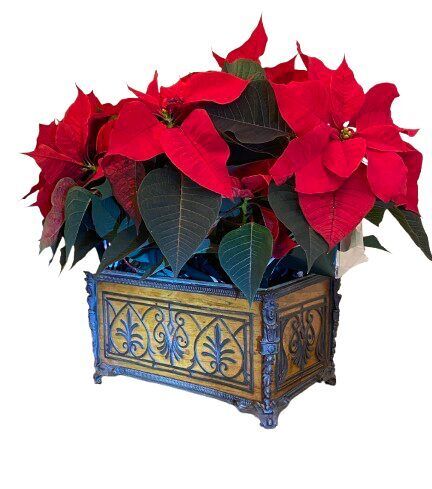
Makers utilised cast bronze, ormolu, and gilt metal to create intricate mounts and frames, often combined with exotic timbers like kingwood, burr walnut, and mahogany. Wood elements frequently feature marquetry inlay or ebonised finishes beneath the metallic decoration.
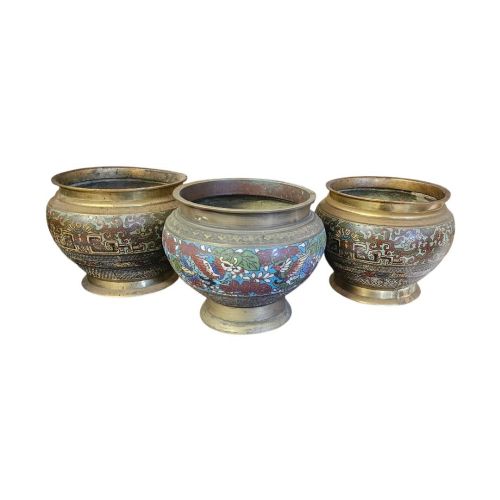
Ceramic components such as majolica, porcelain plaques, and cloisonné enamel were manufactured separately before being secured within the metal framework. Gilding techniques applied to the bronze and brass provided a durable, bright surface finish intended to catch candlelight.
Some nineteenth-century French planters doubled as wine coolers, proving that botanical displays and chilled champagne shared the same decorative vessel.
Assessing quality
The refinement of the cast bronze mounts distinguishes finer examples, where crisp chasing and deep relief ornamentation show superior workshop execution. Heavier gauge metals and tightly fitted wooden or ceramic bodies indicate robust construction.
The integration of materials determines overall sophistication, such as hand-painted porcelain plaques or intricate marquetry patterns paired harmoniously with the gilt mounts. Uniformity in the gilding and secure retention of decorative hardware reflect high craftsmanship.
Barbedienne
The Gilt Bronze Planter Glossary
- Jardiniere
- An ornamental pot or stand for holding plants or flowers. These vessels often sit on low feet or elevated tables.
- Ormolu
- Finely ground high-carat gold-mercury amalgam applied to a bronze object. This technique creates a rich golden decorative surface.
- Kingwood
- A dense, heavily figured timber prized for cabinetmaking during the eighteenth and nineteenth centuries. It frequently appears with contrasting grain patterns.
- Cloisonne
- Enamelling technique where thin metal strips form compartments to hold coloured glass paste before firing. The resulting surface displays intricate geometric or floral patterns.
- Majolica
- Heavy earthenware covered with an opaque tin-glaze and painted with bright colours. It frequently forms the central body of nineteenth-century decorative urns.
Gilt Bronze Planter: Frequently Asked Questions
What is a gilt bronze planter?
A gilt bronze planter is an ornate ornamental vessel designed to hold plants, featuring cast bronze or ormolu mounts combined with materials like porcelain, wood, or ceramic.
These pieces were popular during the nineteenth century in various revival styles, serving both practical horticultural functions and decorative display roles in period interiors.
How were these planters used?
They functioned primarily as indoor plant holders or table-top jardinieres to bring greenery into formal reception rooms and parlours. Some larger examples doubled as wine coolers or standalone display tables.
Removable metal liners usually contained the soil and moisture, protecting the delicate wooden or ceramic bodies from water damage during use.
How can I tell periods apart?
Stylistic indicators help separate periods, such as the exuberant curves of Louis XV Revival pieces compared to the strict symmetry of Empire and Neoclassical designs. Materials also provide clues, as mid-nineteenth-century works frequently incorporate majolica and Sevres-type porcelain plaques.
Construction methods and timber choices, such as kingwood and ebonised finishes, align with specific decades like the Victorian era or Napoleon III period.