
Gilt Bronze Mounted
Gilt bronze mounted works bring together rich cabinet woods, marble and porcelain with finely cast metallic ornaments.
Gilt Bronze Mounted
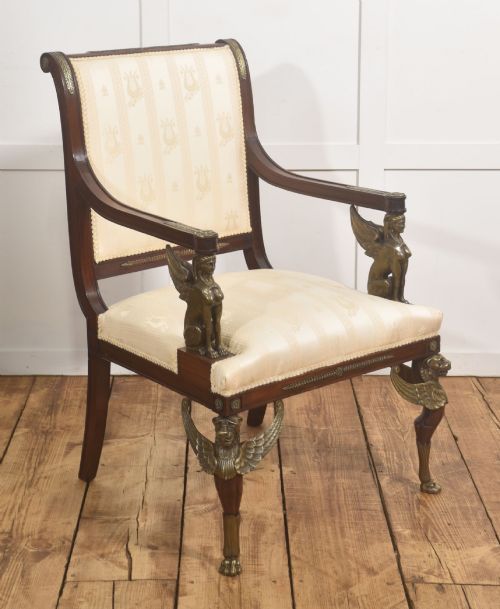
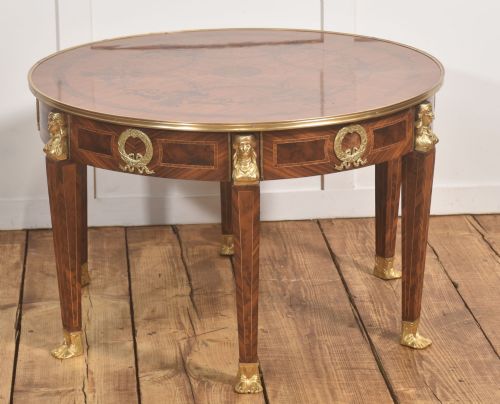
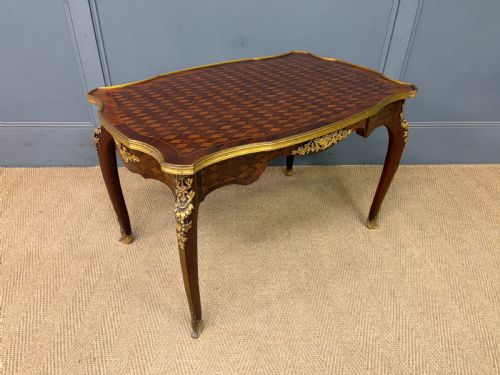
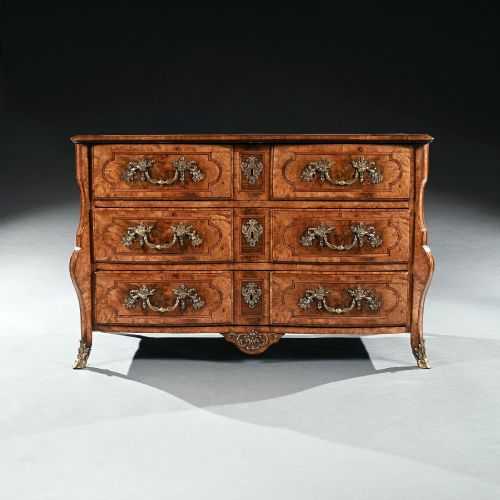
Gilt bronze mounted items comprise furniture, clocks, pedestals and decorative vessels ornamented with cast metal fittings, predominantly originating from nineteenth-century France during the revival of Louis XV and Louis XVI styles.
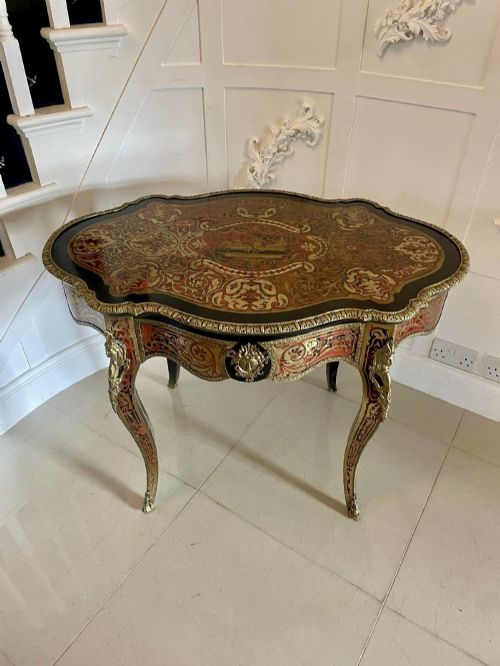
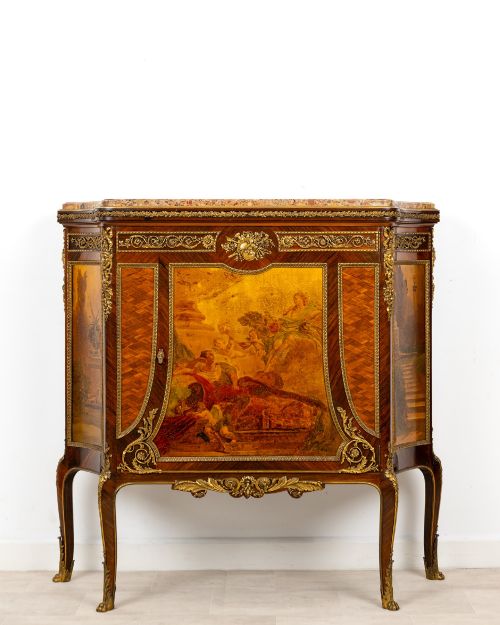
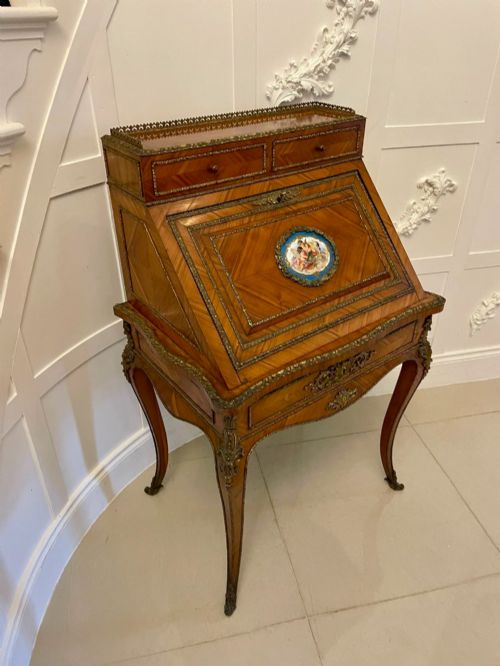
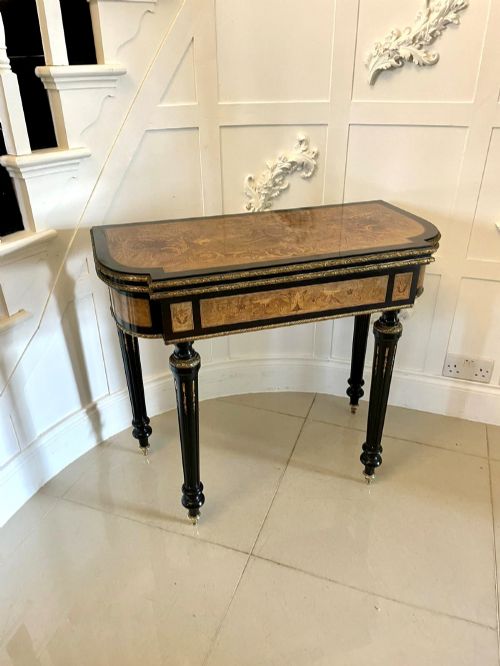
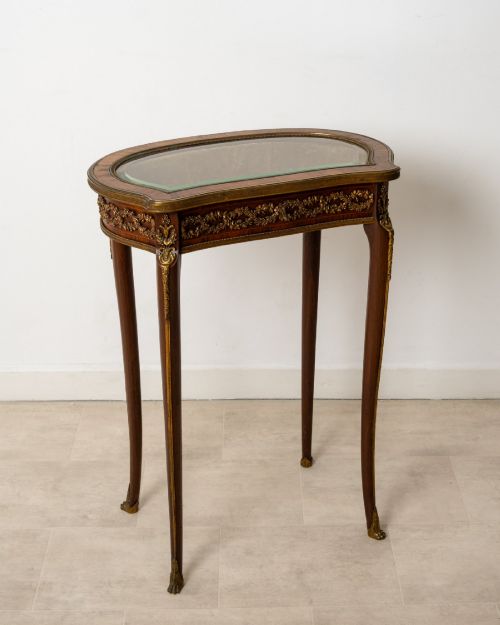
Buyers encounter freestanding centre tables, writing desks, credenzas, display cabinets and mantel clocks constructed from exotic woods like kingwood and mahogany, augmented by ormolu mounts.
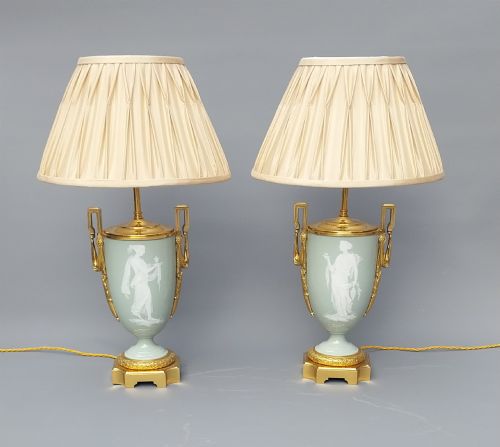
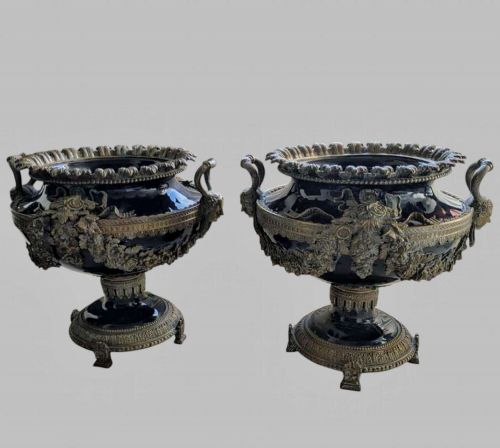
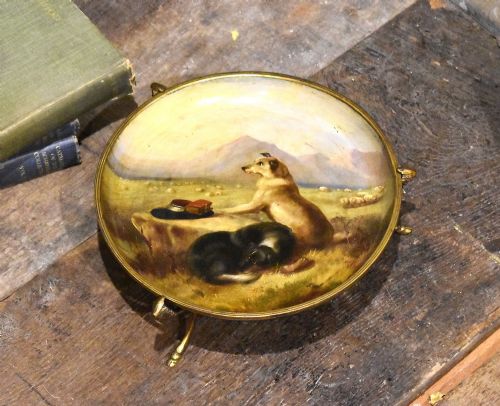
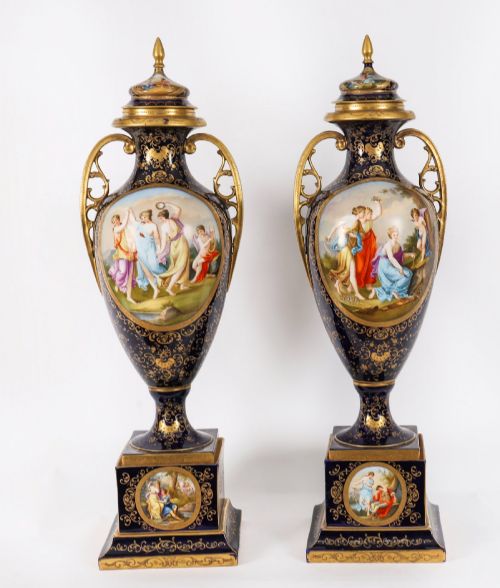
The category extends to marble columns, porcelain vases and caskets elevated by chased bronze collars, feet and handles.
How They Were Made
Maker workshops built carcases from timbers such as mahogany, walnut and kingwood, frequently employing intricate marquetry, parquetry and vernis martin lacquer.
Metal ornaments were cast in bronze, chased by hand to sharpen details, and then gilded utilising mercury or electroplating methods before being secured to the timber, marble or porcelain bodies.
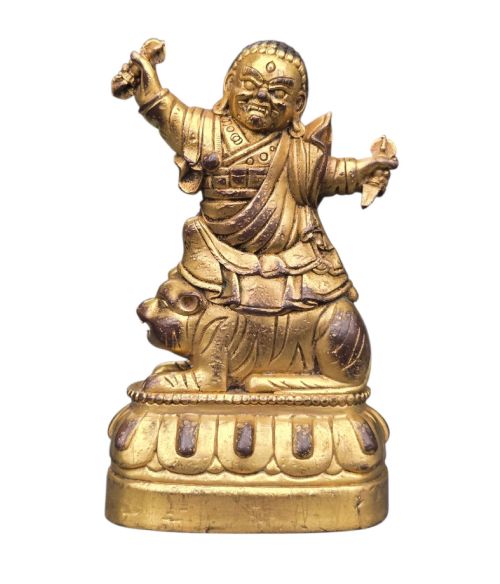
A tiny bronze putto finial mount gazes out from the collection alongside massive credenzas and heavy marble columns.
What Varies in Quality
The refinement of the cast bronze ornament dictates the primary tier, where crisp chiselling and depth separate superior mounts from soft, mechanical castings.
Cabinetwork precision, the selection of figured veneers such as amboyna and satinwood, and the integration of high-grade Sevres porcelain plaques distinguish master workshops from standard production.
Edward Holmes Baldock·Poix Blin·Johnstone And Jeanes·Jacques Bircklé·Maison Millet·Charles à Orléans·François Linke·Joseph-Emmanuel Zwiener·Paul Sormani·Edwards And Roberts·H. J. Hatfield And Sons·Fournier·Gillows·Maison Soubrier·Krieger·Paul Louchet
The Gilt Bronze Mounted Glossary
- Ormolu
- Gilt bronze produced by applying gold amalgam to cast bronze. This technique creates a durable golden finish seen on nineteenth-century French furniture and clocks.
- Vernis Martin
- A type of European lacquer developed in imitation of Asian finishes. It appears on panels of cabinets and tables alongside bronze mounts.
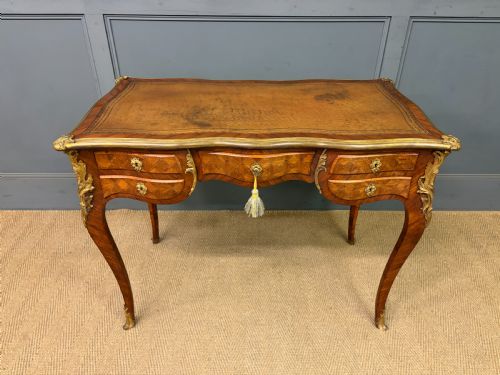
- Bureau Plat
- A freestanding writing table fitted with drawers. These desks frequently display gilt bronze mounts framing the leather writing surface.
- Gueridon
- A small round table supported by a central column or legs. These items often incorporate marble tops and gilt bronze collars.
Gilt Bronze Mounted: Frequently Asked Questions
How do I identify a reproduction piece?
Study the construction methods behind the bronze mounts and timber carcases. Nineteenth-century examples display hand-chased metalwork and period joinery.
Modern copies often show cast uniformity without hand finishing and lack the appropriate wear patterns on the underlying woods and patinated surfaces.
What is the difference between ormolu and gilt bronze?
Ormolu specifically refers to gilt bronze created through historical mercury gilding processes. The terms are frequently used interchangeably in trade descriptions.
Both denote metallic components cast and finished to adorn furniture, clocks and decorative objects.
How should I clean gilt bronze mounts?
Dust the metal surfaces regularly with a soft, dry brush to prevent dirt accumulation. Avoid harsh chemical cleaners or abrasive cloths.
Moisture can damage vulnerable lacquered woods and stone surfaces adjacent to the mounts, so keep liquids away from the joints.
Where were these pieces originally made?
The majority of these items originate from Parisian workshops operating during the nineteenth century. Makers reproduced and adapted earlier court styles.
English cabinetmakers also utilised imported ormolu mounts on domestic furniture during the Regency and Victorian eras.