



Gilt Bronze Compotes
These gilt bronze compotes are elevated serving vessels and centrepieces, combining cast metalwork with glass, porcelain and stone to anchor a formal table or mantelpiece.
Gilt Bronze Compotes
When searching for gilt bronze compotes, buyers encounter pedestal bowls, tazzas and centrepieces spanning the Regency period through the late nineteenth century. French workshops dominate the selection, producing works within the Rococo Revival, Empire and Second Empire styles alongside occasional English and continental interpretations.
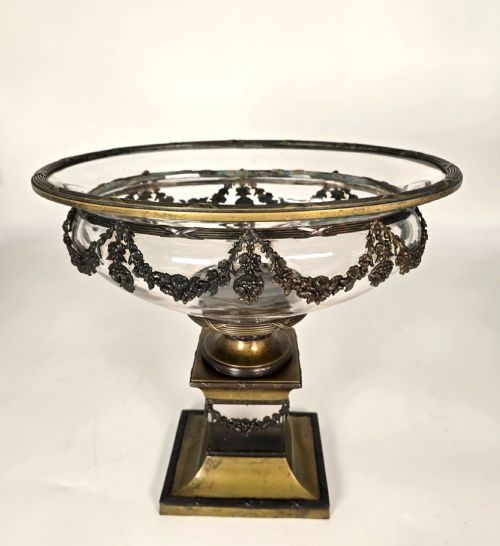
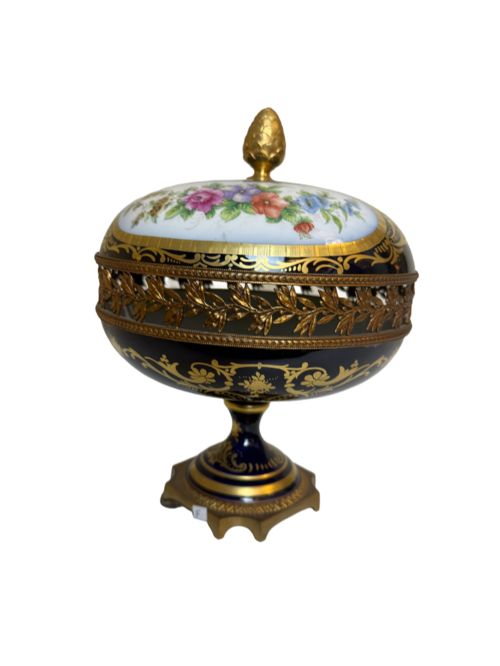
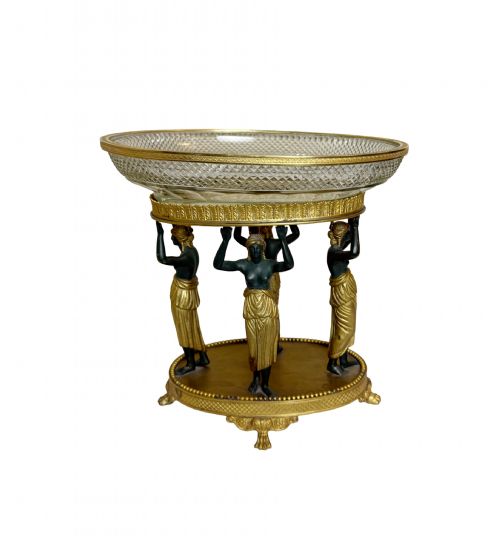
The form functions primarily as a decorative centrepiece, often taking the shape of a shallow dish or tazza raised on a central column. Many pieces incorporate secondary materials such as marble, onyx, porcelain or crystal to create contrast with the gilded metalwork.
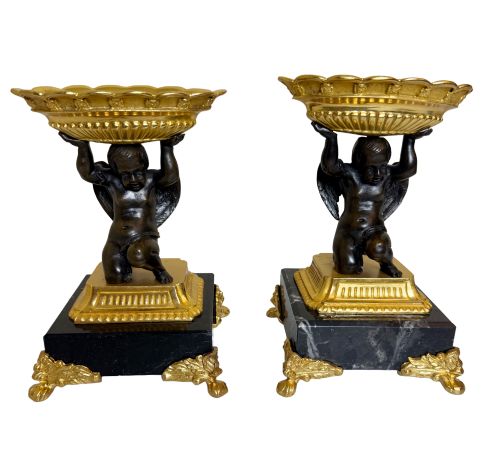
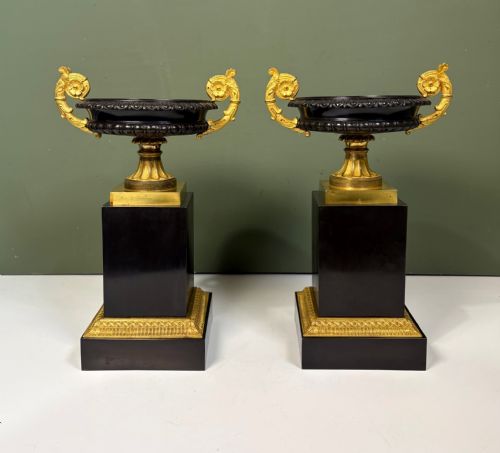
Nineteenth-century examples frequently draw on classical motifs, incorporating cherubs, mermen or architectural mounts. Buyers will also find pairs designed for mantel garnitures, balancing decorative symmetry with functional display surfaces.
Materials and construction
The fabrication relies on bronze or brass cast in detailed sections, then finished with mercury gilding or electroplating to achieve the distinctive golden surface. This metallic structure provides a rigid framework capable of supporting heavy inserts of carved marble, onyx or cut crystal.
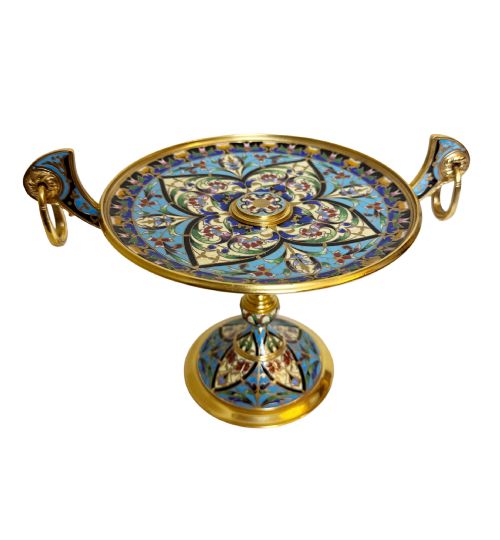
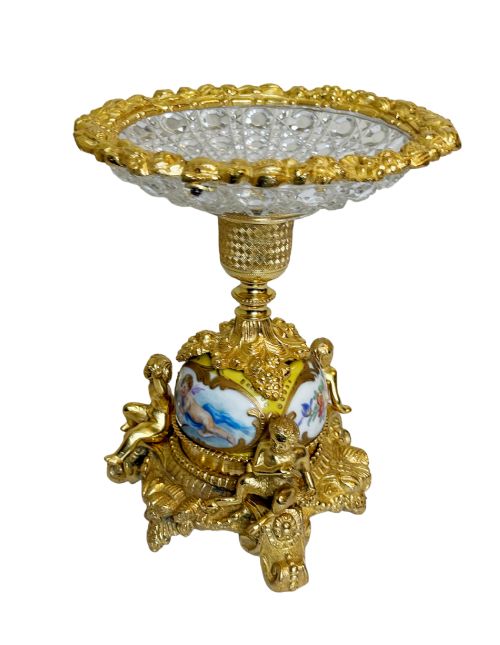
Artisans combined the cast metal mounts with fired ceramics including Limoges, Sevres style and Paris porcelain bowls, or decorative stones such as malachite, agate and Blue John. Enamelling techniques like champleve and cloisonne further decorate the surfaces with coloured glass pastes fused into metal recesses.
Listings feature items incorporating Sevres style porcelain, Limoges dishes, Paris porcelain, and Samson porcelain alongside hardstones like malachite, agate, and Blue John.
Factors determining quality
The choice and integration of companion materials dictate the status of a piece, separating standard production items from ambitious Grand Tour commissions. Master artisans selected unblemished hardstones, finely painted porcelain plaques and heavy cut crystal to complement the structural bronze.
Christofle Paris
The Gilt Bronze Compotes Glossary
- Compote
- An elevated bowl or dish used for serving fruit or sweets, often standing on a central stem and foot. In nineteenth-century usage, the term frequently overlaps with tazza and centrepiece.
- Ormolu
- Finely chopped high-grade brass or bronze finished with a mercury-gilding process to produce a rich gold appearance. It serves as the primary mount for decorative stone and porcelain vessels.
- Tazza
- A shallow bowl or saucer mounted upon a stem and foot, originating from classical forms. These pieces often feature cast bronze handles and decorative borders.
- Champleve
- An enamelling technique where troughs or cells are hollowed out of a metal surface and filled with vitreous enamel before firing. The resulting designs sit flush with the surrounding metal borders.
- Garniture
- A set of three or more matching decorative objects, typically comprising a central clock or urn flanked by matching vases or compotes. They were designed for display on a mantelpiece.
Gilt Bronze Compotes: Frequently Asked Questions
What is a gilt bronze compote?
A gilt bronze compote is a raised decorative bowl or tazza featuring gilded metal mounts combined with materials like crystal, porcelain or marble. These vessels functioned as formal centrepieces on dining tables and mantelpieces during the nineteenth century.
Craftsmen produced them across various European centres, particularly in France, incorporating classical motifs, figurative supports and decorative stonework into the pedestal design.
How were compotes used historically?
Historically, compotes served fruit, sweetmeats or desserts during formal dining courses, occupying the centre of the table. Their elevated design allowed them to remain visible above other tablewares.
Over time, many transitioned into purely ornamental objects, displayed as part of mantel garnitures or empty on side tables to highlight their decorative mounts and coloured stones.
How do I identify a Regency period piece?
Regency pieces typically date from the early nineteenth century and reflect neoclassical influences drawn from Greek and Roman design. Look for crisp ormolu casting, architectural bronze mounts and materials like Sienna marble.
Pieces from this era often feature specific classical iconography, such as patinated bronze figures supporting shallow stone or crystal bowls.
What styles are common in nineteenth-century compotes?
The listings show a prevalence of French Rococo Revival, Empire and Second Empire aesthetics alongside Regency and Victorian Gothic Revival examples. These styles dictate the character of the bronze mounts, ranging from exuberant scrolling foliage to strict classical symmetry.
Designers also drew inspiration from Grand Tour travels, incorporating ancient motifs, hardstones like agate, and Japanese-influenced cloisonne enamelling.