





Gilt Bronze Ceramic Urns
Gilt bronze ceramic urns combine glazed ceramic bodies with cast metal mounts to create decorative focal points for interior spaces.
Gilt Bronze Ceramic Urns
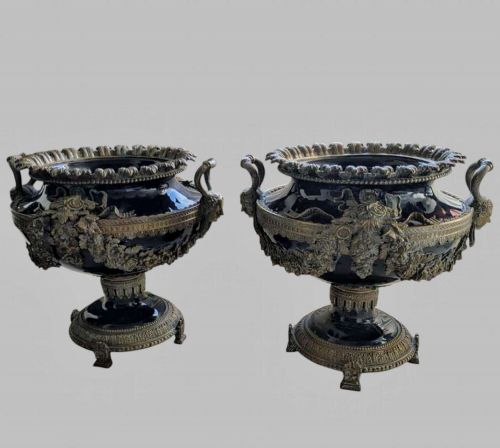
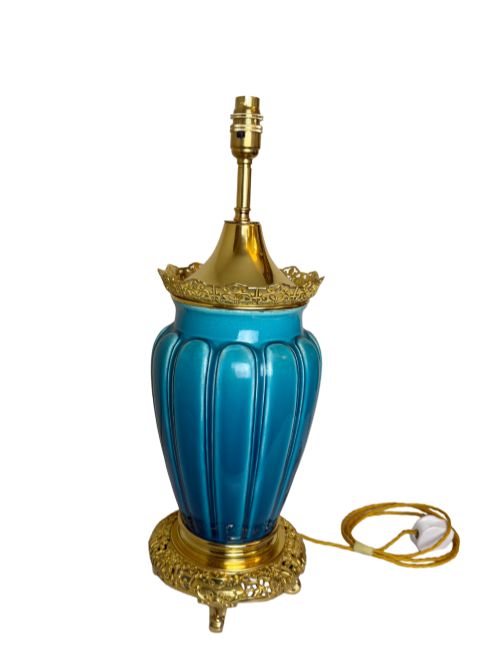
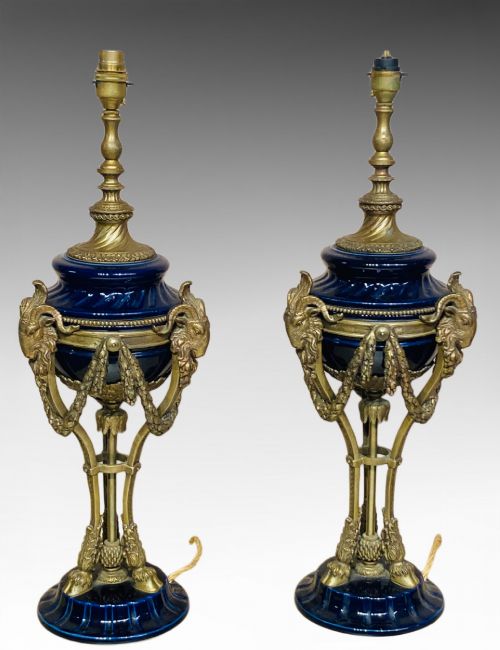
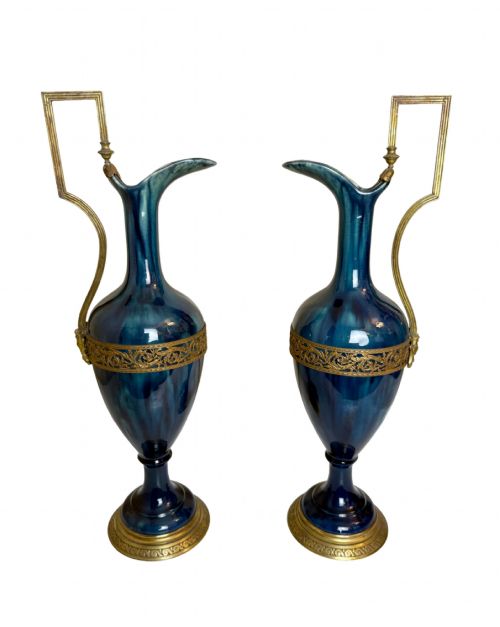
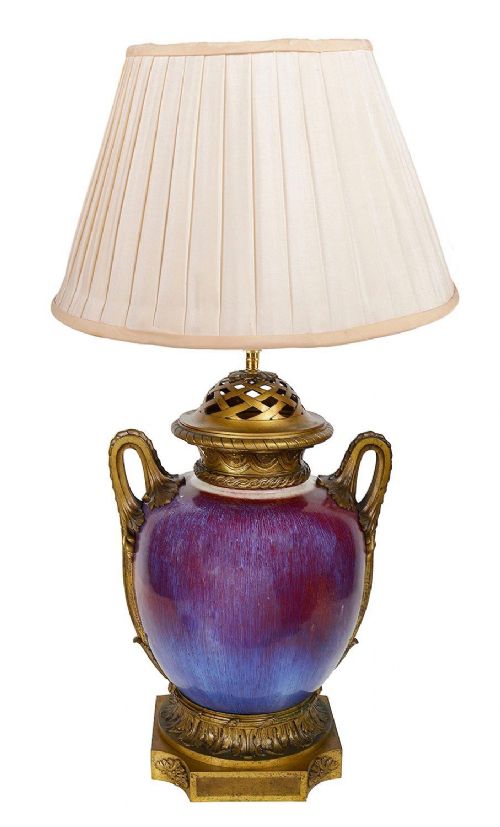
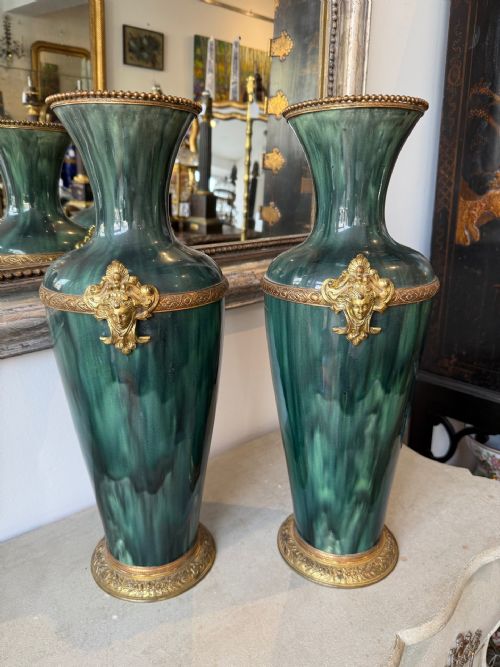
Gilt bronze ceramic urns unite fired ceramic bodies with cast metal mountings, creating decorative objects that often serve as table lamps, garnitures, or mantel garnitures. The category includes French porcelain pieces styled after Sevres production alongside Asian export wares fitted with European metalwork.
Most examples found in current stock date from the nineteenth century, reflecting Victorian and continental tastes for mixed-media display items. These vessels range from petite lidded pots to monumental pairs intended for formal reception rooms.
The ceramic components vary from powder blue and turquoise glazes to hand-painted panels, while the metal mounts incorporate brass, ormolu, and gilt bronze elements shaped in rococo or neoclassical revival styles.
How They Were Made
Makers utilised fired porcelain and pottery bodies, applying coloured glazes such as sang de bouef, bleu celeste, and powder blue before secondary firing. Many surfaces received hand-painted detailing or enamel work prior to the mounting process.
The metal components involve cast bronze, ormolu, and brass, shaped into handles, bases, and rims that follow the contours of the ceramic vessels. Craftsmen secured these mounts using pins, screws, or adhesives to unite the metalwork with the fragile ceramic bodies.
Gilt Bronze Ceramic Urns Retail Price Guide 2026
Typical asking prices for gilt bronze ceramic urns among the pieces listed under this phrase on Sellingantiques today, from the lower quarter to the upper quarter. They describe what is for sale here now, not the wider market.
Listings feature nineteenth-century porcelain, ormolu, and gilt bronze across French revival and Chinese export styles.
What Varies in Quality
The precision and crispness of the bronze casting separate standard decorative mounts from superior examples. Finely chased ormolu displays sharp architectural and floral details, whereas lesser castings appear soft and uniform in texture.
Ceramic body selection also dictates standard, with hand-painted porcelain panels and rich, even glaze distributions representing higher tiers of production compared to simpler monochrome vessels.
Meissen·Kizan·Sevres
The Gilt Bronze Ceramic Urns Glossary
- Ormolu
- A method of applying finely ground high-carat gold to a bronze base using a mercury amalgam. This technique creates a rich golden finish found on nineteenth-century French mounts.
- Garniture
- A set of three or more decorative objects designed to be displayed together on a mantelpiece or sideboard. These sets typically include a central urn flanked by matching vases or candlesticks.
- Bleu Celeste
- A bright sky blue ceramic glaze popular in eighteenth and nineteenth-century French porcelain production. It provides a vivid backdrop for gilt bronze mounts.
- Koro
- A traditional Japanese incense burner fitted with a lid and tripod feet. These vessels often incorporate decorative handles and ceramic relief work.
- Sang de Boeuf
- A deep red copper-based ceramic glaze translating to ox-blood. This finish appears on Chinese porcelain vessels adapted with European metal mounts.
Gilt Bronze Ceramic Urns: Frequently Asked Questions
What are gilt bronze ceramic urns?
These pieces combine ceramic vessels with cast metal mounts made of bronze or ormolu. They function as decorative ornaments, table lamps, or garniture sets.
Origins trace to European porcelain factories and Asian export workshops, primarily during the nineteenth century. The metalwork complements the glazed ceramic bodies to create ornamental objects for domestic interiors.
How were these urns used historically?
Owners placed these objects on mantelpieces, consoles, and sideboards as decorative focal points within formal rooms. Many served purely as visual art rather than functional containers.
Later adaptations converted several of these vessels into table lamps by adding electrical fittings while retaining the original ceramic bodies and metal mounts.
How do you clean the metal mounts?
Maintenance requires gentle dusting with a soft, dry brush to prevent dirt accumulation on the gilt surfaces. Harsh cleaning agents can strip the historic ormolu finish from the bronze.
Care must be taken around the ceramic body and any painted panels to avoid moisture damage or abrasion to the glaze.
How do you identify Sevres style pieces?
Sevres style works typically feature painted pastoral scenes, monarchical portraits, or rich monochrome glazes framed by heavy gilt bronze or ormolu mounts. The aesthetic draws on French neoclassical and rococo revival design traditions.
These pieces often date to the nineteenth century, emulating the earlier royal French factory output through decorative motifs and colourful porcelain bodies.