



Blue Porcelain Ewers
Blue porcelain ewers are water vessels made for pouring, prized for rich cobalt colour and decorative form.
Blue Porcelain Ewers
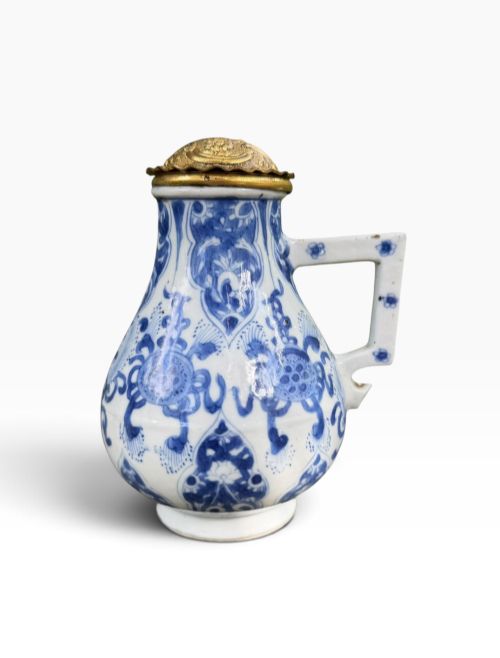
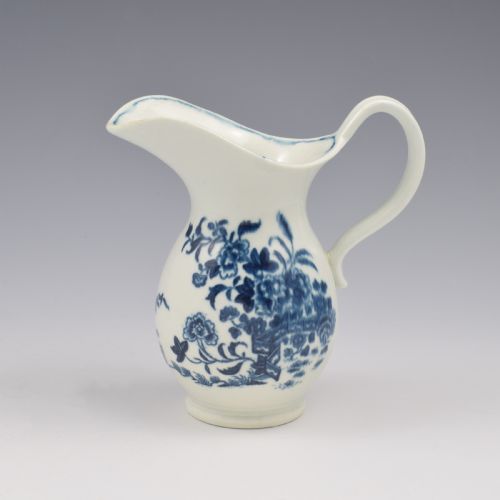
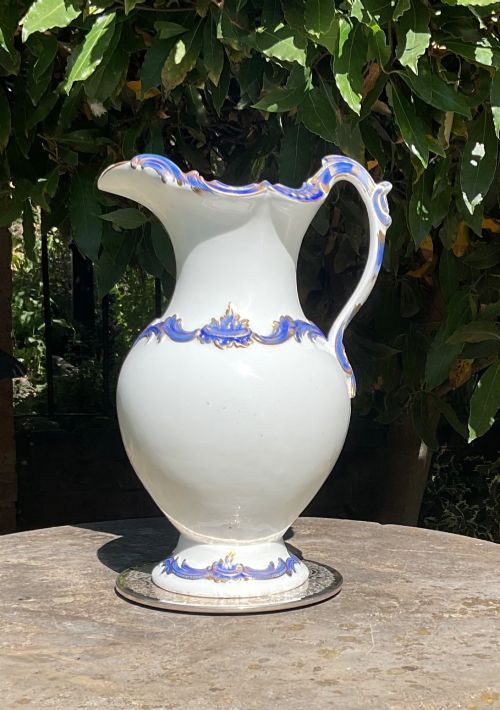
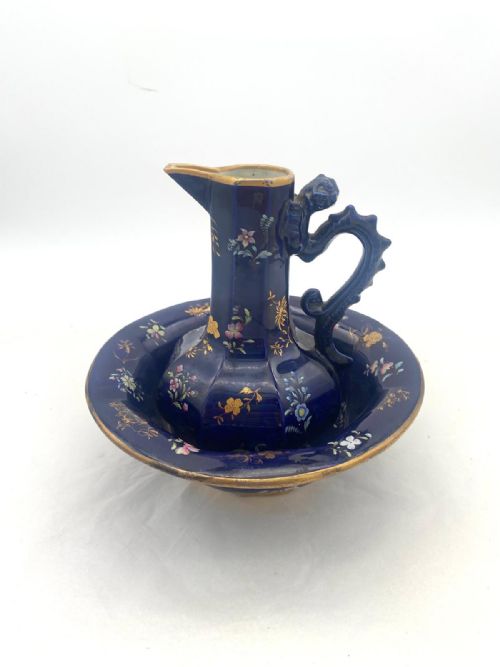
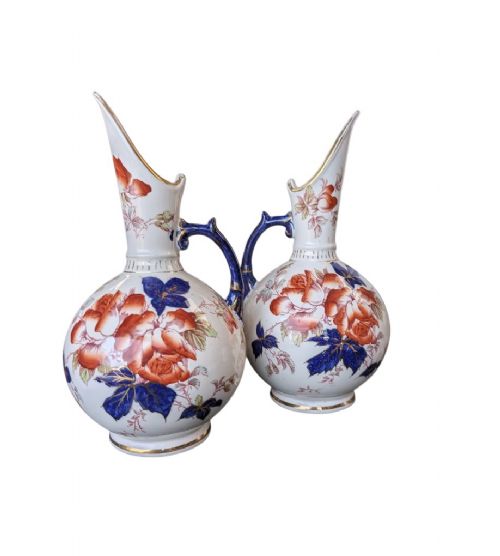
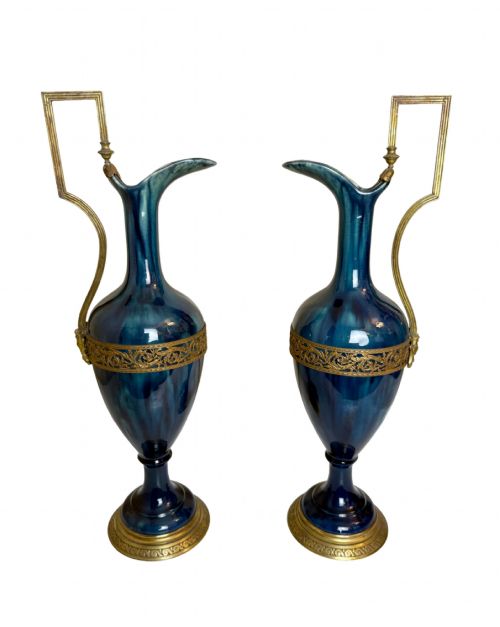
Blue porcelain ewers encompass pouring vessels created across several centuries, ranging from early Japanese and Chinese pieces to nineteenth-century English ironstone examples. These items combine utilitarian forms such as jugs and pitchers with elaborate decorative programmes suited for display or service. Buyers encounter varied iterations including single ewers, pairs of urns, and components of washstand sets.
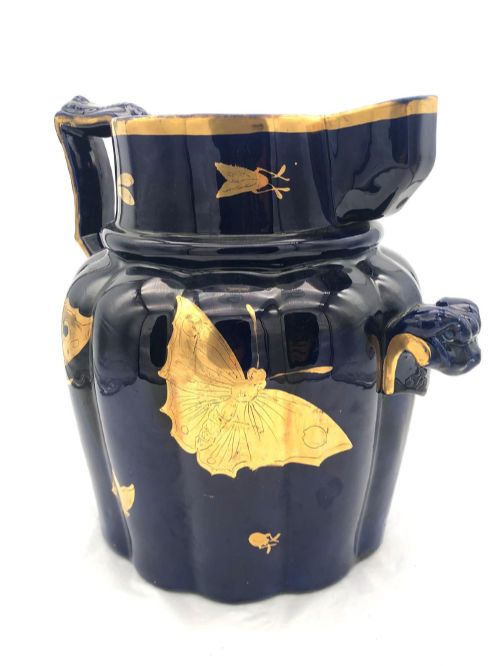
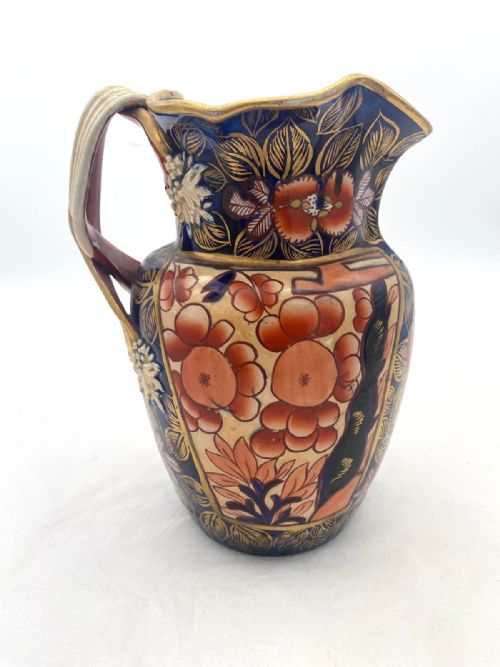
The selection on this page demonstrates strong representation from nineteenth-century English factories alongside earlier Asian export pieces. Mason's ironstone examples frequently appear, often featuring cobalt blue grounds and distinct handles, alongside Worcester porcelain and Doulton Burslem sets. Japanese Imari and Chinese Ming style pieces introduce distinct eastern decorative traditions into the category.
How they were made
Production relies on porcelain, ironstone, and earthenware bodies shaped into ewers, jugs, and pitchers. Artisans applied cobalt blue underglaze decoration, sometimes paired with enamel and glaze treatments to achieve deep surface coloration. Certain examples incorporate gold leaf, gold gilding, and gilt bronze trim to highlight handles, rims, and structural contours.
Techniques range from wheel-thrown Asian export ceramics to moulded nineteenth-century ironstone pottery. Specialised handle formation, such as grotesque motifs, demonstrates sculptural modelling combined with functional vessel design. Kiln firing fixed the cobalt pigments beneath or upon the glaze, determining the final tonal depth of the blue ground.
Blue Porcelain Ewers Retail Price Guide 2026
Typical asking prices for blue porcelain ewers among the pieces listed under this phrase on Sellingantiques today, from the lower quarter to the upper quarter. They describe what is for sale here now, not the wider market.
Materials recorded across the inventory include porcelain, ironstone, enamel, glaze, gold leaf, and gilt bronze trim.
What varies in quality
Quality rests upon the crispness of the moulded or thrown form and the depth of the cobalt blue ground. Superior pieces display precise detailing in handles and spouts, whereas lesser items show softer contours and less defined decorative motifs. The application of secondary elements such as gilt bronze trim or gold leaf further distinguishes finer productions from standard wares.
Artistic execution dictates distinction, particularly in hand-painted Chinoiserie and Imari patterns where brushwork precision varies. Pieces retaining complete matching components, such as associated bowls in washstand sets, command greater interest. The preservation of the original glaze and gilding without excessive rubbing remains a primary factor.
Masons Ironstone·Doulton Burslem·Coalport
The Blue Porcelain Ewers Glossary
- Ewer
- A large jug with a wide spout and handled shape, historically used for pouring water. These vessels often serve decorative functions in later periods.
- Ironstone
- A heavy, durable earthenware developed in the nineteenth century to imitate porcelain. It provides a robust body for moulded ewers and jugs.
- Imari
- A style of Japanese export porcelain featuring underglaze blue and iron red, frequently accented with gold. It heavily influenced European ceramic design.
- Chinoiserie
- European artistic interpretations of Chinese and East Asian decorative motifs. This style appears frequently on nineteenth-century English blue and white ceramics.
- Cobalt blue
- A deep blue pigment derived from cobalt oxide, stable at high kiln temperatures. It forms the primary colour ground on these porcelains and ironstones.
Blue Porcelain Ewers: Frequently Asked Questions
What is a blue porcelain ewer used for?
These vessels originally functioned for hand-washing at washstands or for serving liquids at table. Over time, their role shifted primarily toward decorative display in domestic interiors.
Collectors today appreciate them as sculptural objects that showcase historical ceramic techniques and deep cobalt glazes.
How do I date a blue porcelain ewer?
Dating relies on identifying factory marks, ceramic bodies such as ironstone versus porcelain, and stylistic influences like Regency or Chinoiserie. Manufacturing techniques and handle shapes also provide clear chronological indicators.
Comparing pieces to documented examples from periods like the Kangxi reign or Victorian era helps establish precise age.
Are these ewers made of porcelain or ironstone?
The category includes both true porcelain and nineteenth-century ironstone ceramics. Porcelain offers a translucent body and fine finish, whereas ironstone provides a heavier, highly durable earthenware alternative.
Both materials were utilised by makers to achieve rich cobalt blue surface decoration.
How should I display a blue porcelain ewer?
These ewers suit prominent placement on sideboards, mantelpieces, or within cabinet displays where their form and blue coloration stand out. Pairs or larger sets create strong symmetrical arrangements.
Care should be taken to place them securely away from high-traffic edges due to their ceramic composition.