



Blue Stoneware Urns
Blue stoneware urns combine robust ceramic bodies with striking blue colouration, offering robust decorative presence for collectors of Victorian and Art Nouveau ceramics.
Blue Stoneware Urns
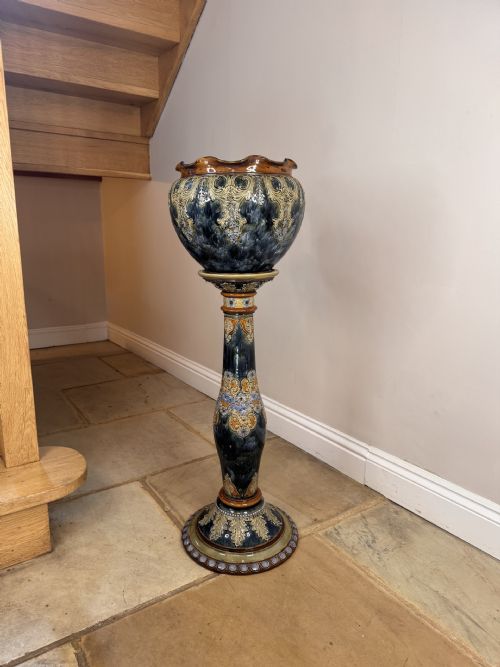
Blue stoneware urns encompass a diverse selection of ceramic vessels originating primarily from the Victorian period through to the 1920s. Buyers searching this phrase encounter robust forms ranging from campana shapes and baluster vases to jardinieres and biscuit barrels.
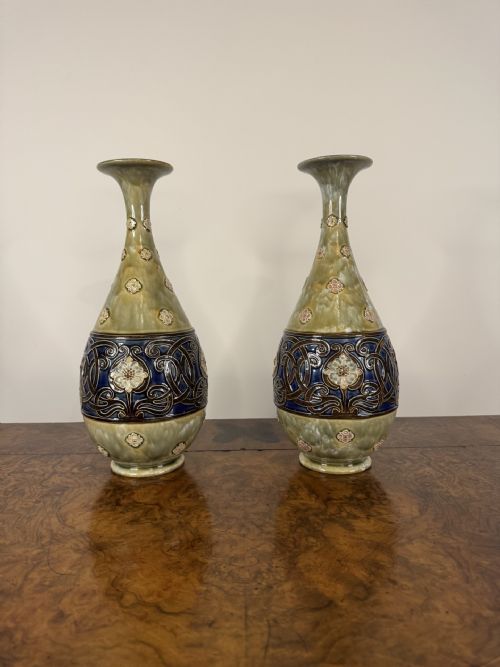
The pieces on this page heavily feature British pottery production, notably from the Doulton potteries in Lambeth alongside Wedgwood examples. These works frequently display stylistic influences from Art Nouveau and Arts and Crafts movements alongside Neoclassical designs.
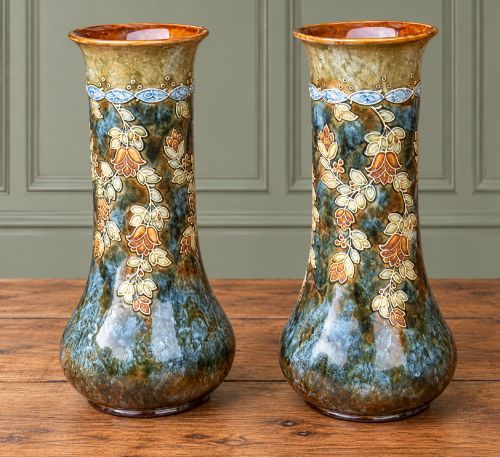
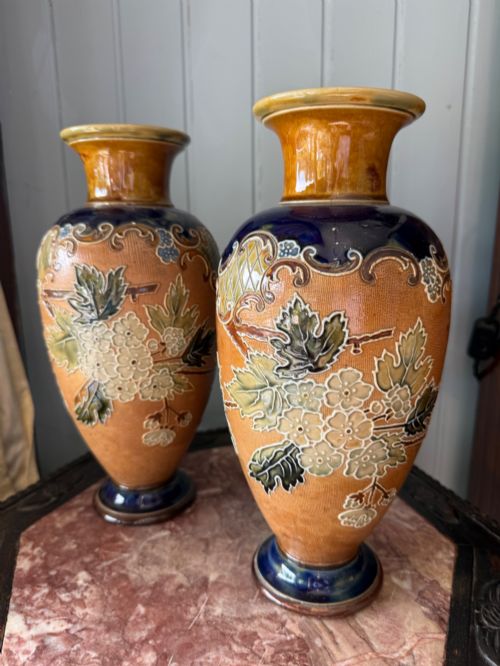
Most examples appear as pairs, serving mantelpieces and large rooms with balanced symmetry. Surface decoration varies from white bas-reliefs and enamel floral motifs to intricate slip-raised patterns.
How they were made
The creation of these vessels relies on dense stoneware and ceramic bodies fired at high temperatures to achieve durability. Potters applied specialised glazes, salt glazes and enamel details to add colour and texture to the finished surface.
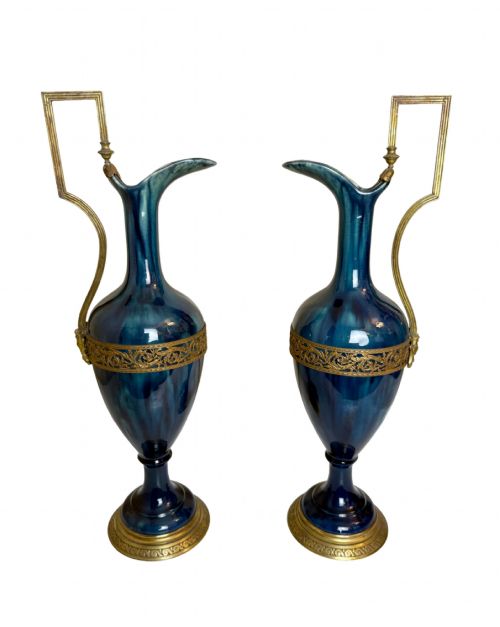
Many items incorporate delicate white jasperware bas-reliefs applied to blue grounds, while others utilise gold leaf or gilt bronze trim for added visual contrast. Skilled decorators hand-painted floral elements and incised intricate patterns directly into the clay before firing.
Blue Stoneware Urns Retail Price Guide 2026
Typical asking prices for blue stoneware urns among the pieces listed under this phrase on Sellingantiques today, from the lower quarter to the upper quarter. They describe what is for sale here now, not the wider market.
Some decorators pressed actual lace into wet clay to create textures that fooled the eye long before the glaze went on.
What varies in quality
Quality in these ceramics often rests upon the crispness of the moulded relief work and the precision of hand-painted enamel decoration. Pieces bearing specific artist signatures display superior execution compared to unmarked workshop output.
The complexity of the form and the integration of decorative elements such as gilt bronze trim or intricate slip work distinguish standard production items from masterworks.
Royal Doulton·Wedgwood·Doulton Lambeth·Louisa Wakely·Emily Edwards
The Blue Stoneware Urns Glossary
- Stoneware
- A type of pottery fired at a high temperature until vitrified and impervious to liquid. It provides a durable, dense body suitable for large decorative urns and vases.
- Jasperware
- A fine-grained, unglazed stoneware developed by Wedgwood, typically featuring contrasting white bas-relief figures set against a coloured ground. This technique defined many classic nineteenth-century urn designs.
- Slaterware
- A patented Doulton technique involving pressing lace or fabric into wet clay to create textured background patterns. These surfaces were often highlighted with enamel and gold.
- Campana
- A bell-shaped urn form derived from classical antiquity. This classical silhouette remained popular throughout the Victorian era.
- Jardiniere
- A large decorative ceramic pot designed to hold growing plants. These pieces often match the aesthetic of contemporary urns and vases.
Blue Stoneware Urns: Frequently Asked Questions
What periods do these pieces date from?
The inventory spans the nineteenth century up to the 1920s, with a strong concentration of Victorian and Edwardian examples.
Art Nouveau and Arts and Crafts styles also feature prominently among the manufacturing dates.
Are these items usually sold in pairs?
Many listings comprise matched pairs designed for symmetrical display on mantelpieces or pedestals.
Single vessels also appear frequently across various forms.
What materials are used in their construction?
The primary material is dense stoneware or ceramic, often enhanced with enamel, glaze, and gold leaf.
Some examples incorporate metal elements like gilt bronze trim.
How do I identify specific makers?
Look for factory stamps and impressed factory marks on the underside of the ceramic body.
Artist initials or signatures scratched into the clay often indicate individual studio decorators.