

Gilt Bronze Centre Table
A gilt bronze centre table brings sculptural presence and French revival elegance to the middle of a room.
Gilt Bronze Centre Table
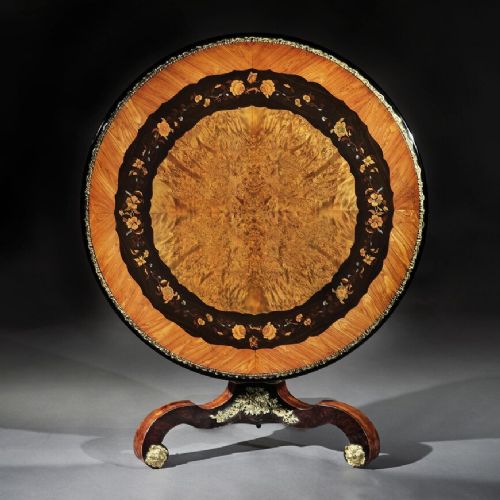
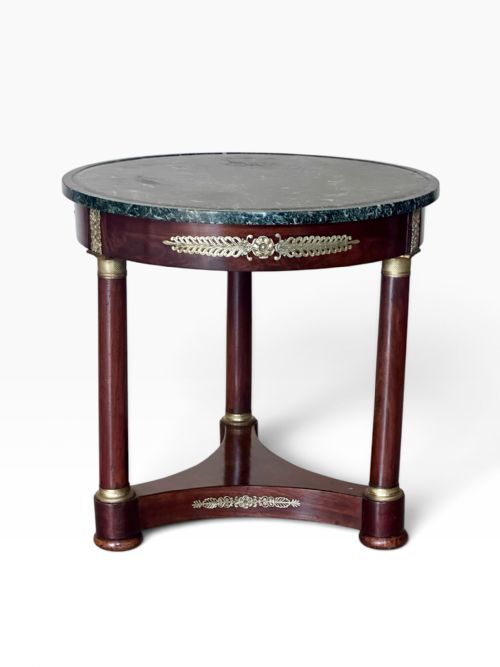
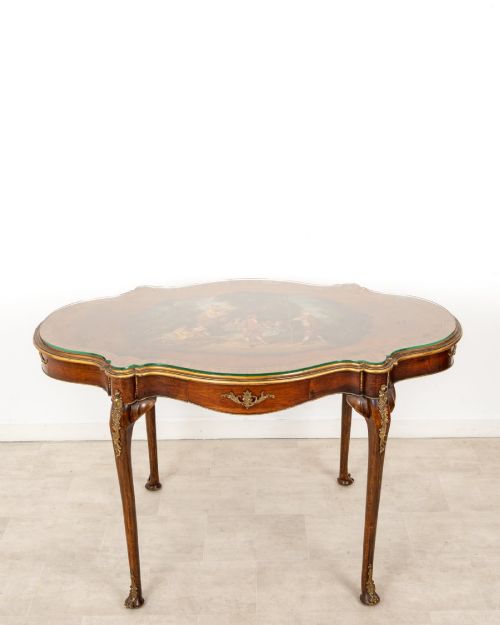
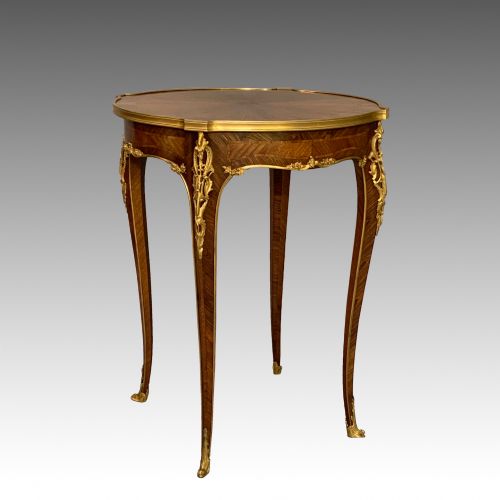
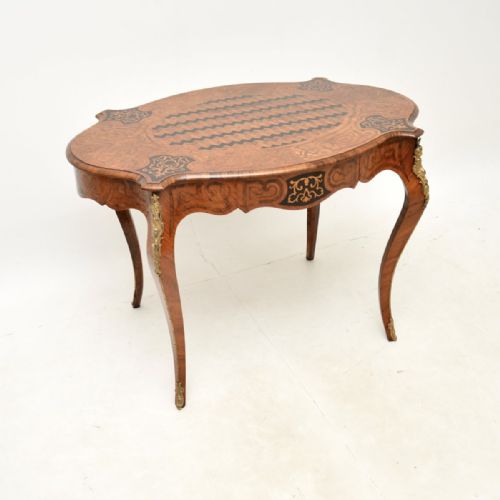
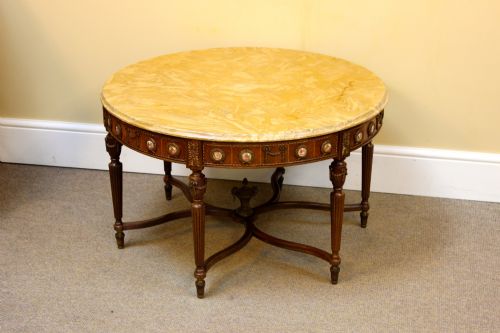
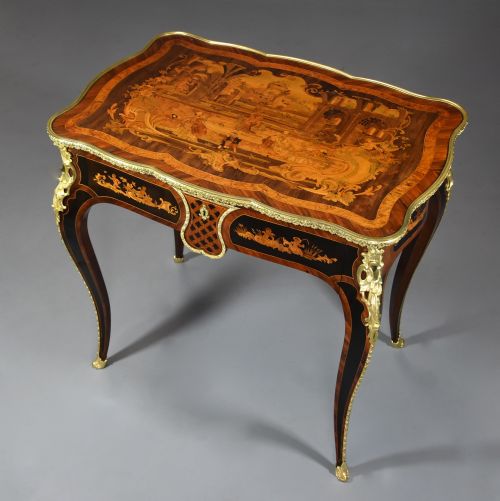
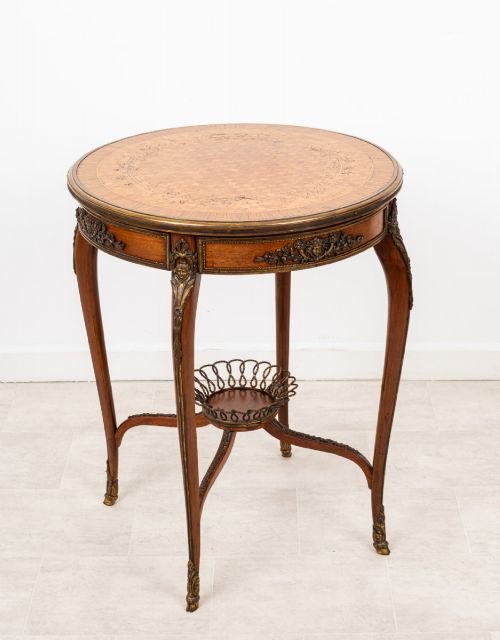
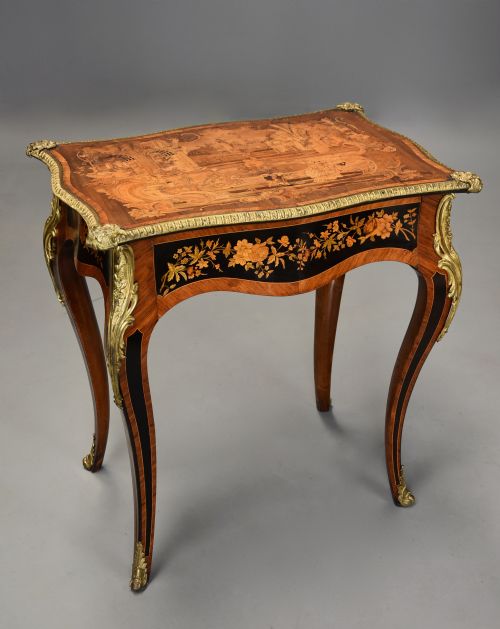
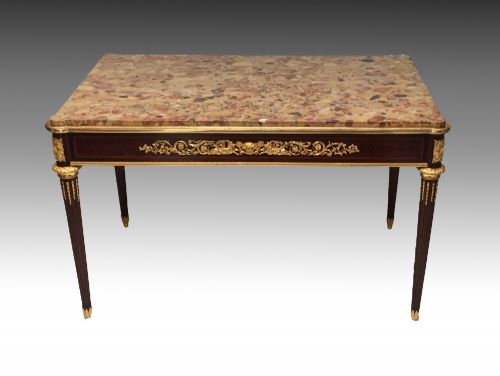
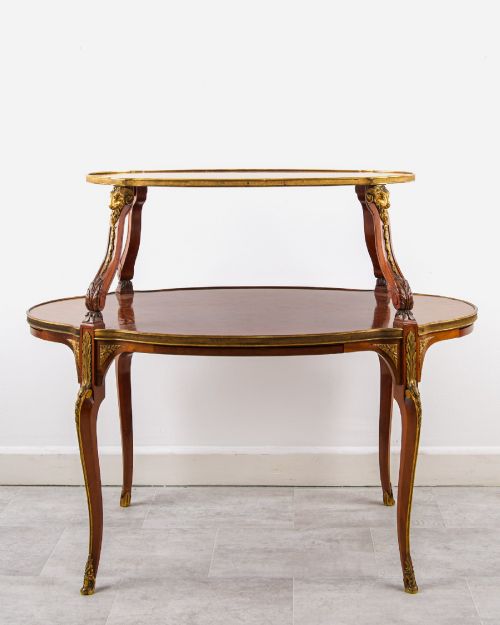
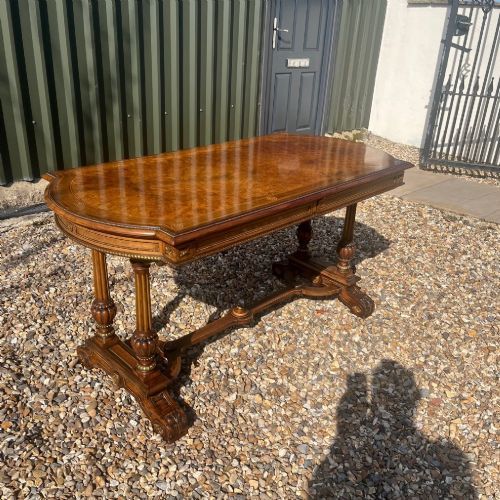
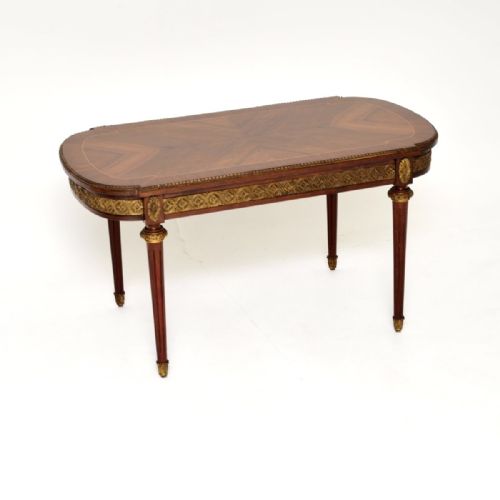
A gilt bronze centre table serves as a freestanding focal point designed to be viewed from all sides within a principal room. When you search for a gilt bronze centre table, you encounter nineteenth-century French forms drawing on Louis XV, Louis XVI, and Empire styles. The examples found here range from elaborate marquetry surfaces to marble-topped gueridons supported by ormolu mounts.
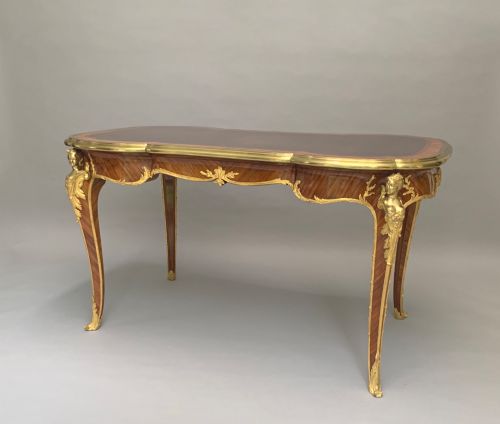
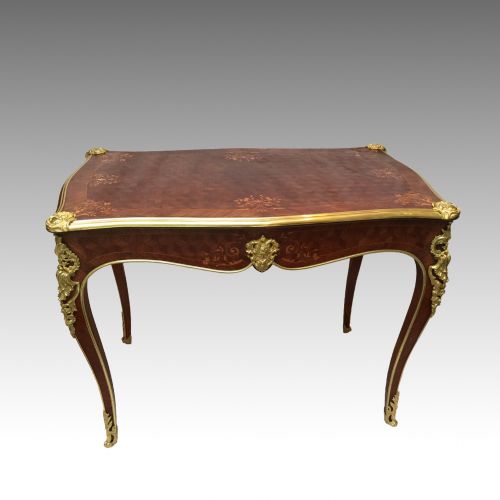
Makers and workshops of the period, including notable figures represented in the archive, constructed these tables for reception rooms and salons. Common manifestations include writing desks, bureau plats, and occasional tables with intricate parquetry. These pieces combine utility with decorative metalwork, reflecting nineteenth-century revivals of earlier court aesthetics.
What varies in quality
The crispness of the chasing on the gilt bronze mounts distinguishes masterwork production from standard workshop output. Superior castings exhibit sharp detail in foliage, scrolls, and figural elements, whereas lesser examples show softness in the metalwork and simpler, repetitive stamping.
The precision of the wood veneers and the complexity of the marquetry layout indicate the standing of the maker. Tables retaining their original fire-gilt surfaces and properly fitted marble slabs demonstrate greater integrity than those with compromised finishes or replaced components.
Gilt Bronze Centre Table Retail Price Guide 2026
Typical asking prices for gilt bronze centre table among the pieces listed under this phrase on Sellingantiques today, from the lower quarter to the upper quarter. They describe what is for sale here now, not the wider market.
Listings feature eighteenth-century revival aesthetics, encompassing Louis XV, Louis XVI, and French Empire styles executed in walnut, mahogany, and kingwood.
Edward Holmes Baldock·Francois Linke·Joseph-Emmanuel Zwiener·Paul Sormani·A. Beurdeley·Jackson & Graham
The Gilt Bronze Centre Table Glossary
- Ormolu
- Gilded bronze, produced by applying a mercury-gold amalgam to cast bronze and heating it to drive off the mercury. This technique creates a durable, deep golden finish seen on nineteenth-century mounts.
- Gueridon
- A small round table, typically supported by a single central column or three legs. In nineteenth-century French furniture, these often feature marble tops and gilt bronze mounts.
- Marquetry
- The art of applying pieces of veneer to a structure to form decorative patterns and pictures. Makers utilised varied coloured woods to create floral and architectural scenes.
- Bureau Plat
- A flat-topped writing desk designed to stand free in the middle of a room. These tables feature finished backs and drawers fitted into the frieze.
- Parquetry
- Geometric wood inlay forming repeating patterns such as cubes or checkers. It differs from marquetry by relying on angular, repeating motifs rather than pictorial designs.
Gilt Bronze Centre Table: Frequently Asked Questions
Where should I place a centre table?
A centre table stands freely in the middle of a room rather than against a wall. It functions as a decorative surface for lamps, books, or objects of curiosity while providing visual weight to the centre of the space.
Because these pieces are finished on all sides, they allow circulation around them. They suit large hallways, drawing rooms, and libraries where they can be viewed from every angle.
How do I identify a Louis XV style table?
Louis XV style tables feature asymmetrical curves, cabriole legs, and naturalistic motifs such as scrolling foliage and flowers. The forms avoid straight lines in favour of flowing serpentine outlines.
Ormolu mounts on these pieces typically accentuate the corners and feet, often terminating in scroll or hoof shapes. The overall impression is organic and decorative.
What is the difference between ormolu and gilt brass?
Ormolu consists of fire-gilded bronze, where a mercury-gold mixture is applied to cast bronze and fired. This produces a rich, deep golden lustre with substantial weight in the underlying metal.
Gilt brass uses a different alloy and often employs modern plating techniques rather than historical fire-gilding. Ormolu generally indicates higher production standards in nineteenth-century furniture.
How do I care for a marble top?
Marble surfaces require protection from acidic substances such as wine, fruit juice, and vinegar, which can etch the polished stone. Use coasters and clean the top with a damp cloth and mild soap.
Avoid abrasive cleaners that dull the polish. Periodic gentle dusting maintains the stone without disturbing the surrounding wood and metal mounts.