




Gilt Brass Timekeeper
A gilt brass timekeeper offers precision engineering housed in polished metal, catching the eye on any mantelpiece with its reflective surfaces.
Gilt Brass Timekeeper
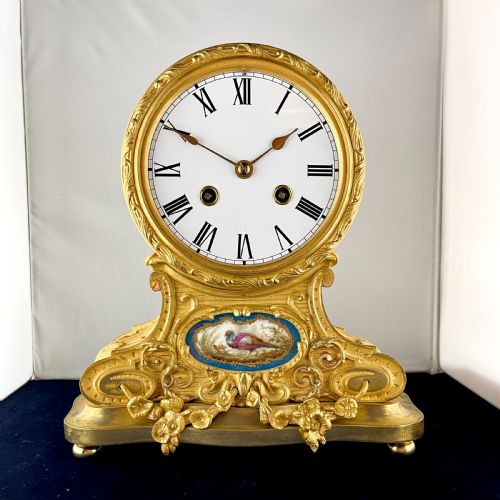
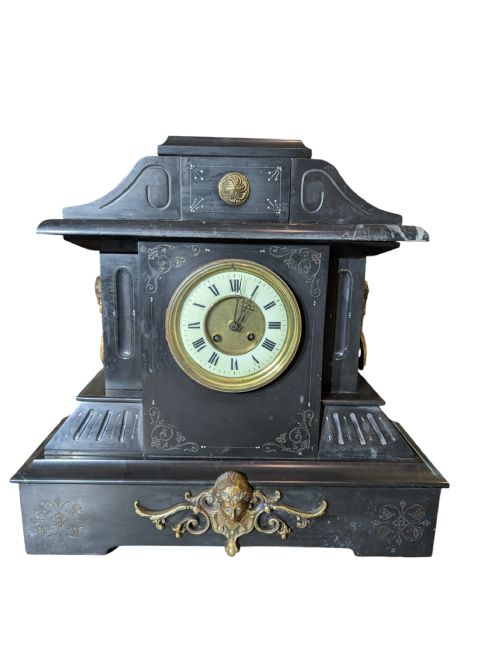
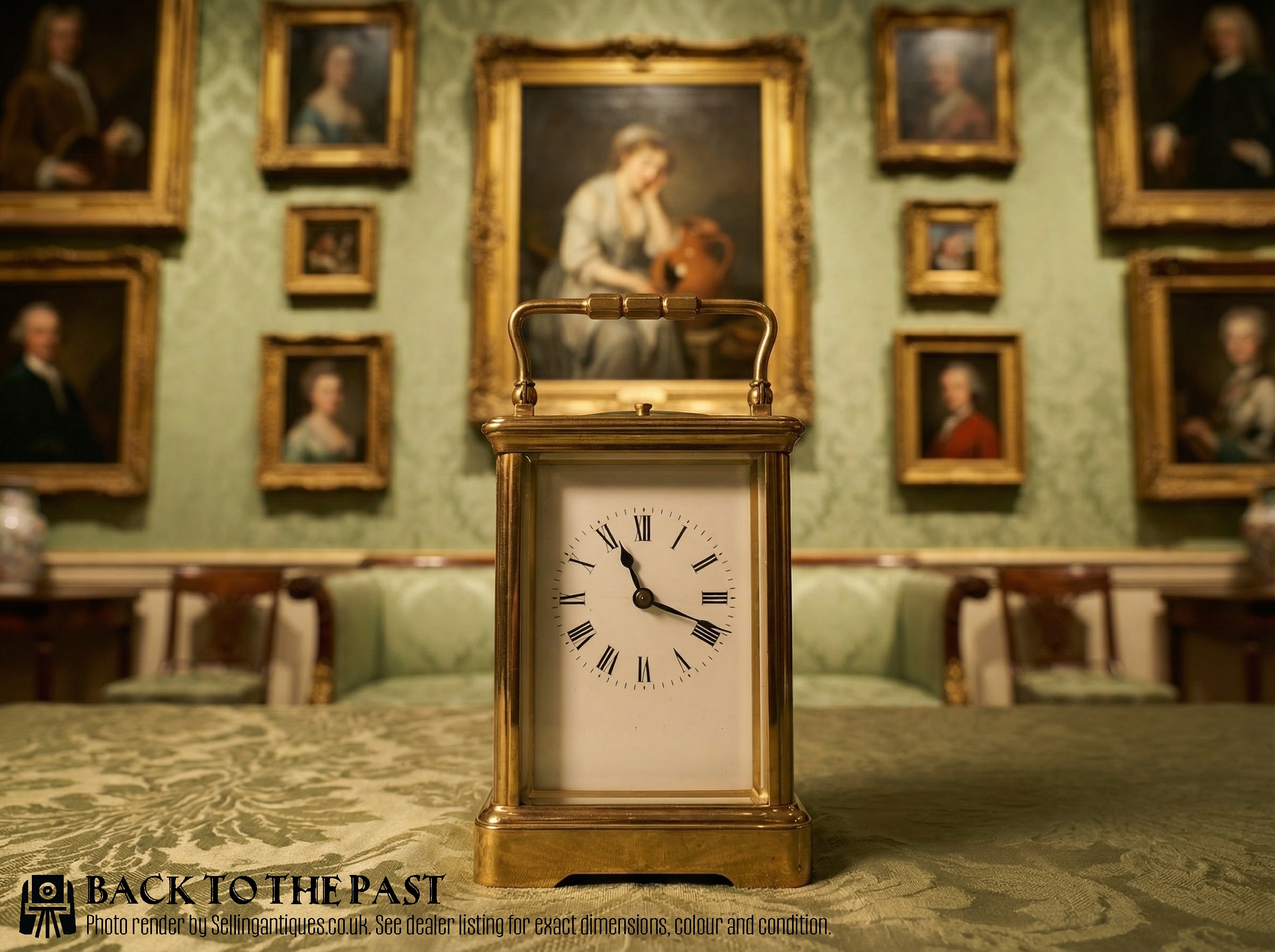
A gilt brass timekeeper encompasses various horological forms, predominantly appearing here as carriage clocks and mantel clocks from the nineteenth century. These objects function primarily to measure hours while serving as decorative centerpieces in domestic interiors.
Most examples hail from French workshops or British makers, spanning periods from the Regency era through to the late nineteenth century, alongside occasional mid-twentieth-century Swiss pieces. Carriage clocks feature travelling cases with glass panels, whilst mantel clocks take architectural, drumhead, or figural shapes.
Buyers encounter styles ranging from French Rococo Revival and Louis XVI Revival to Victorian and Gothic designs. Materials frequently accompany the primary metal, including marble, black slate, porcelain, and mahogany.
Assessing craftsmanship and condition
Quality reveals itself in the crispness of the cast bronze work and the depth of the hand engraving across the brass panels. Finer examples display intricate figural castings, such as cherubs or doves, integrated seamlessly into the case design.
The sophistication of the internal movement distinguishes standard pieces from superior examples. Signed movements by notable makers, alongside complications such as grande-sonnerie striking or repeater functions, indicate higher manufacturing ambition.
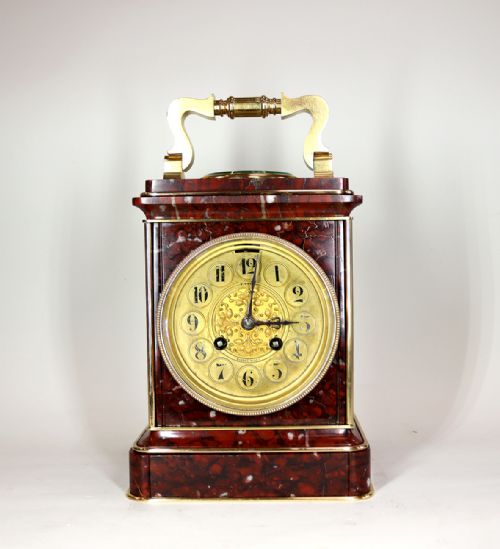
Some carriage clocks feature heavy rouge marble cases, proving that travellers occasionally preferred their luggage exceptionally weighty.
Brunelot·Delépine-Barrois·Bourdin, Paris·FB Adams London·Jaeger Le Coultre
The Gilt Brass Timekeeper Glossary
- Carriage clock
- A portable spring-driven timepiece designed for travelling, typically housed in a brass case with glazed panels to view the movement. These clocks often feature a folding handle on top.
- Fusee
- A conical pulley used with a chain or cord to maintain even power delivery to the gear train as the mainspring unwinds. This mechanism improves timekeeping accuracy throughout the running period.
- Repeater
- A clock mechanism that chimes the hours and quarters upon the activation of a push-piece or lever. This function allowed owners to check the time in darkness.
- Ormolu
- Finely chopped high-karat gold applied to a bronze base using a mercury amalgamation technique, or later through electroplating. The finish provides a rich, warm metallic lustre.
- Escapement
- The internal mechanism that controls the release of power from the gear train to the balance wheel or pendulum. It translates the unwinding spring into controlled, rhythmic impulses.
Gilt Brass Timekeeper: Frequently Asked Questions
How do I wind a carriage clock?
Wind the movement using a dedicated key inserted into the winding squares located on the backplate or underneath the base. Turn the key gently until resistance indicates the mainspring is fully tensioned.
Avoid over-winding the mechanism, as this can damage the internal springs and disrupt the delicate gear train.
Where should I place a mantel clock?
Position the clock on a stable, level surface such as a mantelpiece, sideboard, or desk to ensure the escapement beats evenly. Stability is essential for maintaining accurate timekeeping.
Keep the clock away from direct sunlight, draughts, and damp areas to protect the gilt finish and internal metal components.
How do I tell if a clock is French or English?
Examine the movement style and signature, as French makers frequently utilised platform escapements in carriage clocks and distinct numbering formats on enamel dials. English pieces often incorporate chain fusee movements.
Stylistic cues such as Regency or Victorian case designs also offer strong indicators of British origin, whereas Rococo Revival points towards continental workshops.
What maintenance do these clocks require?
Ensure the clock is kept clean of dust by using a soft, dry brush on the exterior brass and glass panels. Avoid using abrasive metal polishes that can wear away the gilt layer.
Arrange for professional servicing every few years to clean and lubricate the internal mechanical parts properly.