



Gilt Brass Grandfather Clock
A gilt brass grandfather clock is a tall timekeeper combining metallic lustre with rich lacquer, bringing vertical presence and historical depth to a room.
Gilt Brass Grandfather Clock
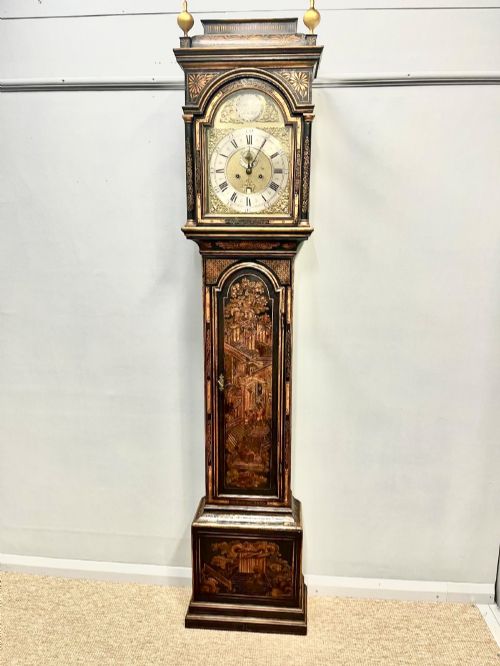
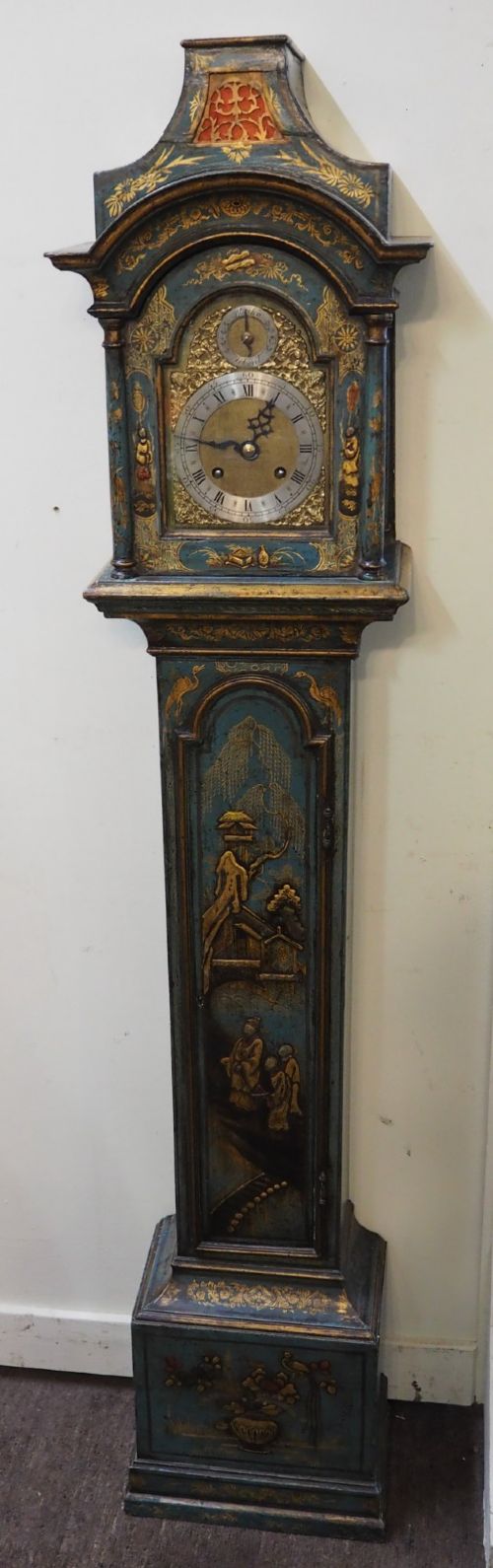
A gilt brass grandfather clock brings together tall wooden cases and metal dials, spanning periods from early Georgian work to the 1930s. Buyers searching this phrase most frequently encounter longcase clocks adorned with Chinoiserie decoration and lacquered finishes.
The objects take the form of full-height longcase clocks alongside miniature or desk versions from later eras like the 1920s and 1930s. Origins range from London and Edinburgh workshops to provincial centres, with movements often featuring brass dials and silvered accents.
How they were made
The construction relies on wood cabinets finished in lacquer, Japanned decoration, or gilt layers, paired with brass movements and dials. Craftsmen applied multiple coats of lacquer to build up oriental-inspired scenes, housing tall weights and pendulums inside.
Dials combined cast brass with silvered brass chapter rings, while miniature versions integrated delicate brass casting techniques suited to smaller desk scales.
Gilt Brass Grandfather Clock Retail Price Guide 2026
Typical asking prices for gilt brass grandfather clock among the pieces listed under this phrase on Sellingantiques today, from the lower quarter to the upper quarter. They describe what is for sale here now, not the wider market.
Some makers tucked miniature bells inside diminutive cases, ensuring tiny clocks chimed with surprising volume.
What varies in quality
The depth and preservation of the Chinoiserie decoration distinguish finer examples from simpler provincial pieces, as does the crispness of the brass engraving on the dial. Hand-painted or gilt details executed by skilled hands retain sharper definition across figures and landscape motifs.
Cabinet proportions and the integration of the hood architecture also dictate overall success, separating standard workshop output from exceptional commissions.
Wise of Reading·Gardner of London·Robert Berry
The Gilt Brass Grandfather Clock Glossary
- Longcase clock
- A tall pendulum clock enclosed in a wooden case standing directly on the floor. This is the formal term for what is commonly called a grandfather clock.
- Japanned wood
- European furniture finished with varnishes and lacquers in imitation of Japanese lacquerware. The technique typically involves raised metallic decoration on a dark or coloured background.
- Silvered brass
- A metallic surface treatment where a thin layer of silver is applied to a brass dial plate. This creates a contrasting background that makes the numerals easier to read.
- Movement
- The internal mechanism of a clock that drives the timekeeping and striking trains. Eighteenth-century examples often utilised eight-day weight-driven systems.
Gilt Brass Grandfather Clock: Frequently Asked Questions
How do I wind a longcase clock?
Winding requires using a crank key to raise the weights up inside the trunk by turning the winding arbours on the dial face. Care must be taken not to over-wind the movement.
Most traditional eight-day movements need attention weekly, while thirty-hour versions require daily winding using the pull cords or separate keys.
What is the difference between a grandfather and a grandmother clock?
Grandfather clocks are full-sized tall case timekeepers standing over six feet high, designed to house long pendulums and heavy weights. Grandmother clocks are smaller versions produced in later periods.
Miniature or grandmother variations often date to the twentieth century and sit lower in stature while retaining similar decorative lacquer finishes.
How should I place a lacquered clock in a room?
Position the tall case away from direct sunlight and strong heat sources to protect the delicate lacquer and gilt surfaces from cracking or fading. Ensure the floor is level so the pendulum swings evenly.
Securing the tall trunk to the wall using a discreet bracket prevents accidental tipping, especially in older hallways with uneven flooring.
How can I tell an 18th-century dial from a later one?
Early dials feature engraved brass plates with separate applied silvered chapter rings and cast corner spandrels in Rococo or earlier styles. The layout reflects the technical requirements of weight-driven movements.
Later revival pieces often display simplified dial construction or cast details that lack the hand-engraved crispness found on Georgian examples.