

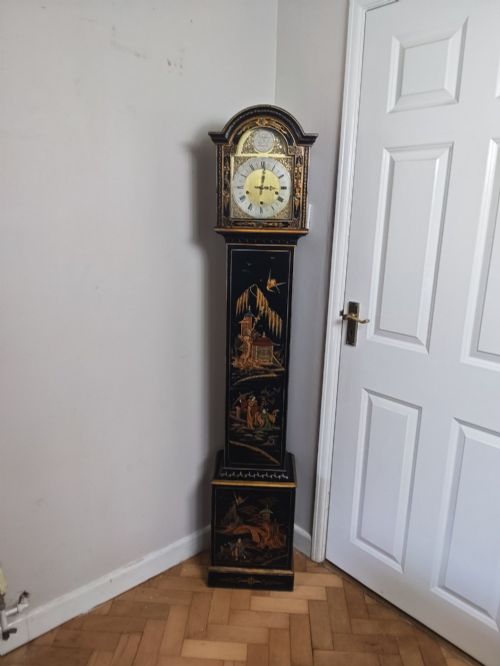
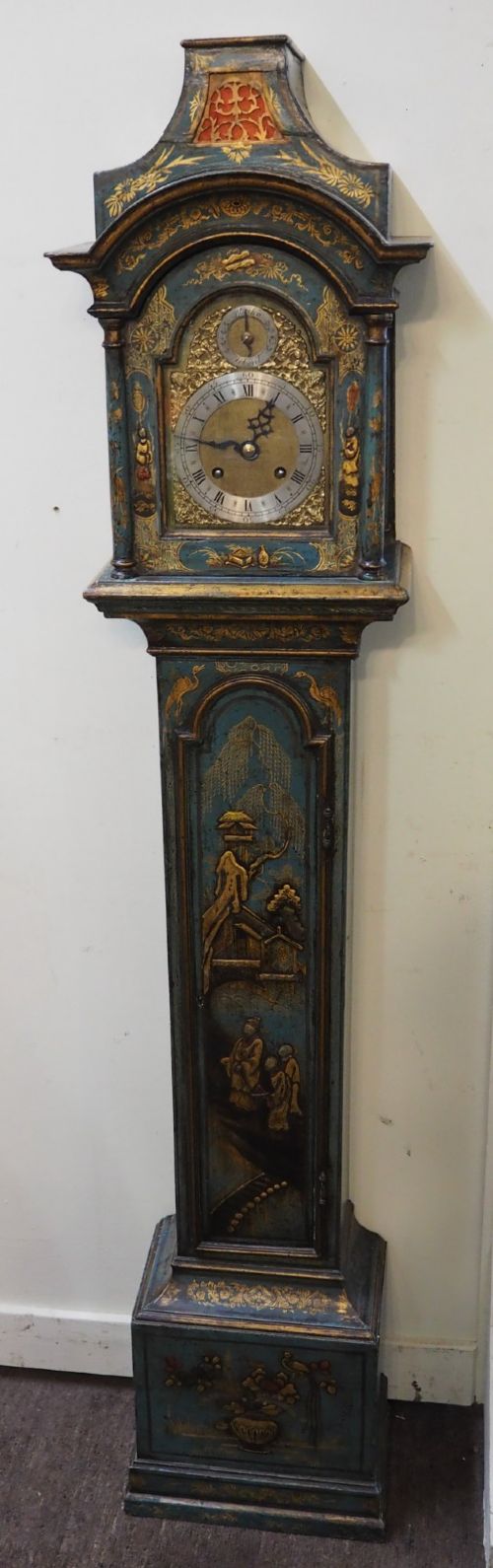


Lacquer Floor Clock
A lacquer floor clock brings dramatic height and painted narrative scenes into a room, offering both traditional timekeeping and striking decorative presence.
Lacquer Floor Clock
A lacquer floor clock is a tall timepiece housed in an upright wooden case finished with specialist decorative painting, commonly known as a longcase or grandfather clock. When you search for lacquer floor clock, you encounter substantial proportions designed to stand directly on the floor, measuring several feet high.
The examples available range widely in age and scale, from substantial 18th-century Georgian pieces originating in London and regional towns to smaller grandmother clocks produced during the 1920 and 1930 revivals. These timepieces take the form of longcase clocks and smaller derivative formats, frequently featuring elaborate painted surfaces.
The decorative schemes on these clocks often embrace Chinoiserie motifs, displaying figures, pavilions, and landscapes derived from East Asian aesthetics applied onto dark green, blue, cream, or traditional dark grounds. Surviving pieces present varied proportions, from full-sized floor-standing grandfather formats down to more compact domestic iterations.
How they were made
Makers constructed the tall wooden cases using native timbers before applying layers of surface coatings to build a smooth ground for decoration. Craftsmen then built up pictorial scenes using gilt, gold leaf, and painted details to achieve the characteristic glossy finish associated with these clocks.
Internal mechanisms utilise brass movements housed behind protective glass door panels, driving mechanical timekeeping and sometimes musical chimes or automata. The integration of fine metal dials with the painted wooden exterior represents the principal technical achievement of these floor clocks.
Lacquer Floor Clock Retail Price Guide 2026
Typical asking prices for lacquer floor clock among the pieces listed under this phrase on Sellingantiques today, from the lower quarter to the upper quarter. They describe what is for sale here now, not the wider market.
Some timepieces feature rocking Father Time figures that march onward while the pendulum swings.
What varies in quality
The distinction between ordinary and superior examples rests upon the intricacy of the painted decoration and the crispness of the gilt detailing across the case. Finer pieces demonstrate careful composition in their Chinoiserie scenes, whereas simpler versions rely on more repetitive surface patterns.
William Kipling London·Wise of Reading·Thomas Utting of Yarmouth·Gardner of London·Robert Berry
The Lacquer Floor Clock Glossary
- Longcase clock
- A tall, floor-standing pendulum clock enclosed in a wooden case, commonly called a grandfather clock. These instruments typically measure over six feet in height.
- Chinoiserie
- A European decorative style reflecting Chinese artistic influences, prevalent in the ornamentation of these clock cases. Artists used raised motifs and gilt figures against painted backgrounds.
- Grandmother clock
- A smaller, scaled-down version of the traditional longcase clock, frequently produced during the 20th century. They occupy less floor space while retaining the architectural form of full-sized clocks.
- Automaton
- A mechanical figure or moving part integrated into the clock face or dial, such as a rocking Father Time. These devices animate the dial while the clock operates.
- Japanned wood
- European furniture and clock cases finished with resinous varnishes to imitate East Asian lacquer work. This technique creates a hard, glossy surface for painted decoration.
Lacquer Floor Clock: Frequently Asked Questions
Where should I place a lacquer floor clock?
These tall timepieces require a stable, level floor surface away from direct heat sources and strong sunlight to protect the painted wooden case and internal mechanism.
Allow sufficient vertical clearance for the full height of the case, ensuring the pendulum can swing freely without obstruction once the clock is properly installed.
How do I distinguish 18th-century pieces from later revivals?
Eighteenth-century examples typically display specific Georgian architectural proportions, hand-hammered brass movements signed by period makers, and aged patination across the wooden carcase.
Later pieces from the 1920s and 1930s often take the form of compact grandmother clocks, utilising standardised modern movements alongside revival Chinoiserie decoration.
What maintenance do these clocks need?
Regular care involves professional mechanical servicing every few years to clean and lubricate the brass gears, escapement, and any associated chime trains.
Keep the exterior surfaces clean using a soft, dry cloth, avoiding harsh chemical polishes that might damage the delicate lacquer and gilt layers.