


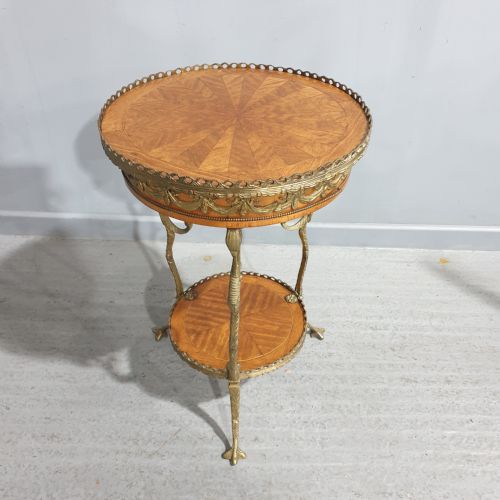

Gilt Brass Gallery Table
These gilt brass gallery tables bring refined French and English period elegance to a room, offering both decorative presence and functional surface space.
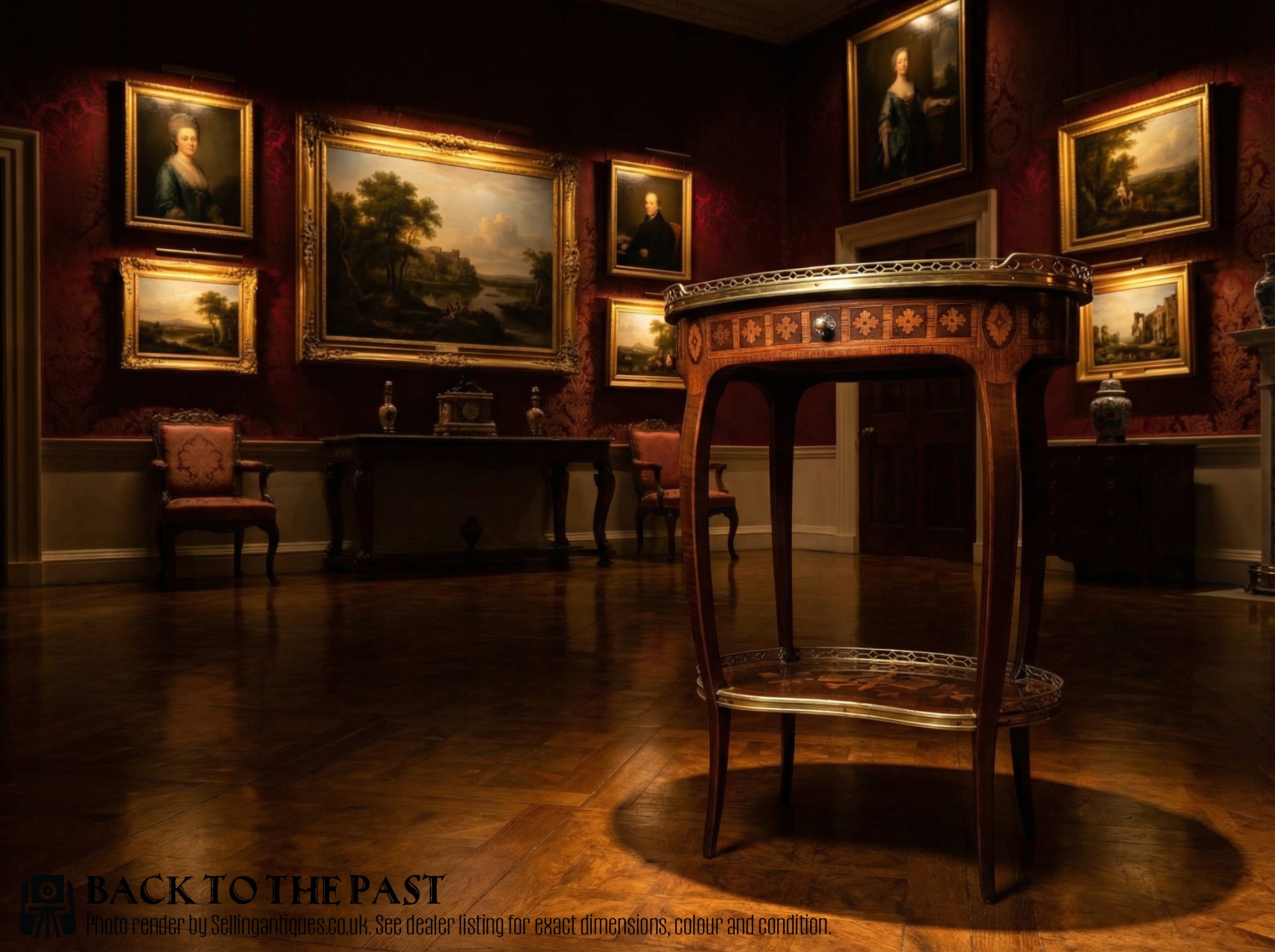
Gilt Brass Gallery Table
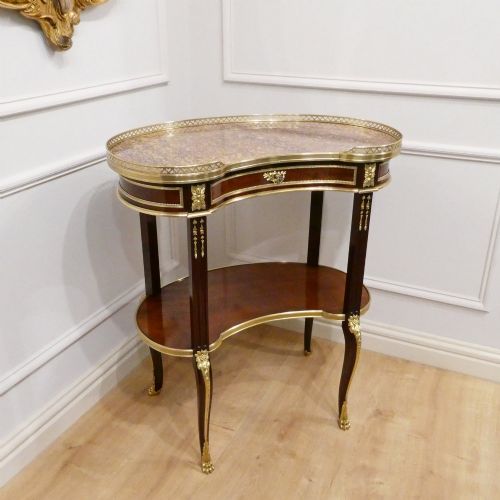
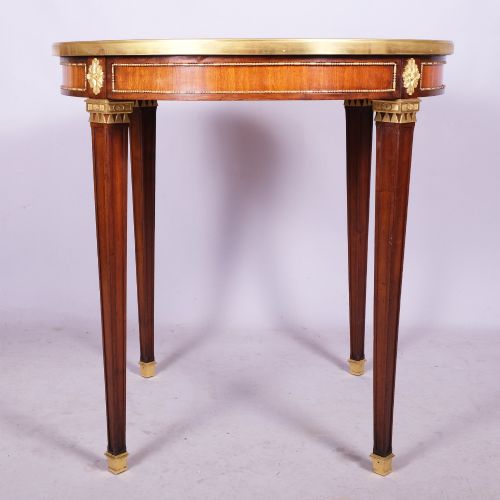
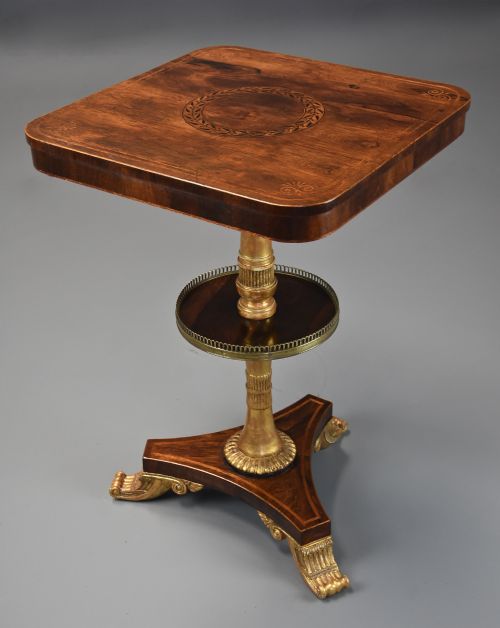
When you search for a gilt brass gallery table, you encounter a refined class of occasional furniture distinguished by a low metal railing encircling the top surface. These pieces span periods from the Regency era through the nineteenth century and into the early twentieth century, taking forms such as side tables, two-tier etageres, and compact lamp tables. On this page, you are most likely to meet French occasional tables finished in kingwood, mahogany, or ebonised wood.
How they were made
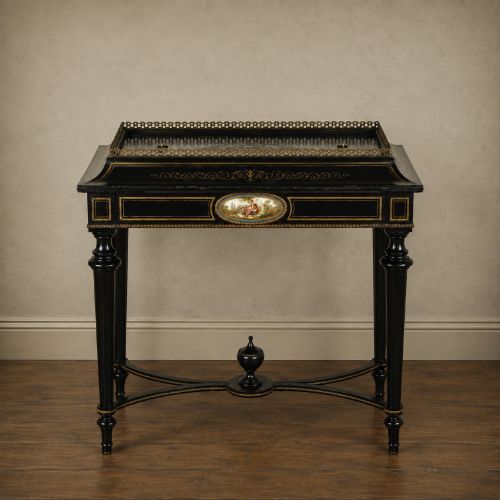
Cabinetmakers constructed these tables using a solid timber carcase veneered in figured woods such as kingwood, mahogany, rosewood, walnut, and amboyna, frequently accented by ebonised wood or Chinoiserie lacquer. The defining gilt brass or ormolu mounts, galleries, and edgings were cast and chased, then secured around the marble, wood, or porcelain-plaques-inlaid tops. Marquetry and parquetry elements were meticulously hand-cut and inlaid to form geometric or floral patterns across the surfaces.
The structural joinery relies on traditional methods suited to fine nineteenth-century and early twentieth-century cabinet work. Metal components were meticulously fitted to the perimeters of table tops, creating the protective gallery rails that characterise the group. Finishing techniques involved French polishing to bring out the deep grain of the underlying hardwoods.
Gilt Brass Gallery Table Retail Price Guide 2026
Typical asking prices for gilt brass gallery table among the pieces listed under this phrase on Sellingantiques today, from the lower quarter to the upper quarter. They describe what is for sale here now, not the wider market.
Several tables feature miniature porcelain plaques painted with delicate scenes, turning ordinary furniture into miniature art galleries.
What varies in quality
The distinction between ordinary production and the finest work lies in the crispness of the bronze or ormolu casting and the precision of the marquetry inlay. Superior examples feature heavily chased metalwork and thick, richly figured timber veneers rather than simple printed motifs or plain secondary woods. The integration of specialty elements, such as genuine breche d'alep marble tops or hand-painted porcelain plaques, elevates an ordinary occasional table into a notable piece.
Structural refinement also separates the grades, visible in the elegance of the cabriole or tapered legs and the seamless fit of the gallery rail around the table edge. Tables bearing signatures or labels from recognised makers generally display a higher standard of hand-finishing throughout the carcase and mounts. The overall weight and rigidity of the frame indicate the level of care invested during construction.
Maison Millet·George Bullock·Haentgos Freres Paris·Donald Ross·Paul Sormani
The Gilt Brass Gallery Table Glossary
- Gallery
- A low raised railing, usually made of pierced gilt brass or ormolu, running around the perimeter of a table top to prevent items from sliding off.
- Ormolu
- Gilt bronze mounted on furniture, created by applying a gold amalgam to cast bronze and firing it to achieve a rich metallic finish.
- Marquetry
- Decorative veneer work forming pictorial or geometric patterns using various coloured woods, shells, or metals inlaid into a solid background.
- Etagere
- A piece of furniture consisting of open shelves or tiers, typically used for displaying small decorative objects or serving items.
- Jardiniere
- A decorative stand or container specifically designed to hold plants or floral arrangements, often fitted with a metal liner and gallery mounts.
Gilt Brass Gallery Table: Frequently Asked Questions
What is a gilt brass gallery table used for?
These tables served primarily as versatile surface furniture in nineteenth-century drawing rooms and boudoirs, holding lamps, writing materials, or decorative ornaments.
The raised brass gallery ensured that small items or precious vessels remained secure when the table was moved or used actively.
How do I identify a French nineteenth century table?
Look for characteristic wood choices such as kingwood and mahogany, combined with ornate ormolu mounts and intricate marquetry or parquetry patterns.
Maker attribution often appears through specific stylistic traits, cabinet labels, or the incorporation of Sevres-style porcelain plaques.
Where should I place a two tier etagere?
An etagere works effectively beside a sofa or in an empty corner where its multiple levels provide vertical display space without occupying a large floor footprint.
The open tiers lend themselves to holding books, small sculptures, or decorative porcelain collections.
Are marble topped tables difficult to maintain?
Marble tops require simple cleaning with a damp cloth and gentle soap, avoiding acidic substances that can etch the polished stone surface.
The heavy stone adds stability to smaller lamp and occasional tables while offering a durable, heat-resistant service area.