

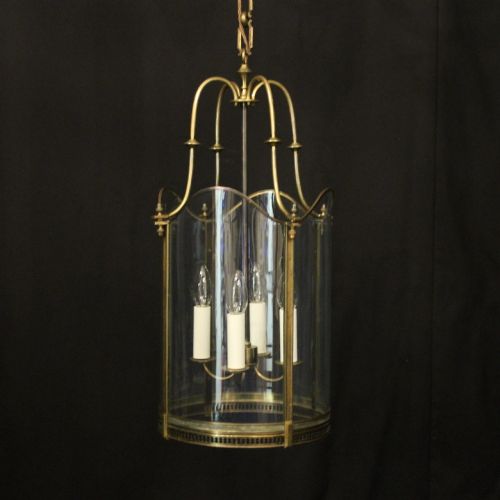
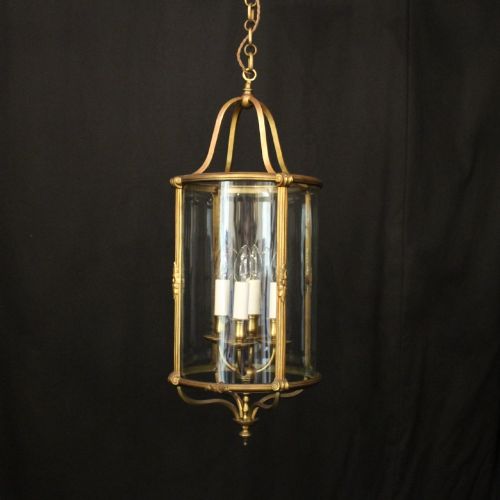
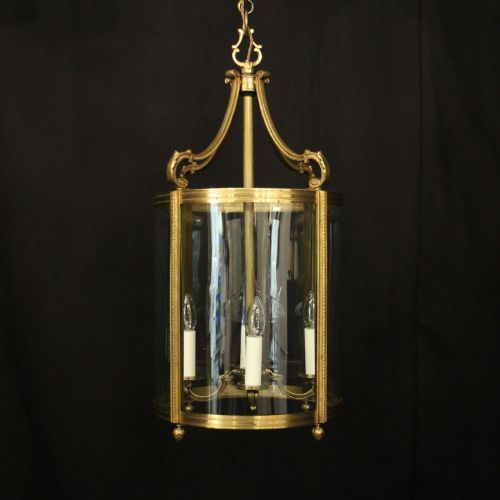


Gilt Brass Entry Lantern
A gilt brass entry lantern brings warm, reflected light to a hallway, combining metalwork and glass to shape a welcoming entrance.
Gilt Brass Entry Lantern
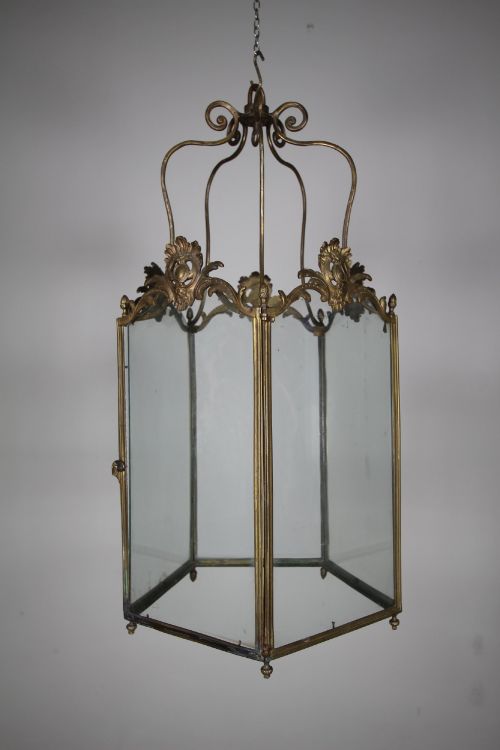
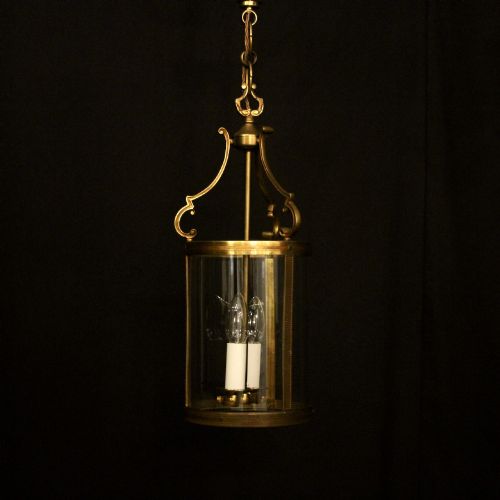
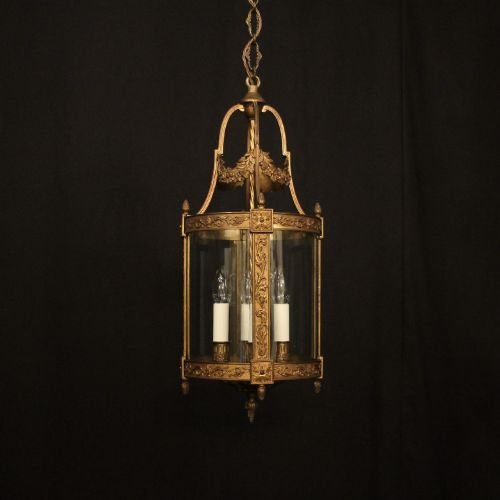
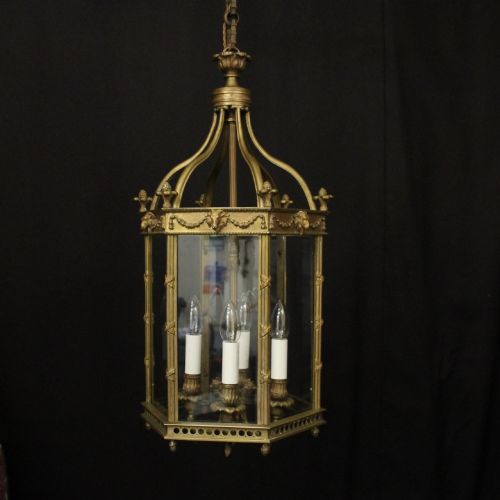
A gilt brass entry lantern provides overhead illumination in entrance halls and vestibules, suspended from ceilings by chains or mounts. These fixtures take forms such as hall lanterns, ceiling lights, and pendant lights, designed to sit gracefully in narrow spaces.
The pieces available here span the nineteenth century and the early twentieth century, showing strong French influence in styles like Louis XVI, Rococo, and Chateau designs alongside English examples.
Convex and bevelled glass panels feature heavily in these designs, held within metal frames to diffuse light outwards into the hallway.
How they were made
Makers constructed these lanterns using brass and bronze frames finished with surface gilding, giving the metal a rich golden tone. Individual panels of glass, including convex and bevelled panes, were then glazed directly into the metal framework.
Many examples house multiple internal light fittings, such as four-light configurations, requiring robust internal wiring frames and secure suspension loops to bear the weight.
Gilt Brass Entry Lantern Retail Price Guide 2026
Typical asking prices for gilt brass entry lantern among the pieces listed under this phrase on Sellingantiques today, from the lower quarter to the upper quarter. They describe what is for sale here now, not the wider market.
Materials recorded across the current selection include bevelled glass, gilded bronze, and standard brass.
What varies in quality
The refinement of the cast metal ornamentation largely separates standard examples from finer works, particularly where delicate Neoclassical or Rococo motifs define the frame. Crisp detail in the chasing and casting shows the maker's hand.
Glass selection also marks the difference between tiers, with thick bevelled or curved convex panes demonstrating greater technical skill than flat, plain glass panels.
The Gilt Brass Entry Lantern Glossary
- Gilt brass
- Brass that has been coated with a thin layer of gold or a gold-coloured finish to provide a bright, reflective surface. This treatment protects the base metal while offering a decorative sheen.
- Convex glass
- Curved glass panels that bulge outward, adding depth and wider light dispersion to the lantern frame. This type of glass requires specialist shaping during manufacture.
- Bevelled glass
- Glass panes featuring an angled edge cut and polished around the perimeter. This catches and refracts light as it passes through the panels.
- Hall lantern
- A ceiling-hung lighting fixture specifically scaled for corridors, vestibules, and entrance spaces. These pieces combine decorative metalwork with protective glass enclosing the bulbs.
Gilt Brass Entry Lantern: Frequently Asked Questions
Where should I hang a gilt brass entry lantern?
These lanterns suit entrance halls, vestibules, and high-ceilinged corridors where their suspended form can hang freely. They work well as a central focal point upon entering a home.
Ensure adequate ceiling height for clearance beneath the hanging chain, allowing the light to illuminate the space effectively without obstructing movement.
How do I date a gilt brass entry lantern?
Dating relies on stylistic clues, such as Neoclassical or Rococo revival motifs, alongside the construction methods of the metal frame and glass. Nineteenth-century pieces often display heavier cast components.
Twentieth-century examples from the decades following nineteen hundred frequently incorporate convex glass panels and refined French gilt finishes.
How many light bulbs do these lanterns take?
Many of the larger hanging lanterns accommodate multiple internal points of illumination, frequently configured for four lights. This setup provides ample brightness for entranceways.
Wiring configurations inside historical lanterns have generally been updated for modern electrical standards while retaining the original external metal and glass housing.
What is the difference between brass and bronze frames?
Bronze is an alloy primarily of copper and tin, while brass is an alloy of copper and zinc. Both metals appear in these lanterns with applied gilding.
Gilded bronze components often carry heavier, sharper cast ornamentation, whereas brass structures tend to be slightly lighter in weight.