

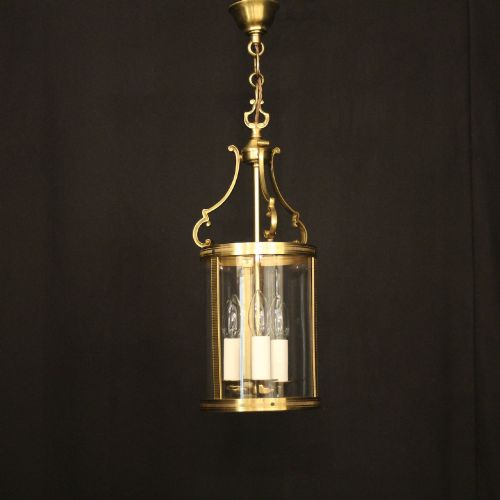
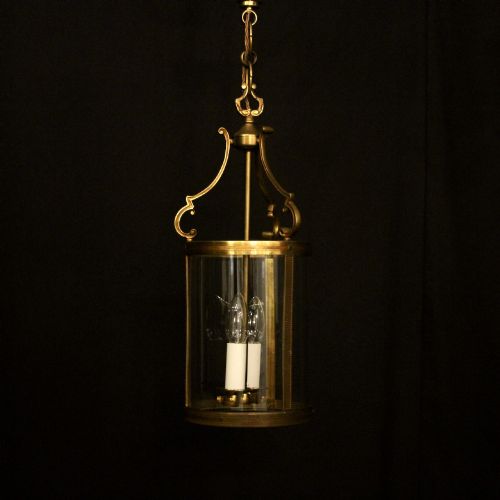
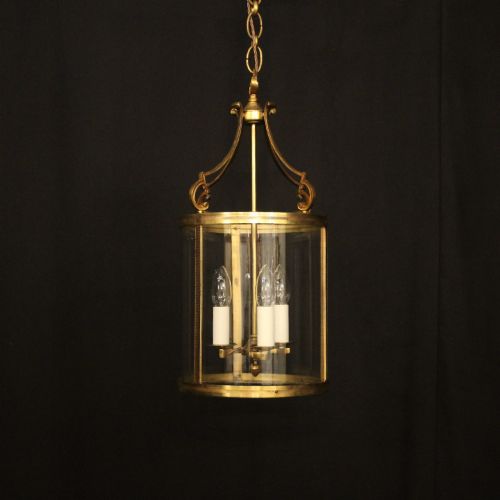
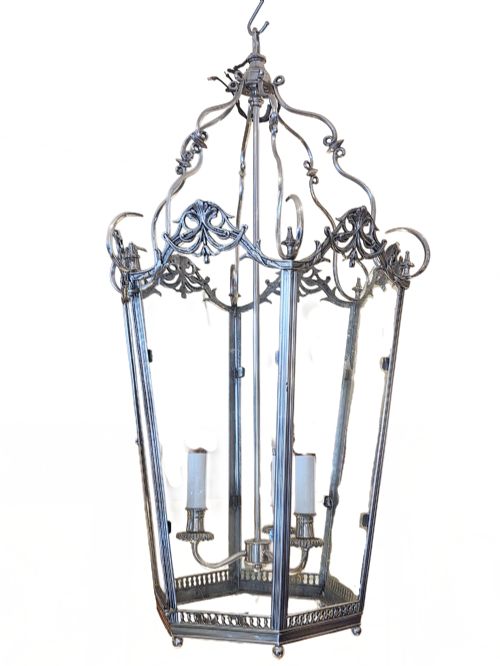
Antique Glass Lantern Chandelier
These antique glass lantern chandeliers combine functional hall lighting with ornate metal frames, bringing period character to entryways and landings.
Antique Glass Lantern Chandelier
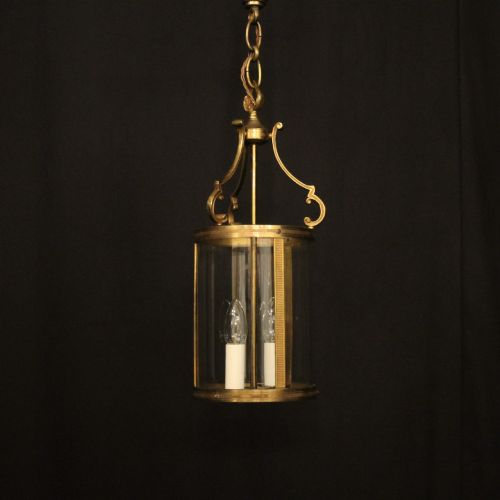
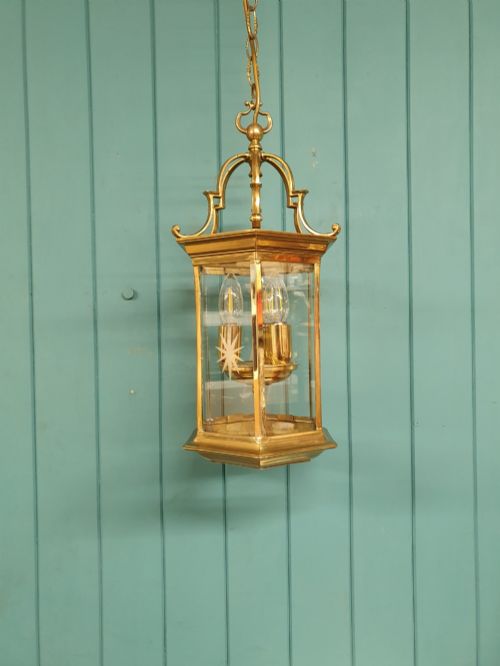
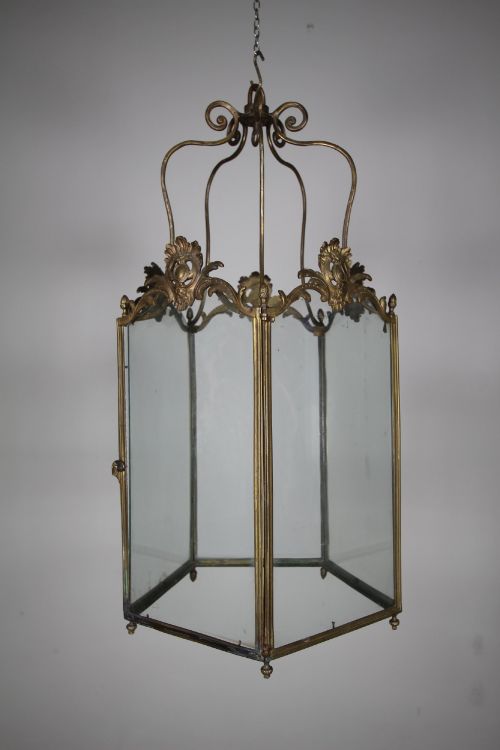
When you search for an antique glass lantern chandelier, you encounter a distinct form of overhead lighting designed primarily for corridors, entrance halls, and stairwells. These pieces suspend from ceilings via chains or rods, enclosing a light source within glazed or open metallic frames.
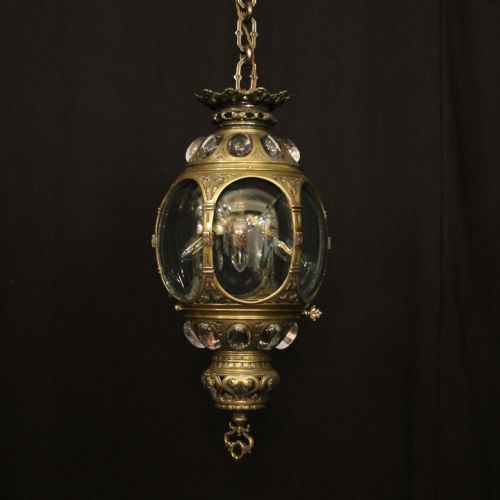
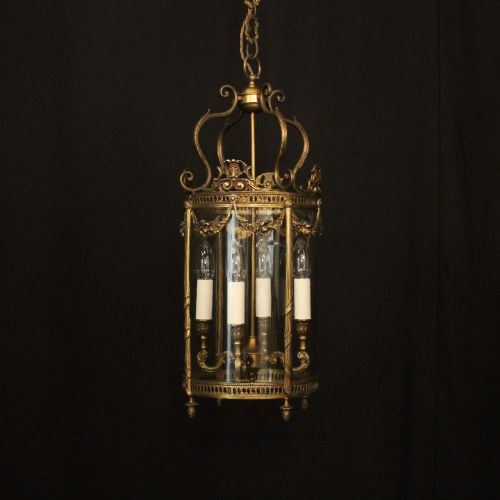
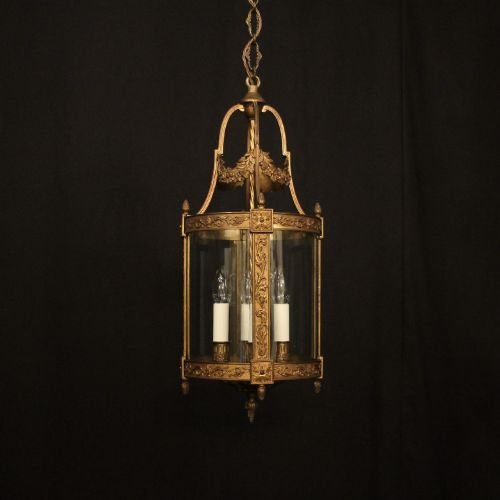
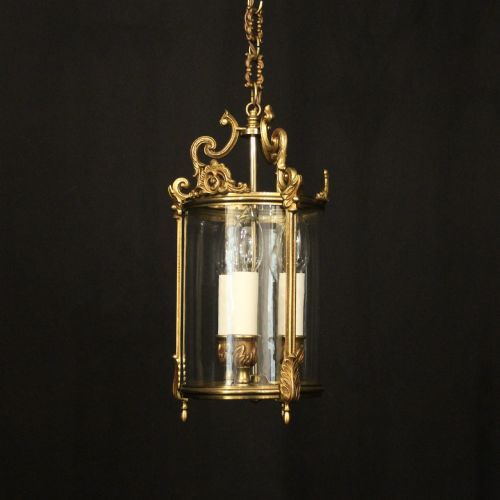
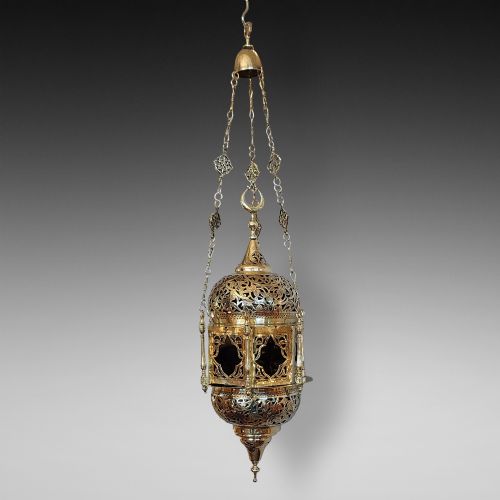
The pieces on this page lean heavily towards French designs, notably gilded bronze or brass fixtures featuring convex glass panels. You will also find English examples from the nineteenth century alongside Victorian Gothic, Edwardian, and Moroccan revival pieces.
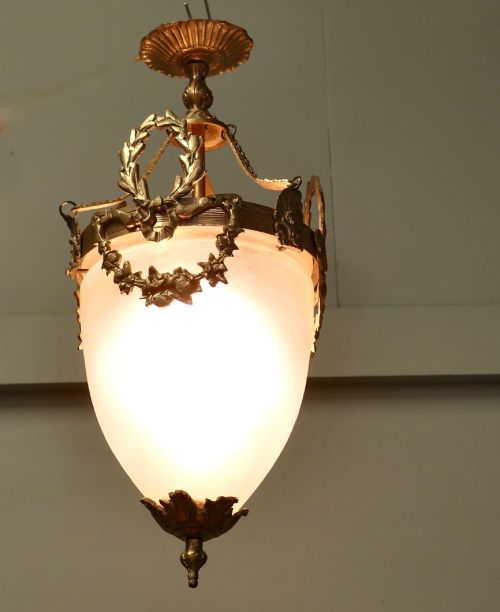
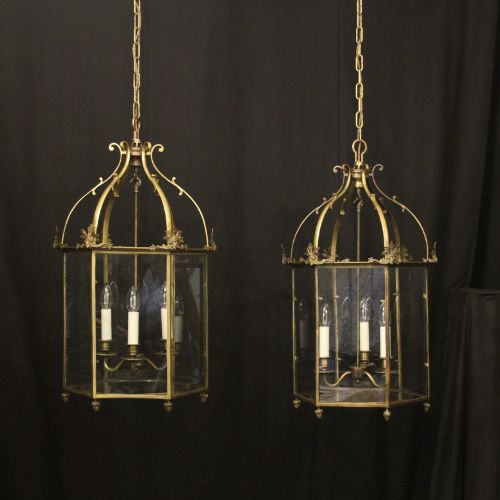
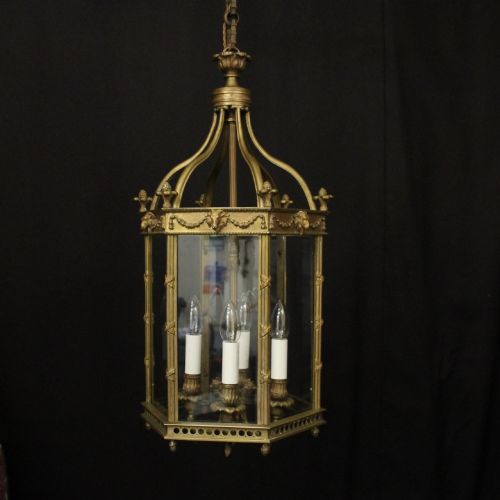
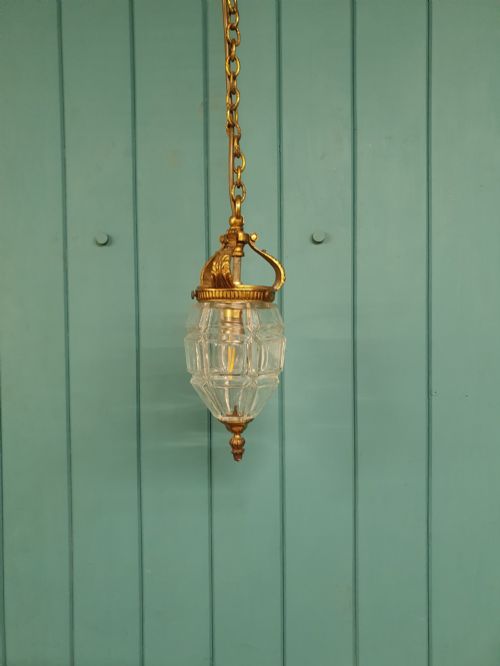
Forms range from simple single-light glazed hanging pendants to large multi-light hall lanterns and occasional prism-adorned chandeliers. The prevailing aesthetic balances structural metalwork with transparent or moulded glass panels designed to diffuse light evenly across a space.
How they were made
Maker workshops constructed these lanterns using cast bronze, brass, or silvered metal frames fitted with glass panels. Metals were frequently gilded to enhance their decorative impact, while frames utilised hinges or screws to secure individual panes of glass.
Glass elements vary from plain convex panes to moulded, etched, or stained varieties depending on the period and stylistic influence. Early examples accommodated candles before being adapted for electricity, while twentieth-century iterations were built specifically for internal bulb wiring.
Antique Glass Lantern Chandelier Retail Price Guide 2026
Typical asking prices for glass lantern chandelier among the pieces listed under this phrase on Sellingantiques today, from the lower quarter to the upper quarter. They describe what is for sale here now, not the wider market.
Listings feature brass, bronze, and gilded metals paired with convex, etched, and stained glass across various 19th-century and 20th-century periods.
What varies in quality
Quality rests in the weight of the metal casting, the crispness of applied gilding, and the integrity of the glass panels. Heavier bronzes and precisely moulded or convex glass panes distinguish finer workshop output from standard production.
The sophistication of the internal framing and decorative mounts separates standard hall lights from exceptional statement pieces. Original patination on the brass and bronze also plays a vital role in preserving the aesthetic integrity of the fixture.
Faraday and Son·Voysey
The Antique Glass Lantern Chandelier Glossary
- Convex glass
- Curved glass panels that project outward, frequently utilised in French hall lanterns to diffuse light and magnify the internal glow. This technique adds depth and softness to the overall illumination.
- Gilded bronze
- Bronze metal treated with a thin layer of gold leaf or gilt finish to produce a lustrous, enduring surface. It provides the rich metallic sheen seen on many French chateau and neoclassical lanterns.
- Hall lantern
- A suspended lighting fixture designed specifically for narrow transition spaces such as corridors and entryways. They combine the enclosed protection of a lantern with the decorative presence of a chandelier.
- Leaded glass
- Glass panes held together by strips of lead cames, forming geometric or decorative patterns. This technique appears prominently in Victorian Gothic and Arts and Crafts lighting fixtures.
Antique Glass Lantern Chandelier: Frequently Asked Questions
Where should I hang a lantern chandelier?
These fixtures suit transitional spaces such as entrance halls, high-ceilinged corridors, and stairwell landings where vertical drop works effectively. Their enclosed design projects focused yet diffused light downward and outward.
Ensure you measure ceiling heights carefully before hanging, as many pieces include suspension chains that determine the final drop into the room.
Are these lanterns electrified?
Many surviving examples have been adapted for modern electricity over their lifespan, transitioning from early candle or gas configurations. Rewiring is common to ensure safety standards align with contemporary domestic electrical systems.
Some period pieces retain older internal wiring that benefits from professional inspection and updating by a qualified electrician prior to installation.
How do I identify the period of a lantern?
Dating relies on combining material evidence, such as the composition of the bronze or brass framework, with distinct stylistic markers. Victorian pieces often display heavier Gothic or leaded glass influences, whereas 1920s examples favour streamlined convex glass and gilt brass.
Examining construction techniques, including screw types and casting methods, helps narrow down the decade of manufacture alongside stylistic design cues.
What maintenance do glass lanterns require?
Routine upkeep involves gentle dusting of the metal framework and careful cleaning of the glass panels using non-abrasive solutions. Preserving original gilt finishes or patinated bronze requires avoiding harsh chemical cleaners.
Period wiring and structural hanging points should be checked periodically to ensure the fixture remains securely suspended from the ceiling.