



Gilt Brass Carriage Timepiece
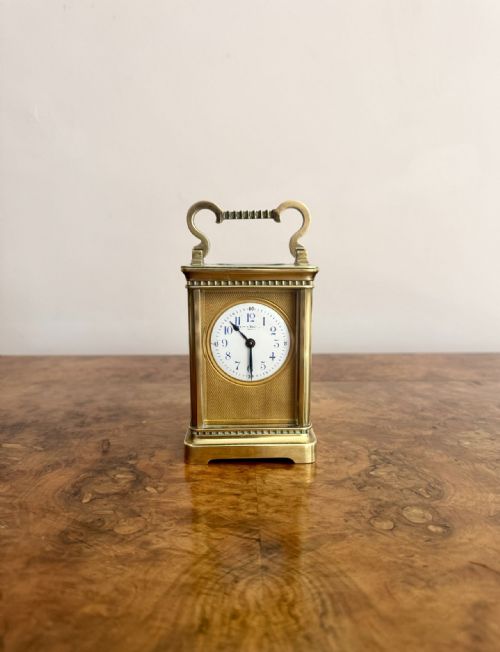
A gilt brass carriage timepiece is a portable mechanical clock designed for travel, prized for its combination of precision engineering and decorative metalwork.
Gilt Brass Carriage Timepiece
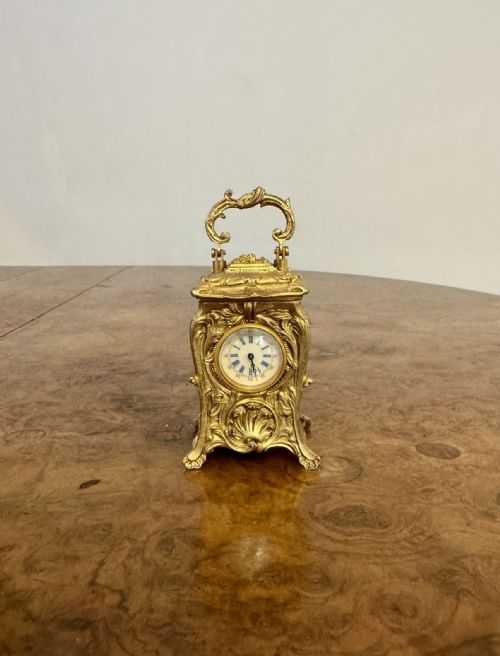
When searching for a gilt brass carriage timepiece, a buyer examines portable mechanical clocks produced primarily during the nineteenth century and the Edwardian era. These pieces frequently originate from French workshops or British makers, appearing in forms such as standard carriage clocks, repeating models, and miniature examples.
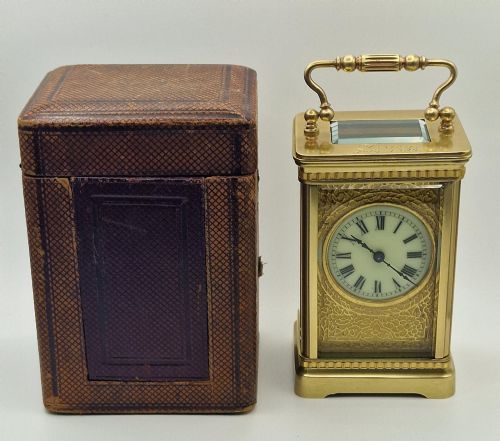
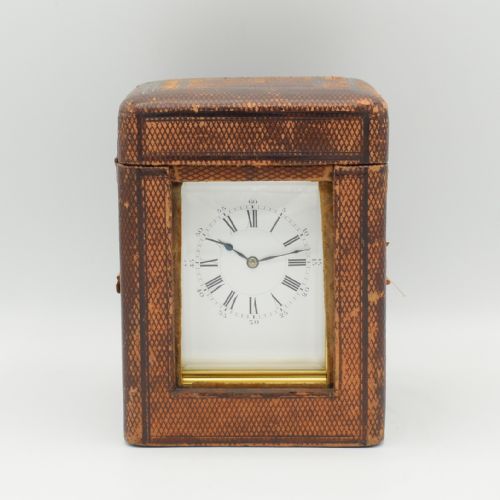
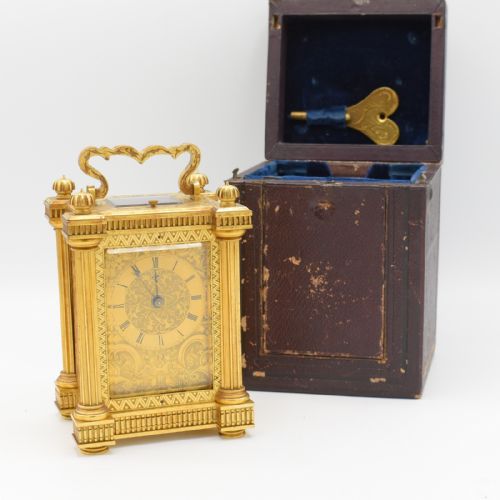
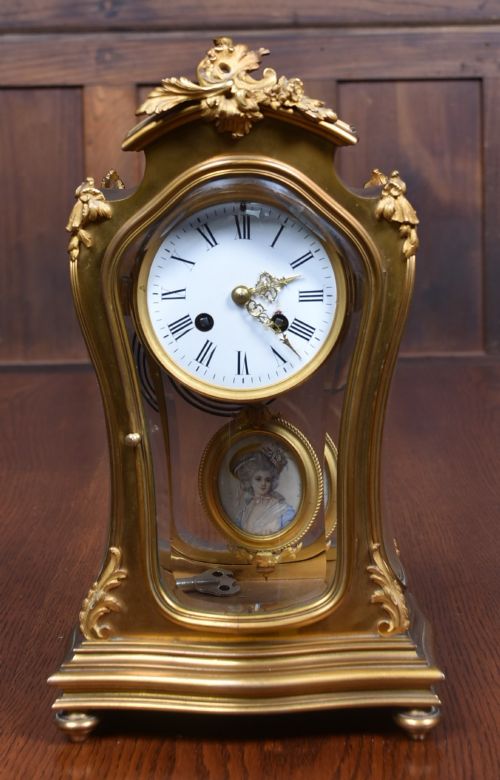
The versions most commonly met on this page span the Victorian period through to 1900, housing movements designed to keep time while travelling. Many feature bevelled glass panels that reveal the internal escapement and gear trains, often accompanied by travel cases in leather.
Makers ranged from individual horologists to established retailers, placing timepieces in domestic interiors or supplying them for royal presentation. The forms vary from simple timepieces to complex repeaters and grand sonnerie clocks.
How they were made
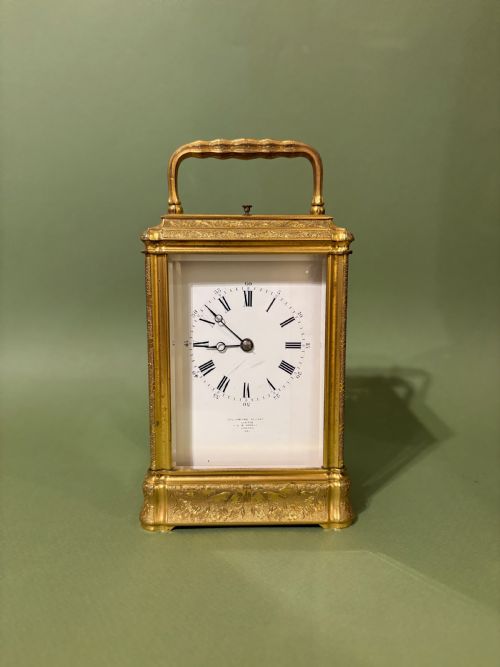
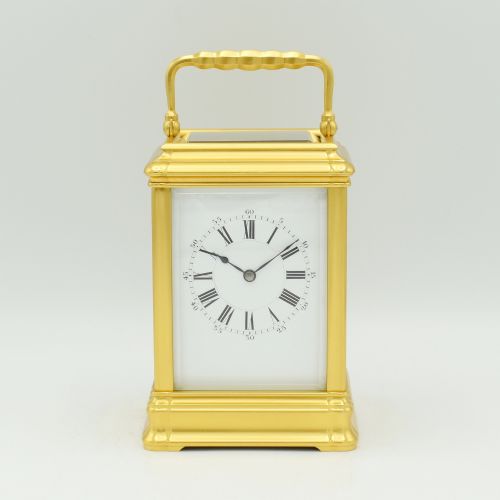
Makers utilised heavy brass and bronze castings, applying fire-gilding, or ormolu, to create the characteristic golden surfaces of these cases. Glass panels were cut and bevelled to fit snugly into the metal frames, protecting the delicate dials and hands within.
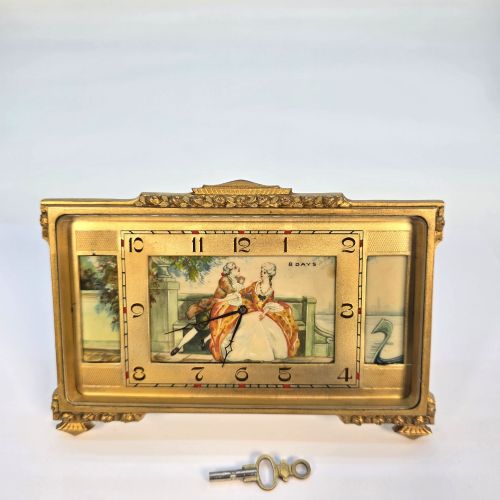
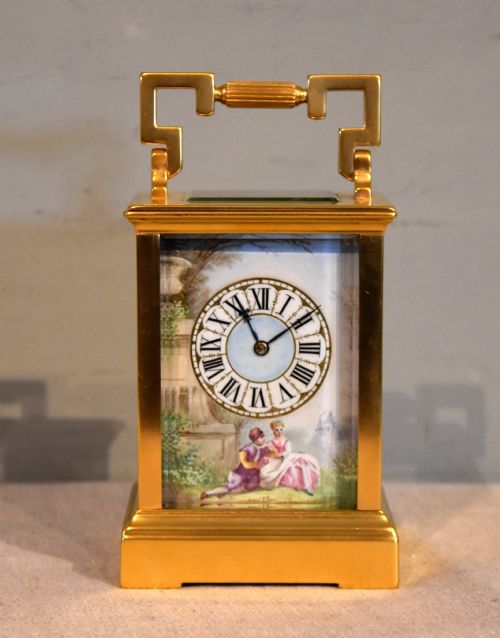
Enamel was applied to metal dials for the chapter rings, sometimes decorated with hand-painted scenes or intricate engravings across the gilt brass framework. Movements incorporated platforms for the escapement, allowing the clocks to maintain accurate time despite movement.
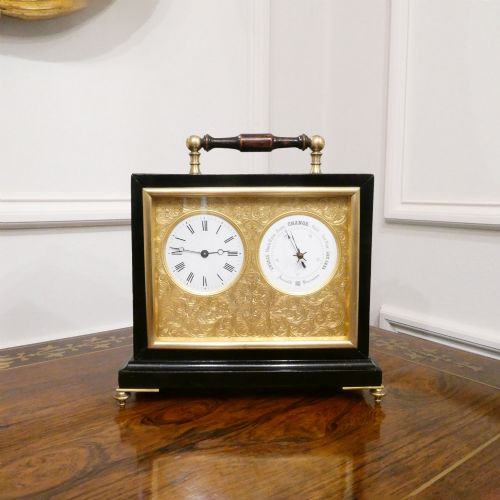
Secondary materials such as ebonised wood and leather appear on specific models, particularly for protective travel cases or specialised mantel clock variants.
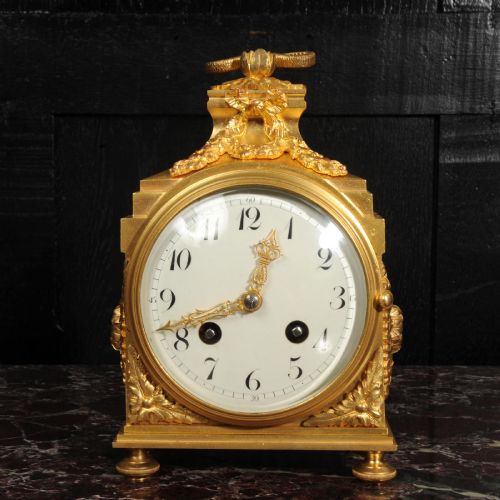
One exceptional timepiece includes a built-in ships wheel, proving that Victorian travellers liked to keep their nautical bearings indoors.
What varies in quality
The degree of hand-engraving across the gilt brass case separates standard production items from workshop masterpieces. Fine examples display crisp, deep chasing on the mask and pillars rather than shallow machine stamping.
The complexity of the internal mechanism dictates the standard of the piece, with repeater complications and platform escapements requiring exceptional skill to execute. The clarity and preservation of the enamel dial and its painted details also define the upper tier of quality.
Henri Jacot·Howell And James·Gontard And Bolviller·Paul Garnier·Mappin And Webb·Arnold And Frodsham·Thomas Cole And James Cole
The Gilt Brass Carriage Timepiece Glossary
- Carriage clock
- A portable spring-driven timepiece originally built for officers and travellers. These clocks typically feature a rectangular brass case with glass panels.
- Escapement
- The mechanical linkage that controls the release of the gear train and drives the balance wheel. Platform escapements are mounted visibly near the top of French carriage clocks.
- Repeater
- A mechanism that chimes the hours and quarters when a button or pendant is depressed. This complication required advanced gear cutting and assembly.
- Ormolu
- Finely ground high-carat gold mercury-gilded to a bronze or brass base. The technique creates a warm, durable metallic sheen characteristic of nineteenth-century French luxury items.
- Fusee
- A conical pulley used in mechanical clocks to maintain even tension on the gear train as the mainspring unwinds. This mechanism is frequently found in British timepieces.
Gilt Brass Carriage Timepiece: Frequently Asked Questions
How do I wind a carriage clock?
Most pieces use a dedicated winding key inserted into the arbours on the backplate. Turn the key gently until resistance indicates the mainspring is fully wound.
Avoid over-winding, as this places undue stress on historical springs and gear trains.
What is the difference between a timepiece and a clock?
In horological terms, a timepiece indicates the passage of hours and minutes without a striking mechanism. A clock includes an audible gong or bell strike for hours or quarters.
Timepieces generally feature simpler gear trains focused solely on the escapement and dial.
How can I identify a French movement?
Nineteenth-century French movements often bear workshop stamps, serial numbers, or maker marks on the backplate. They frequently utilise platform lever escapements rather than pendulum regulations.
Many French examples also include numbered components to ensure correct reassembly after servicing.