


Small Carriage Clock
A small carriage clock combines precise mechanical engineering with portability, housed in a brass, silver, or glass case designed for travel.
Small Carriage Clock
A small carriage clock is a portable timekeeper originally built for travellers, designed with a protective handle and sturdy housing. The pieces seen here span the Victorian, Edwardian, and early twentieth-century periods, originating largely from French and English workshops.
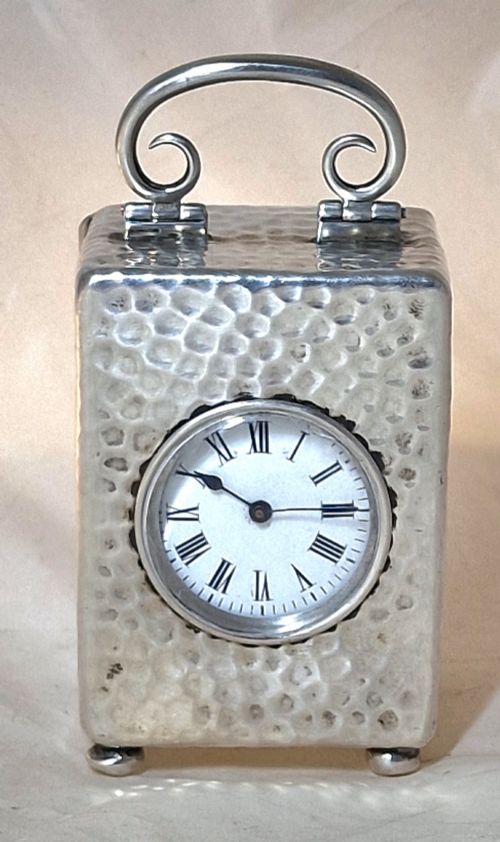
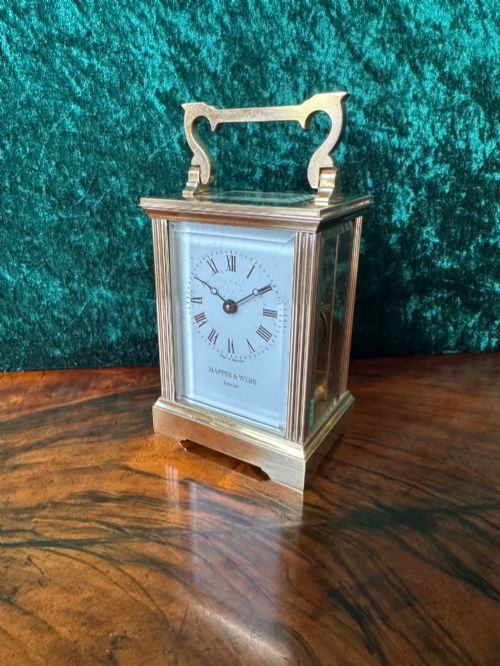
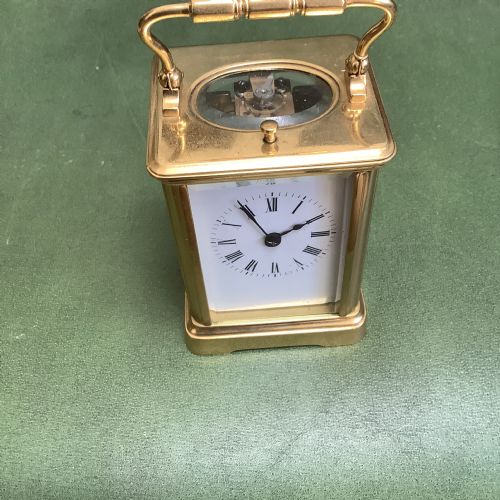
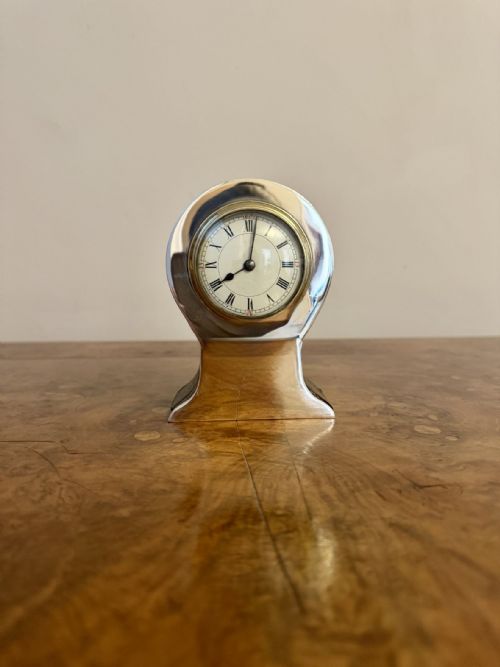
Most examples take the form of miniature or standard carriage clocks and small mantel clocks. Common configurations include brass or gilt-brass cases with glass panels, alongside versions fashioned from sterling silver or decorated with enamel.
Makers and retailers represented across the records include established names like Drocourt, Henri Jacot, Mappin and Webb, William Comyns, and J.C. Vickery. These range from simple daily timepieces to complex repeating movements and striking mechanisms.
How They Were Made
Cases rely heavily on brass, gilt brass, and sterling silver, frequently formed into gorge or pillared styles and paired with bevelled glass panes. Silver iterations often incorporate hallmarks, embossing, or hammered surface treatments.
Dial construction involves enamel, sometimes decorated with floral motifs or Delft designs, protected behind glass doors. Movements are mechanically driven, utilising platforms for escapements and occasionally incorporating leather travelling cases for protection.
One tiny example is specifically designated as a mignonette, proving that miniature timepieces held a special appeal for Victorian travellers.
What Varies in Quality
Quality rests upon the crispness of case engraving, the weight and finish of the brass or silver housing, and the complexity of the movement inside. Fully engraved gilt brass frames and intricate dial work elevate an example above standard production models.
The presence of maker marks from renowned workshops, combined with functional sophistication such as striking trains or repeating mechanisms, dictates the standing of a piece within the field.
Mappin and Webb·William Comyns·J Batson and Son·Tiffany·Richard·Drocourt·J C Vickery·Pons·Jacot·Henri Jacot·Goldsmiths and Silversmiths of London·Kendal and Dent London·Japay Freres·Walker and Hall
The Small Carriage Clock Glossary
- Gorge case
- A specific style of carriage clock case featuring stepped mouldings at the top and base. This design is frequently associated with fine French makers.
- Repeating mechanism
- A complication that strikes the hours and quarters on demand when a button or pendant is pressed. It allowed owners to check the time in the dark.
- Mignonette
- A term used to describe an exceptionally small carriage clock. These diminutive pieces require highly miniaturised internal mechanics.
- Platform escapement
- The horizontal assembly containing the balance wheel and escapement visible through the top glass of many carriage clocks. It replaced the pendulum for portability.
- Timepiece
- A clock that tells the time without incorporating striking or chiming mechanisms. These simpler movements were common in boudoir and miniature models.
Small Carriage Clock: Frequently Asked Questions
How do I wind a carriage clock?
Most mechanical models use a dedicated key applied to arbours situated on the backplate. Winding should be done steadily until gentle resistance indicates the mainspring is fully tensioned.
Care must be taken not to overwind the movement, as this can strain the internal spring mechanism. Timekeeping regulation is often adjusted via a small lever near the balance wheel.
Were these clocks actually carried in carriages?
The original prototypes were built for officers and travellers during the nineteenth century to keep time on rough roads. They were housed in heavy protective leather cases to absorb the shock of transit.
Over time, they transitioned into decorative domestic timepieces used on mantels and boudoir desks rather than active travel accessories.
What is the difference between a timepiece and a striking clock?
A timepiece simply measures and displays the hours and minutes without making any sound. These are lighter and mechanically simpler.
A striking or repeating clock includes extra geartrain components to sound the hours or quarters automatically or upon demand, requiring a larger case to accommodate the extra hammers and gongs.
How do I identify the period of a silver carriage clock?
English silver examples rely on assay office hallmarks stamped directly onto the metal, which include date letters indicating the exact year of manufacture. London hallmarks are particularly common on these pieces.
French models require an examination of the movement style, dial design, and maker stamps, as formal date letters were less universally applied to the brass cases.