



Gilt Brass Candle Stands
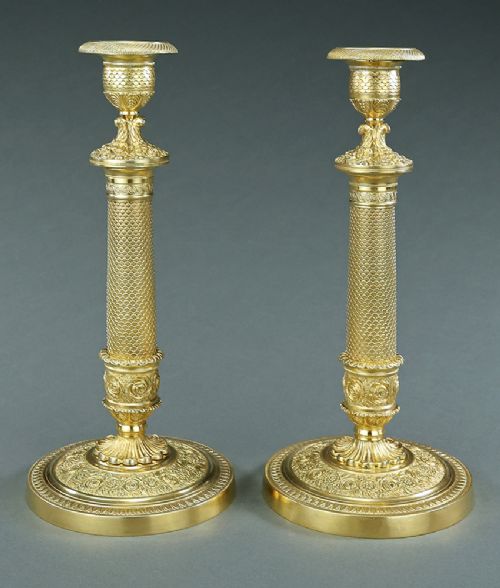
These gilt brass candle stands combine bright metalwork with classical forms, offering steady illumination and heavy presence for a mantelpiece.
Gilt Brass Candle Stands
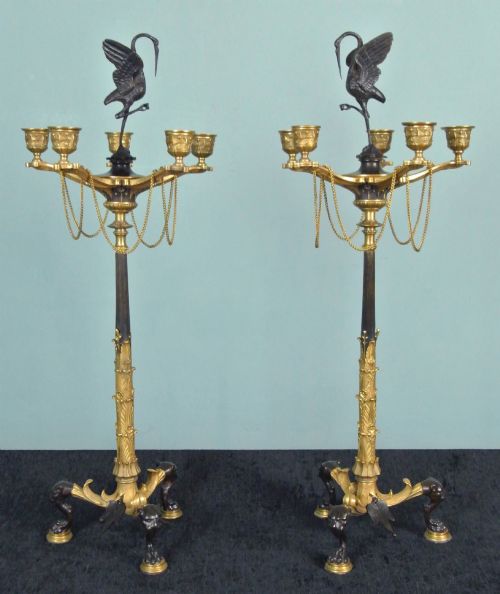
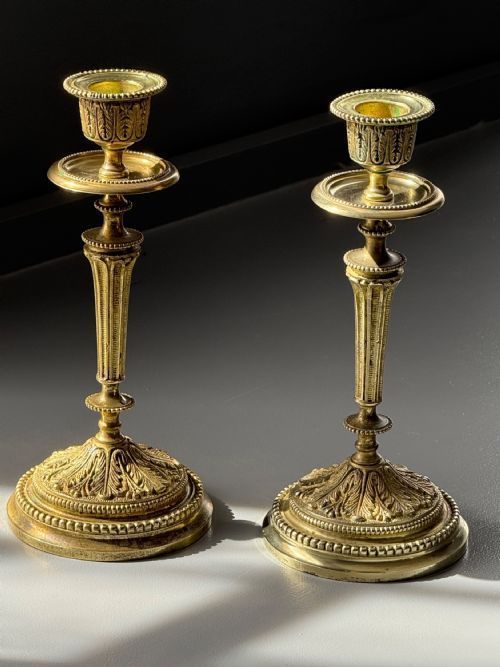
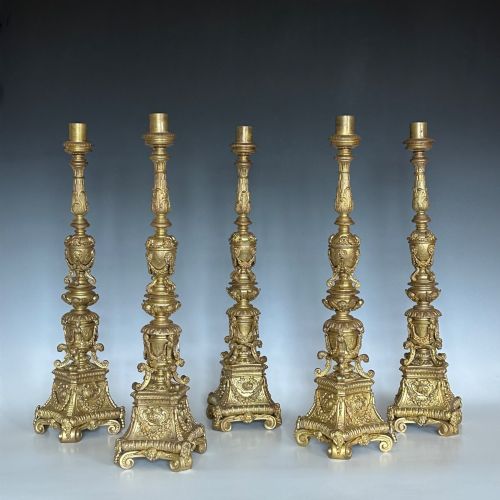
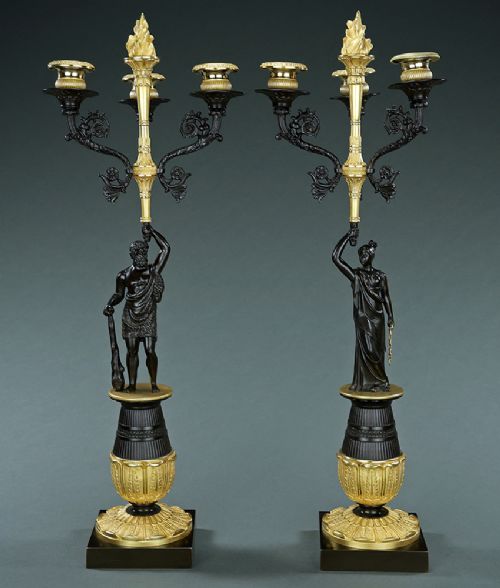
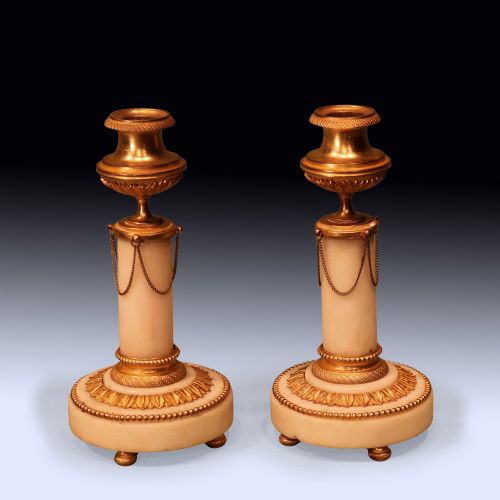
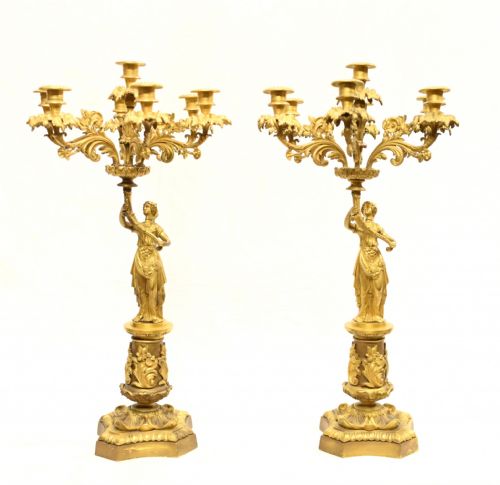
Gilt brass candle stands appear in various forms on this page, including single candlesticks, multi-armed candelabra, and tall standard lamps. The selection spans the eighteenth, nineteenth, and early twentieth centuries, drawing heavily upon French Empire, Regency, and Victorian aesthetics.
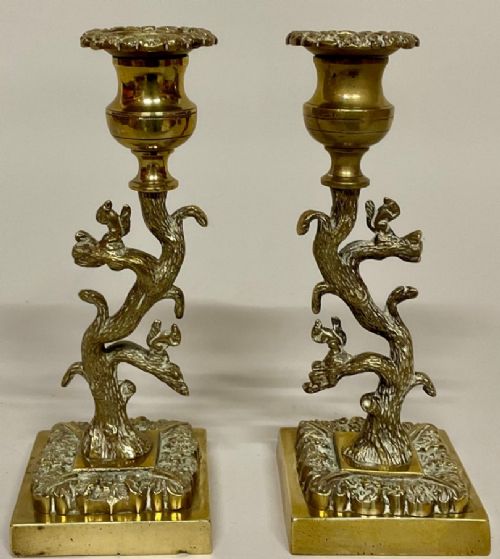
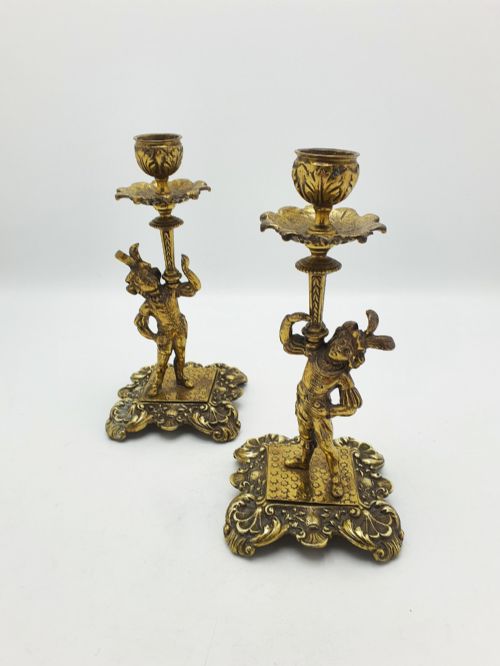
Makers cast these objects in configurations ranging from simple column shafts to sculptural figures involving trees, squirrels, cherubs, and mythological scenes. Pairs dominate the listings, alongside occasional graduated sets and single standing pieces.
Origins stretch across Britain, France, and Italy, incorporating stylistic influences from the Louis XVI, Rococo, and Neoclassical periods. Buyers encounter standard table models alongside heavier desk candlesticks and large church pieces.
How they were made
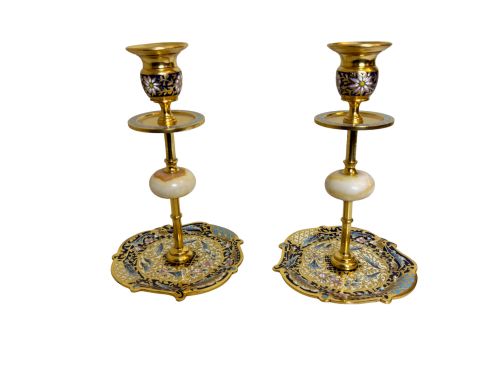
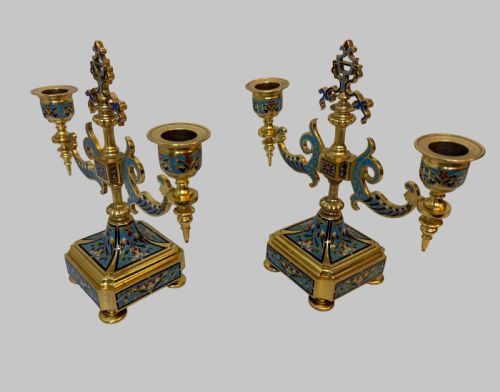
Foundries shaped these items using cast bronze, brass, and ormolu, applying fire gilding or chemical patination to the metal surfaces. Many examples integrate contrasting materials such as white marble, onyx, porcelain, and champleve enamel into the bases and columns.
Craftsmen utilised detailed chasing and engraving techniques after casting to sharpen the acanthus leaves, figures, and architectural motifs. Components were then mechanically assembled, often combining patinated bronze elements with bright gilded mounts.
Listings incorporate materials spanning gilt bronze, ormolu, brass, marble, onyx, champleve enamel, and porcelain across the nineteenth century.
What varies in quality
The weight and purity of the foundational bronze or brass influence the structural stability of the stand, particularly in multi-armed candelabra. Integration with secondary materials like marble or porcelain demands tight joints and matching mineral grain.
Abel Landry·Barbedienne
The Gilt Brass Candle Stands Glossary
- Ormolu
- Gilded bronze produced by applying a mercury-gold amalgam to a bronze base and heating it until the mercury vaporised. This technique creates a durable, warm golden finish characteristic of eighteenth and nineteenth-century decorative metalwork.
- Candlestick
- A portable device designed to hold a single candle in a socket or nozzle. These objects rest on flat bases and often feature slender shafts.
- Candelabra
- A branched lighting fixture that supports multiple candles from a single base. They frequently incorporate removable arms and central decorative finials.
- Champleve enamel
- A technique where troughs are dug into the metal surface and filled with vitreous enamel powder before firing. The resulting coloured patterns sit flush with the surrounding metal borders.
- Campana
- A vase-shaped candle sconce resembling an inverted bell. This classical silhouette appears widely on Regency and Empire lighting.
Gilt Brass Candle Stands: Frequently Asked Questions
How do I clean gilt brass?
Dust the surface gently with a soft, dry cloth to prevent accumulation in recessed chasing. Avoid abrasive commercial metal polishes that strip away the thin layer of gold.
Keep moisture away from any integrated marble, porcelain, or enamel sections during maintenance. Professional conservation remains advisable for valuable nineteenth-century fire-gilded surfaces.
Were these electrified?
Most items on this page retain their original configuration designed strictly for wax candles. Conversions to electricity occurred later in many domestic settings.
Buyers should inspect the base and sconces for wiring holes if historical accuracy matters. Unaltered examples preserve the original weight distribution intended by the maker.
How do I date a piece?
Examine the casting quality, fastener types, and stylistic vocabulary used in the ornamentation. Regency and Empire pieces favour distinct classical motifs, while Victorian items often blend multiple historical revivals.
Material combinations like ormolu paired with white marble point directly to nineteenth-century French workshops. Look for maker stamps or foundry marks hidden near the base rim.
Can they hold modern candles?
Many nineteenth-century sockets accommodate standard taper sizes, though older French dimensions can vary slightly. Check the internal diameter of the campana sconce before purchasing candles.
Use fitted drippers or beeswax adapters if the candle sits loosely in the cup. This prevents hot wax from contacting the gilt metal surfaces.